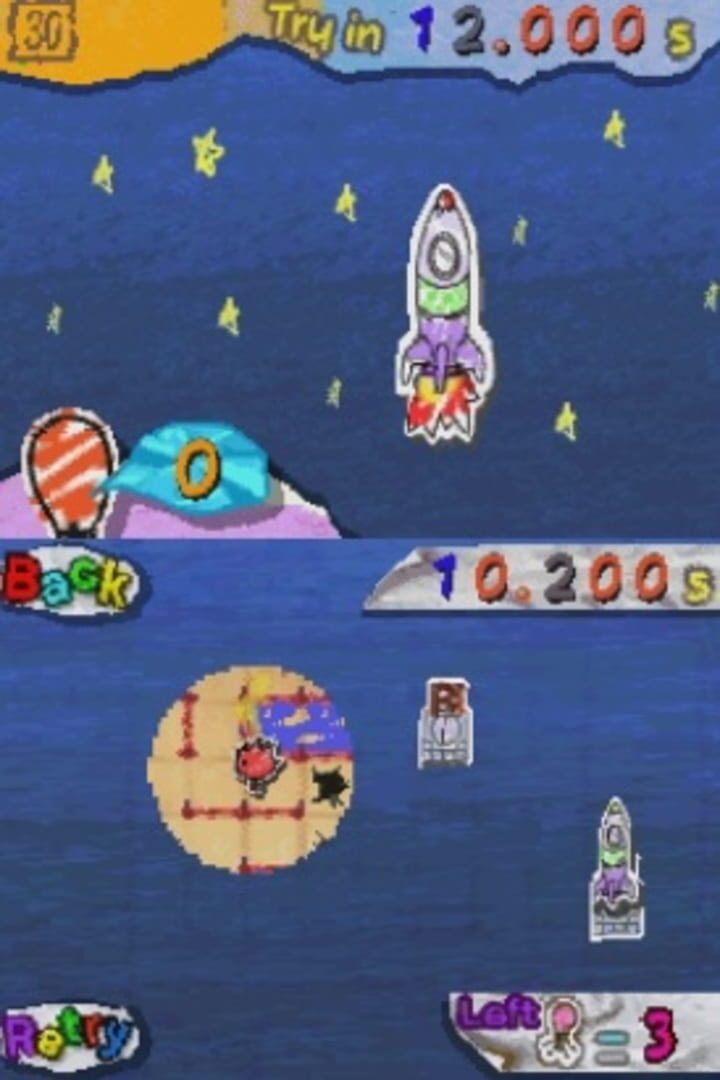
Sparky has been entrusted to bring the light to the Crayon Castle before nightfall. The castle is so packed with candles that without your help he'll never make it in time!
Screenshots
Featured in
Sparky has been entrusted to bring the light to the Crayon Castle before nightfall. The castle is so packed with candles that without your help he'll never make it in time!
Puzzle / Quiz/Trivia / Party
A DSiWare adaptation of The Price is Right.
Number Battle (Sujin Taisen: Number Battles) is a new kind of board game that combines puzzle and strategy. You take turns against human or computer opponents in an attempt to reach a target score by placing numbered tiles on the board.
Mighty Flip Champs! is a puzzle/platform game hybrid, requiring players to explore stages that vary from having two areas to up to eight areas. The objective is to get the player-character, Alta, through the stage and to find the Fishman.
Bomberman Blitz is the battle mode of Bomberman 2, distributed as DSiWare.
Puzzle / Real Time Strategy (RTS) / Strategy / Action / Survival
Plants vs. Zombies is a tower defense game in which players protect their suburban home from waves of approaching zombies by placing various plants on a grid-based lawn. Each plant has a unique defensive function, from shooting projectiles to blocking or exploding, while different zombie types require specific strategies to defeat. The game spans five stages across daytime, nighttime, backyard pool, fog, and rooftop settings, with additional puzzle, mini-game, and survival modes.
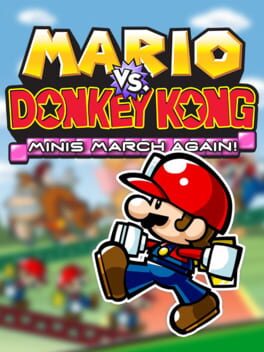
Mario vs. Donkey Kong: Minis March Again! is a puzzle video game for the Nintendo DSi. Announced at the Electronic Entertainment Expo 2009, it is the third game in the Mario vs. Donkey Kong series. It was released via the Nintendo DSiWare download service in North America on June 8, 2009, in Europe and Australia on August 21, 2009 and in Japan on October 7, 2009. It is the first DSiWare game to feature a level editor in which players can create custom-made levels and send them to players on other devices via a wireless Internet connection.
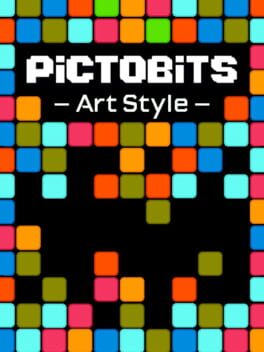
The objective of Picopict is to move coloured blocks from the bottom of the touch screen under falling blocks of corresponding colors. If a shape is made using the added block, the blocks add to an image on the top screen. For example, if players form a red block sequence, the image will gain as many red blocks as has been cleared, assuming that the any blocks of that colour remain to be added. If blocks fall as a result of clearing blocks that were attached to it, they are added to the blocks at the bottom and can be used, though a special variety of block exists that cannot be picked up, forcing players to either clear them before they land or wait for the right blocks to fall on them. As players clear more blocks, they will eventually form an image. These images are of 8-bit renditions of characters from NES games, such as Mario, Link, and Bowser.