
Developed by Square Enix Product Development Division 8 for Square Enix.
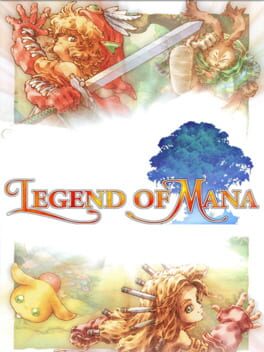
This installment of the series takes place in the world of Fa'diel on the island of Illusia where, at the center of the island, stands the famous Tree of Mana. Several years ago, on the island of Illusia, an event known the "great disaster" took place at the base of the Mana Tree and many lives were lost. During this event, a brave young boy and girl used the Sword of Mana to save the world from disaster. Now, years later, a group of orphans sets out to investigate the details of the event that took so many loved ones away from them. The player must journey through the rest of Fa'diel's five continents of Jadd, Topple, Wendell, Ishe, and Lorimar to complete the game, traveling to the other continents by riding Flammie from place to place using the "Flammie Drum."
Save the Mana Tree - from itself! Take up sword, flail, bow, and hammer, and strike back at the evil that corrupts the heart of Mana. Choose from over 180 magic gems to customize your characters with new skills and abilities to prepare for fast-paced battles. Call in up to three friends to help with your adventure in a local wireless game - get some help in a pinch, or just team up and explore!
Role-playing (RPG) / Hack and slash/Beat 'em up / Adventure / Action / Fantasy
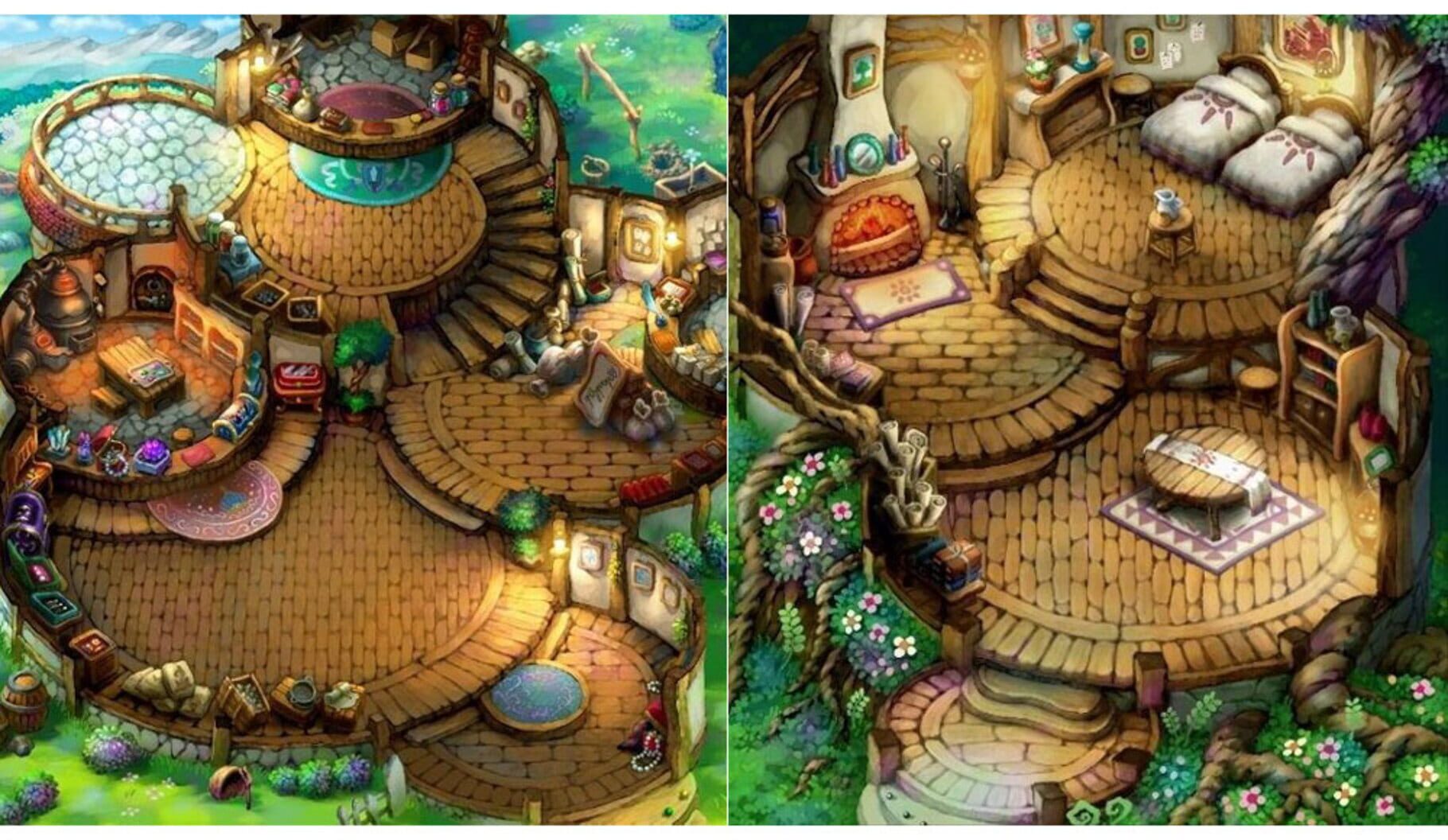
While incorporating action role-playing game elements from the three games which preceded it, Legend of Mana has its own distinct style of gameplay. Most notably, it gives the player the ability to shape the game's world of Fa'Diel according to his or her desires, a system which was incorporated through the use of "artifacts," which are gained as the player progresses through the game. The player uses the artifacts to create different towns, dungeons, etc., called "Lands", to venture to and explore. This creates a non-linear gameplay, since the game is driven by a series of what would be considered side-quests in other games. Legend of Mana features three different plots which can occur simultaneously, and which do not necessarily need to be completed for the player to finish the game. Legend of Mana was a financial success in Japan. While the game garnered considerable praise for its graphics and presentation, many critics and fans were turned off by the game's lack of a main storyline.

Role-playing (RPG) / Adventure / Fantasy / Drama
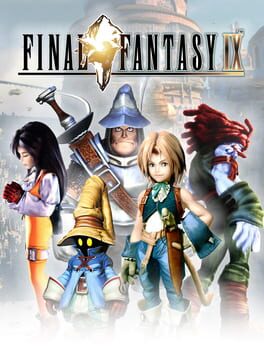
Final Fantasy IX is the ninth main installment in the FF series. The title is a return to the series's roots, with gameplay features and references to the past games featuring throughout, as well as a medieval fantasy setting and cartoonish art style as a break from the sci-fi slant style of Final Fantasy VII and Final Fantasy VIII.

Role-playing (RPG) / Adventure / Fantasy
Final Fantasy VI is the sixth main installment in the Final Fantasy series, developed and published by Square. It was the final title in the series to feature two-dimensional graphics, and the first story that did not revolve around crystals. The game gives players up to fourteen playable characters, the largest cast in the series, and features the Active Time Battle pseudo-turn based menu command system. A party can consist of up to four characters, though some events require the player to assemble three different parties of up to four and switch between them. Each character has a unique command ability, such as Terra's Trance, Locke's Steal, Edgar's Tools or Sabin's Blitz, and can also learn Magic spells from earning AP from battles with magicite equipped. Each character's rare Desperation Attack will randomly activate after using the Attack command when at critical health.

Role-playing (RPG) / Adventure / Action / Fantasy
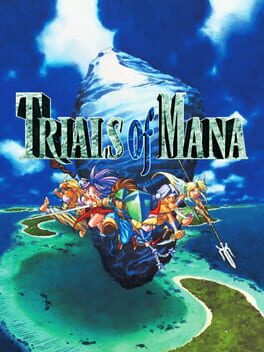
Trials of Mana is the third installment of the Mana series, developed by Square under the direction of series creator Koichi Ishii. The game takes place in a new world where, once again, the Mana Tree is under threat from an ancient evil thought sealed away. Players choose three from among six heroes as the chosen wielder of the Mana Sword and their two companions on the journey to claim the holy blade and preserve what remains of the Mana power.

Role-playing (RPG) / Adventure / Fantasy / Sandbox
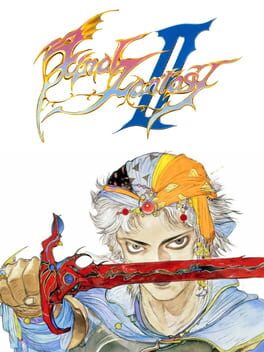
Final Fantasy II is the second installment in the Final Fantasy series, developed and published by Squaresoft. It was directed by Hironobu Sakaguchi, with Yoshitaka Amano designing the characters and Nobuo Uematsu composing the score. It was notable for being one of the first story-intensive RPGs released for console systems, and introducing many series staples, including chocobos and a character named Cid. Its story is unrelated to the original FINAL FANTASY, and its gameplay is a major departure from the previous title for eliminating the traditional experience-based progression system.

Role-playing (RPG) / Turn-based strategy (TBS) / Adventure / Fantasy / Sandbox
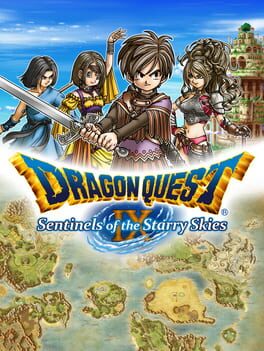
In Dragon Quest IX: Sentinels of the Starry Skies, players begin their adventure as a city guardian who is sent to retrieve a sacred trees fruits, which have the power to grant wishes. Players travel the world, conquer fearsome monsters and unravel an epic storyline. During their journey, players will encounter mighty opponents in fast-paced battles, and also interact with a colorful cast of characters.

Role-playing (RPG) / Strategy / Action / Fantasy
Diablo is an isometric strategy RPG and one of the most well-known examples of the action-RPG subgenre. Although some of the game mechanics resemble a typical RPG, all actions are done in real-time just like in an action game. The player have to kill hordes of monsters through randomized dungeon levels in order to gain experience points, gold and a variety of equipment to bolster the hero's monster-killing potency.

Role-playing (RPG) / Adventure / Card & Board Game / Fantasy / Science fiction
Final Fantasy VIII is the eighth main installment in the Final Fantasy series. The gameplay makes a departure from many series standards. While it still uses the Active Time Battle system, it deviates from the series' traditional means of boosting a character's power via leveling, although levels are not completely abandoned as they were in Final Fantasy II. In addition, it does not have a Magic Point-based system for spell-casting. Instead, magic is collected, drawn, and created from items, and is used to power up the characters via the junction system.