
Developed by Sega Enterprises, Ltd. for Tec Toy.
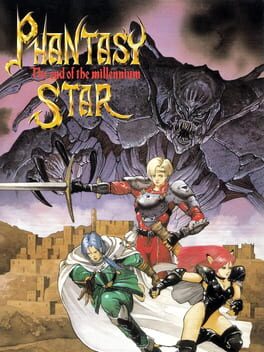
The time: Space Century 3240. The place: The Algol Star System. It began when King Lassic turned evil and let hordes of hideous, magical creatures run amok on the three planets. When her brother was killed, Alis vowed to avenge his death and put an end to Lassic forever. Join her in a journey across time and space to worlds where creatures speak...where magic and science combine to take you on the ultimate video quest. Phantasy Star is total adventure role playing with towns full of people and shops...16 level dungeons full of traps and treasure...three companions who will help you if you find them and some of the most awesome graphics ever put in a video game.
The game introduces the star system of Algo, and its three planets Palma, Motavia and Dezoris. The system is in the grip of its evil ruler, King Lassic. A young girl, Alis, sees her brother die whilst trying to investigate King Lassic, and swears to avenge his death by ridding the system of the evil influence of Lassic. Alis is soon joined on her quest by Myau - a cat-like creature, Odin - a legendary fighter, and Noah, an Esper. Together they explore the planets of Algo, gathering mystical weapons and armour, battling with Lassic in his castle in the sky, and finally discovering the hidden darkness behind it all.
Role-playing (RPG) / Action / Fantasy
Gameplay is similar to the original Phantasy Star, the first game in the series. Its battle system is turn-based, allowing the player to choose commands for their party of up to four characters. Each of the eight characters has a different set of preferred weapons and armor, as well as techniques, suited to the character's job. The player must defeat enemies in the overworld and in dungeons to advance in the game. The game abandoned the first-person view that the first game used for dungeons and battles. Phantasy Star II instead uses a top-down perspective for exploration and a third-person view in battles.

Role-playing (RPG) / Adventure / Fantasy
Final Fantasy VI is the sixth main installment in the Final Fantasy series, developed and published by Square. It was the final title in the series to feature two-dimensional graphics, and the first story that did not revolve around crystals. The game gives players up to fourteen playable characters, the largest cast in the series, and features the Active Time Battle pseudo-turn based menu command system. A party can consist of up to four characters, though some events require the player to assemble three different parties of up to four and switch between them. Each character has a unique command ability, such as Terra's Trance, Locke's Steal, Edgar's Tools or Sabin's Blitz, and can also learn Magic spells from earning AP from battles with magicite equipped. Each character's rare Desperation Attack will randomly activate after using the Attack command when at critical health.

Role-playing (RPG) / Fantasy / Science fiction
You are Chaz Ashely, a rookie Hunter straight out of training who is supported by Alys Brangwin – a crafty veteran whose good looks and prowess with the blade have earned her an awesome reputation. The two Hunters along with a cast of supporting characters will go beyond Motavia to unwittingly save their entire solar system.

Role-playing (RPG) / Adventure / Fantasy / Sandbox
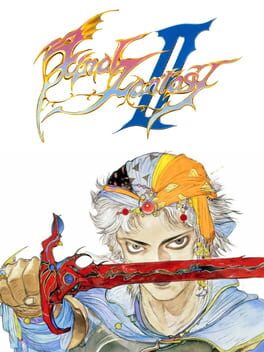
Final Fantasy II is the second installment in the Final Fantasy series, developed and published by Squaresoft. It was directed by Hironobu Sakaguchi, with Yoshitaka Amano designing the characters and Nobuo Uematsu composing the score. It was notable for being one of the first story-intensive RPGs released for console systems, and introducing many series staples, including chocobos and a character named Cid. Its story is unrelated to the original FINAL FANTASY, and its gameplay is a major departure from the previous title for eliminating the traditional experience-based progression system.

Role-playing (RPG) / Adventure / Fantasy / Drama
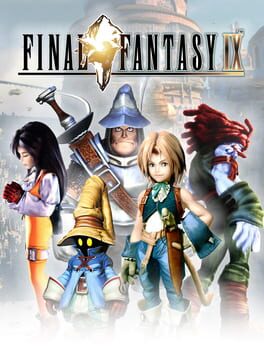
Final Fantasy IX is the ninth main installment in the FF series. The title is a return to the series's roots, with gameplay features and references to the past games featuring throughout, as well as a medieval fantasy setting and cartoonish art style as a break from the sci-fi slant style of Final Fantasy VII and Final Fantasy VIII.

Role-playing (RPG) / Adventure / Card & Board Game / Fantasy / Science fiction
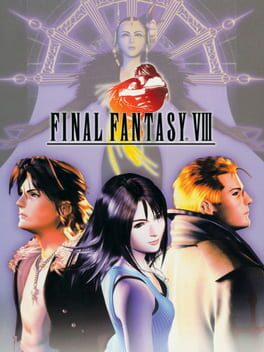
Final Fantasy VIII is the eighth main installment in the Final Fantasy series. The gameplay makes a departure from many series standards. While it still uses the Active Time Battle system, it deviates from the series' traditional means of boosting a character's power via leveling, although levels are not completely abandoned as they were in Final Fantasy II. In addition, it does not have a Magic Point-based system for spell-casting. Instead, magic is collected, drawn, and created from items, and is used to power up the characters via the junction system.

Role-playing (RPG) / Sport / Fantasy / Historical
Dragon Quest VI did not receive an enhanced remake on a console until the Nintendo DS. The Dragon Quest VI enhanced remake for the Nintendo DS was announced in late 2007 by Square Enix and was developed by ArtePiazza. A handful of changes were made to the game, some remaining controversial among fans.

Role-playing (RPG) / Adventure / Action / Fantasy
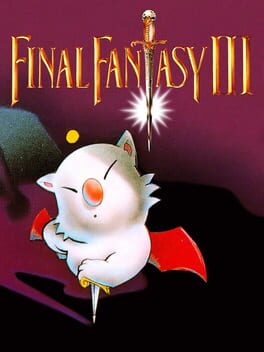
Final Fantasy III is a remake and a complete overhaul of the 1990 version with the same title. This allowed western players to finally experience the classic Final Fantasy game localized for the very first time. The graphics are rendered in full 3D and various changes have been implemented.