DOS / Atari 8-bit / TRS-80
Developed by Infocom for SystemSoft.
Planetfall is a science fiction interactive fiction computer game written by Steve Meretzky, and the eighth title published by Infocom in 1983. Like most Infocom games, thanks to the portable Z-machine, it was released for several platforms simultaneously. The original release included versions for the PC (both as a booter and for DOS) and Apple II. The Atari ST and Commodore 64 versions were released in 1985. A version for CP/M was also released. Although Planetfall was Meretzky's first title, it proved one of his most popular works and a best-seller for Infocom; it was one of five top-selling titles to be re-released in Solid Gold versions including in-game hints. Planetfall utilizes the Z-machine originally developed for the Zork franchise and was added as a bonus to the "Zork Anthology". The word planetfall is a portmanteau of planet and landfall, and occasionally used in science fiction to that effect. The book Planetfall written by Arthur Byron Cover, uses the game image on the cover, and is marketed "In the bestselling tradition of THE HITCHHIKER'S GUIDE TO THE GALAXY.[2] A sequel, Stationfall, was released in 1987. Planetfall teleports you 12,000 years into an outrageous future. You joined the Stellar Patrol to explore the galaxy, but all you've seen is the end of a mop - until your ship explodes and you're jettisoned onto a mysterious, deserted planet. Luckily, you have Floyd, a lovable multi-purpose robot with the personality of a mischievous 8-year-old. He's the ideal companion with whom to brave your new world, as you dare its dangers and uncover its secrets.
After the fall of the Second Galactic Union in 1716 GY, a ten-thousand-year dark age settled upon the galaxy. nterstellar travel was non-existent, and many star systems descended into a near-barbaric state, burning coal and as for energy, and growing food directly from the exposed topsoil. In 11,203 GY, a treaty between the Empires of Tremain and Gallium formed the Third Galactic Union. Ships of the tellar Patrol (a pseudo-military wing of the Union government on Tremain) began exploring the galaxy, searching for he human civilizations that are the remnants of the Second Union. You are a native of the planet Gallium. Although it is one of the most politically powerful worlds in the Union, Gallium is no garden spot. In fact, the Gallium Chamber of Commerce brochure entitled "Ten Great Reasons to Visit Gallium" ends on page 3. The author ran out of reasons after listing just two. For five generations, your family has served in he Stellar Patrol. Your great-great-grandfather was a High Admiral and one of the founding officers of the Patrol. It as taken for granted that when you came of age you would join up. Now, more than a year after signing up, and two months after being transferred to the S.P.S. Feinstein, you are still only ranked Ensign Seventh Class. Your superior officer, Ensign First Class Blather, has been making your life iserable. You're beginning to wonder if you.re really cut out for the Stellar Patrol. But then the unthinkable happens...
Puzzle / Adventure / Science fiction / Comedy
The Hitchhiker’s Guide to the Galaxy is a classic Interactive Fiction game. Though divergent from the source material, the main characters, locations, and concepts are here. Unlike the book, death can come quickly if Arthur fails to observe his surroundings, collect inventory, talk to people, and consult the Guide. Don't panic!

Puzzle / Adventure / Science fiction
The year is 2186. Humanity has established colonies on the moon, Mars, and several of the larger asteroids. Earth's sky is dotted with space habitats, and the spaceways are always busy. As usual, there is the urgent need for energy to power this advanced civilization; one of the primary sources of that energy is quantum black holes. In Starcross, you are a miner of black holes, scouring the asteroid belt in your one-man survey ship. Finding and harnessing a single black hole can make a person's fortune. It's a lonely business, fraught with the known and unknown hazards of space. You've equipped your ship, the M.C.S. STARCROSS, with the best gear you could afford. You've put everything into this venture, and though you've tried before, you somehow sense that this time will be different.

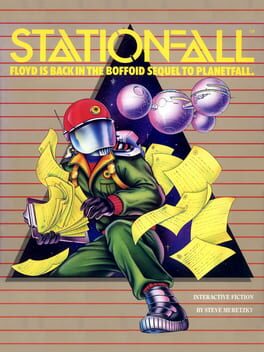
Stationfall is an interactive fiction computer game written by Steve Meretzky and released by Infocom in 1987. Like the majority of Infocom's works, it was released simultaneously for several popular computer platforms of the time, such as the Commodore 64, Apple II, and PC. The game is a sequel to Planetfall, one of Infocom's most popular titles. It is Infocom's twenty-fifth game. Following the events on Resida in Planetfall, the player's character received a promotion from lowly Ensign Seventh Class to Lieutenant First Class. The life of an officer in the Stellar Patrol is no better than that of a humble enlistee, however. Five years after the thrills of saving an entire planet from destruction, the character is stuck in a boring desk job that demands piles of tedious paperwork instead of menial cleaning duties. A typically boring assignment comes in: accompany a spacetruck to a space station and pick up a load of "Request for Stellar Patrol Issue Regulation Black Form Binders Request Form Forms". To make things even more dull, spacetrucks are fully automated, so it will pilot itself once the proper coordinates are entered. But the task does authorize the use of a robot assistant, and coincidentally enough, Floyd, a beloved companion revived at the end of Planetfall, is one of the choices.

You must save the planet above by repairing the Complex you are frozen within. You must do it before they arrive to shut you down. And you must do it not with your own hands, but with those of your robots.

Adventure / Science fiction / Comedy
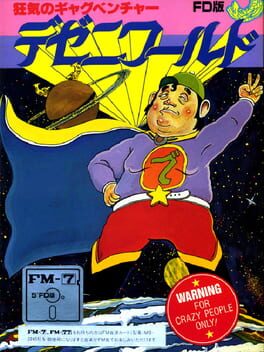
Dezeni World is a sequel to Dezeni Land. Like its predecessor, it is set in a theme park, this time with a broader range of parodies. Gameplay-wise, it is very similar to the previous title. The player moves from screen to screen with key abbreviations representing the four directions, and interacts with the environment by typing combinations of verbs and nouns. The game is fairly simple and develops in a comparatively linear fashion, with only a few items needed to access the next area, and puzzles mostly involving talking to people or using the right item at the right place.

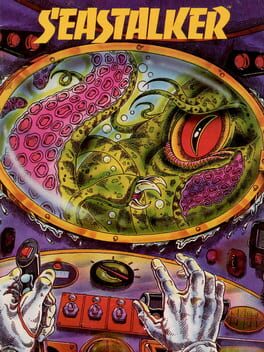
Seastalker is an interactive fiction computer game designed by Stu Galley and Jim Lawrence and published by Infocom in 1984. Like most of Infocom's works, it was released simultaneously for several popular computer platforms of the time, such as the Commodore 64, Apple II, and IBM PC. The game was marketed as an introduction to interactive fiction for pre-teen players. It is Infocom's twelfth game. Galley and Lawrence later wrote Moonmist for Infocom. The player's character is a young inventor and marine scientist. A research facility called the Aquadome issues a call for help, indicating that the undersea structure is being attacked by a sea monster. With helpful assistant Tip, the player must navigate to the Aquadome in the new untested two-person submarine Scimitar and investigate the problem. But that isn't all... it looks like there may be a saboteur within the Aquadome as well.

Point-and-click / Adventure / Fantasy / Science fiction
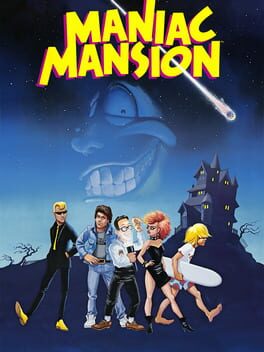
Maniac Mansion is a 1987 graphic adventure video game developed and published by Lucasfilm Games. It follows teenage protagonist Dave Miller as he attempts to rescue his girlfriend from a mad scientist, whose mind has been enslaved by a sentient meteor. The player uses a point-and-click interface to guide Dave and two of his six playable friends through the scientist's mansion while solving puzzles and avoiding dangers. Gameplay is nonlinear, and the game must be completed in different ways based on the player's choice of characters. Initially released for the Commodore 64 and Apple II, Maniac Mansion was Lucasfilm Games' first self-published product.

A Mind Forever Voyaging (AMFV) is a 1985 interactive fiction game, intended as a polemical critique of Ronald Reagan's politics.