Developed by Game Freak for Nintendo.
Role-playing (RPG) / Turn-based strategy (TBS) / Adventure / Action / Fantasy
Pokémon Diamond Version and Pearl Version are role-playing games (RPGs) developed by Game Freak and published by Nintendo for the Nintendo DS. With the enhanced remake Pokémon Platinum, the games comprise the fifth installment and fourth generation of the Pokémon series of RPGs. First released in Japan on September 28, 2006, the games were later released to North America, Australia, and Europe over the course of 2007. Like previous Pokémon games, Diamond and Pearl chronicle the adventures of a young Pokémon trainer as he/she trains and battles Pokémon while also thwarting the schemes of a criminal organization. The games add many new features, such as Internet play over the Nintendo Wi-Fi Connection and changes to battle mechanics and Pokémon Contests, along with addition of 107 new Pokémon. The games are independent of each other but feature largely the same plot and while both can be played separately, it is necessary to trade between them in order to complete the games' Pokédexes.
The games chronicle the adventures of a new Pokémon trainer who strives to become the Pokémon League Champion by collecting and training Pokémon. Like most games in the series, Diamond and Pearl feature eight Pokémon gyms led by Gym Leaders, professional trainers whose expertise lies in a particular Pokémon type. Gym Leaders (Roark, Gardenia, Maylene, Wake, Fantina, Byron, Candace, and Volkner) serve as bosses and reward skilled trainers with Gym badges, key to the advancement of the plot. As in Ruby and Sapphire, the protagonist must also thwart the schemes of a crime syndicate (and here, it is Team Galactic), who plans to use Pokémon to restructure the region into a utopia. Like all other Pokémon RPGs, Diamond and Pearl begin in the protagonist's hometown. After viewing a television report about a media-conducted search for a Red Gyarados, which was spotted at a faraway lake (Johto's Lake of Rage) the protagonist and his or her best friend travel together to check the local lake for a Pokémon like it. They spot Professor Rowan, a Pokémon evolution researcher, and his assistant, the playable character not selected in the game: Lucas (boy) or Dawn (girl). After a short discussion, the professor and his assistant leave the lake, leaving a briefcase behind. When they are attacked by wild Starly, the protagonist and his or her rival examine the case. The player is then given a choice among the three Pokémon found in the briefcase (Turtwig, Chimchar, or Piplup) with which to battle the Starly. After defeating the Starly, Lucas or Dawn retrieves and returns the briefcase to the professor. Noticing that a bond has been forged between the young protagonist and his or her chosen Pokémon, Rowan offers it to him or her, asking that he or she embark on a journey and fill his or her Pokédex. The protagonist encounters the main antagonist, Team Galactic, early in the game, when he or she must save Professor Rowan from its thugs; however, its motives are unclear until later. The protagonist encounters the Team twice (when it takes over a wind farm and when it sets up a base in Eterna City) before it takes over Sinnoh's three lakes in an attempt to capture the Mirage Pokémon (Uxie, Azelf, and Mesprit). Shortly after the player earns his or her seventh Gym Badge, Team Galactic captures the Mirage Pokémon and imprisons them inside the science laboratory of the Team Galactic Headquarters Building, where its members extract crystals from the Pokémon to create the Red Chain, an object that can control the legendary Pokémon Palkia (in Pearl) or Dialga (in Diamond) (both in Pokémon Platinum, though Giratina appears after this). After releasing the trio, the protagonist is able to access the cave atop Mt. Coronet, where the leader of Team Galactic awakens Dialga or Palkia. The legendary Pokémon's powers begin to overwhelm Sinnoh, causing the newly free Uxie, Azelf, and Mesprit to attempt to stop it. The player then battles Palkia/Dialga; after defeating or capturing the Pokémon, Sinnoh returns to normal. After this, the player will continue, eventually battling the Sinnoh Region Pokémon League's Elite Four: Aaron, Bertha, Flint, and Lucian. After defeating all four members, the player will battle the Sinnoh League champion, a woman named Cynthia, who had appeared before in the game. If the protagonist beats Cynthia, he or she is the new Sinnoh League champion, beating the game. After the player beats the game, there is a new island to explore that is filled with other types of Pokémon. His or her old friend, who challenged him or her to battles multiple times before, will be waiting for him or her here. The old friend will challenge the player to another battle. On this island, there are also stores and a tournament center.
Role-playing (RPG) / Turn-based strategy (TBS) / Adventure / Action / Fantasy
Pokemon Platinum is a role-playing game with adventure elements and an enhanced version of Pokemon Diamond and Pearl. Played from a top-down perspective, it has the player explore the Sinnoh region across towns, routes, and caves, catching and training Pokemon and battling them in turn-based combat. The core goals involve building a team, challenging Gym Leaders, and completing the Pokedex. This version adds new areas, expanded online features for trading and battling, and gives the Legendary Pokemon Giratina and its Distortion World a central role. It connects with other games in the generation to trade and transfer Pokemon.

Role-playing (RPG) / Turn-based strategy (TBS) / Adventure / Action / Fantasy
Pokémon Gold, along with Pokémon Silver, are the sequels to Pokémon Red and Blue. They offer 100 new Pokémon to capture and train, 8 more Gyms to take on and a new Pokémon League challenge. Featuring an expanded post-game, Pokémon Gold and Silver additionally offer extra content from the previous entries in the series.

Role-playing (RPG) / Turn-based strategy (TBS) / Adventure / Action / Fantasy
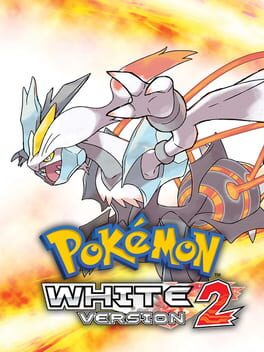
Pokémon White Version 2 and Pokémon Black Version 2 are the second and final paired versions of Generation V and are the sequels of Pokémon Black and White, respectively. Both games were revealed on Pokémon Smash! by Junichi Masuda, and subsequently the official Japanese and international Pokémon websites, on February 26, 2012. They were released in Japan on June 23, 2012, in North America on October 7, 2012, in Australia on October 11, 2012, in Europe on October 12, 2012 and in South Korea on November 8, 2012. The games feature two new forms of Kyurem that serve as the game mascots of the games: Black Kyurem for Black 2 and White Kyurem for White 2.

Role-playing (RPG) / Turn-based strategy (TBS) / Adventure / Action / Fantasy
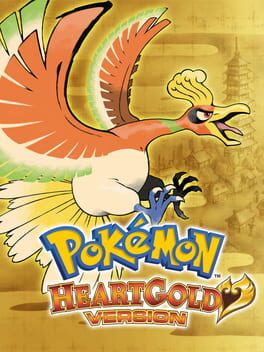
Pokémon HeartGold Version and Pokémon SoulSilver Version are paired Generation IV remakes of the Generation II games Pokémon Gold and Silver. Much like how Pokémon FireRed and LeafGreen revisited the Generation I story of Kanto, HeartGold and SoulSilver retell the story of Johto, with the player's starting town being New Bark Town. While the games feature several expansions in key areas, the overall plot follows the same direction as the original Gold and Silver. Some aspects exclusive to Crystal are also included. Like how FireRed and LeafGreen could link up with Ruby, Sapphire, and Emerald to complete the Pokédex by trading regionally exclusive Pokémon, HeartGold and SoulSilver can link up with Diamond, Pearl, and Platinum to obtain Pokémon unavailable in Johto and Kanto (such as the Sinnoh starters) and vice versa. Kris, despite being the female counterpart of Crystal's player character, is not included as the female player character, with a new character instead taking her place. Whether she is chosen to be the player character or not, this new character will still appear in the game. The unselected protagonist will take a pseudo-rival role similar to the unselected characters of Ruby, Sapphire, Emerald, Diamond, Pearl, and Platinum. The games were released on September 12, 2009 in Japan, February 4, 2010 in Korea, March 14, 2010 in North America, March 25, 2010 in Australia and March 26, 2010 in Europe (this excludes the Netherlands, Luxembourg and parts of Belgium due to an in-game save error, with the patched copies later released on April 2, 2010).

Role-playing (RPG) / Turn-based strategy (TBS) / Adventure / Action / Fantasy
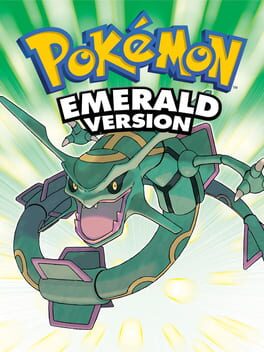
Pokémon Emerald Version is a sister game to Pokémon Ruby and Sapphire. Emerald Version provided the main storyline with more depth and length, as well as making small aesthetic changes to the world and adding unique animations for each Pokémon.

Role-playing (RPG) / Turn-based strategy (TBS) / Adventure / Action / Fantasy
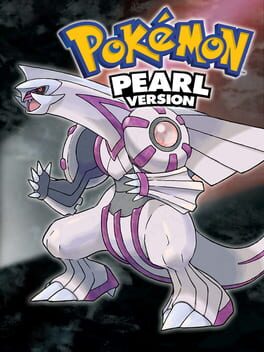
Pokémon Pearl Version and Diamond Version are role-playing games (RPGs) developed by Game Freak and published by Nintendo for the Nintendo DS. With the enhanced remake Pokémon Platinum, the games comprise the fifth installment and fourth generation of the Pokémon series of RPGs. First released in Japan on September 28, 2006, the games were later released to North America, Australia, and Europe over the course of 2007. Like previous Pokémon games, Diamond and Pearl chronicle the adventures of a young Pokémon trainer as he/she trains and battles Pokémon while also thwarting the schemes of a criminal organization. The games add many new features, such as Internet play over the Nintendo Wi-Fi Connection and changes to battle mechanics and Pokémon Contests, along with addition of 107 new Pokémon. The games are independent of each other but feature largely the same plot and while both can be played separately, it is necessary to trade between them in order to complete the games' Pokédexes.

Role-playing (RPG) / Adventure / Action / Fantasy
Pokemon Crystal is an enhanced version of Pokemon Gold and Silver and a role-playing game played from a top-down perspective. As in the earlier versions, the player explores the Johto region, catches and trains Pokemon, and battles other Trainers in turn-based combat while earning Gym Badges and filling out the Pokedex. Crystal keeps the same core adventure while adding refinements, including the option to play as a female character and animated Pokemon sprites. It retains series staples such as a real-time clock, Pokemon breeding, and trading and battling with other games via a link connection.

Role-playing (RPG) / Turn-based strategy (TBS) / Adventure / Action / Fantasy
Pokémon LeafGreen Version and Pokémon FireRed Version are a pair of core series Generation III games that are set in the Kanto region. They were released in Japan on January 29, 2004, in North America on September 9, 2004, in Australia on September 23, 2004 and in Europe on October 1, 2004. As the first remakes in the Pokémon franchise, the games revisit the original pair of Pokémon games, Pokémon Red and Green Versions, and so feature all of the characters, plot elements, and challenges of them, but with several important upgrades to bring them up to speed with other Generation III games. The Game Boy Advance Wireless Adapter was initially included with the games when they were first released, eliminating the need for Game Link Cables when trading between the two games (and later Pokémon Emerald Version). In later copies, it was sold separately. FireRed and LeafGreen went on to become the second best-selling games of the Game Boy Advance, only behind Pokémon Ruby and Sapphire Versions. They also received Nintendo's Player's Choice awards.