Developed by HAL Laboratory for Gradiente.
Simulator / Strategy / Turn-based strategy (TBS) / Action / Science fiction
While Pokémon Stadium 2 does have a storyline, progress in the game can be made by winning Cups in the Stadium and completing the Gym Leader Castle. When all Cups have been won and the Gym Leader Castle completed, the player's Rival will appear. Defeating the Rival will unlock Round 2, in which the player must re-challenge the Stadium, Gym Leader Castle, and the Rival in order to complete the game. But, they have different Pokémon and the difficulty is much higher. Stadium: The player begins by choosing 6 different Pokémon. There are 250 different Pokémon to choose from; including some legendary Pokémon. Pokémon tournaments take place in the Stadium. There are four Cups to participate in. Each round consists of eight battles, and every Cup except the Little and Prime Cup consists of four rounds, named after Poké Balls, that must be cleared to win that Cup.
Role-playing (RPG) / Turn-based strategy (TBS) / Action / Kids
In the game's Stadium Mode, one player competes in 80 different battles, divided into four tournaments. Beat the Stadium Mode and you're in for a bonus battle against the ultimate Pokémon warrior, Mewtwo, as well as a secret mode that gives you 80 brand-new, and devilishly tough battles. There is virtually no way you can beat the secret mode without having trained your own, elite Pokémon. One to four players compete against each other or the computer in a no-holds-barred battle with customizable rules. You can select rental Pokémon for these battles -- but that makes them much too predictable since their selection of techniques isn't determined by the trainer. You can also select quick and easy versus and random battles.

Role-playing (RPG) / Turn-based strategy (TBS) / Adventure / Action / Fantasy
Pokémon Gold, along with Pokémon Silver, are the sequels to Pokémon Red and Blue. They offer 100 new Pokémon to capture and train, 8 more Gyms to take on and a new Pokémon League challenge. Featuring an expanded post-game, Pokémon Gold and Silver additionally offer extra content from the previous entries in the series.

Role-playing (RPG) / Adventure / Action / Fantasy
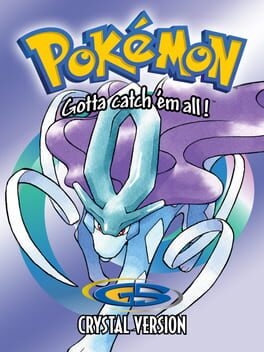
Pokemon Crystal is an enhanced version of Pokemon Gold and Silver and a role-playing game played from a top-down perspective. As in the earlier versions, the player explores the Johto region, catches and trains Pokemon, and battles other Trainers in turn-based combat while earning Gym Badges and filling out the Pokedex. Crystal keeps the same core adventure while adding refinements, including the option to play as a female character and animated Pokemon sprites. It retains series staples such as a real-time clock, Pokemon breeding, and trading and battling with other games via a link connection.

Role-playing (RPG) / Turn-based strategy (TBS) / Adventure / Action / Fantasy
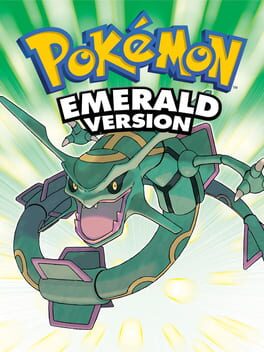
Pokémon Emerald Version is a sister game to Pokémon Ruby and Sapphire. Emerald Version provided the main storyline with more depth and length, as well as making small aesthetic changes to the world and adding unique animations for each Pokémon.

Role-playing (RPG) / Turn-based strategy (TBS) / Adventure / Action / Fantasy
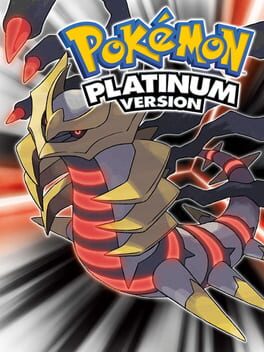
Pokemon Platinum is a role-playing game with adventure elements and an enhanced version of Pokemon Diamond and Pearl. Played from a top-down perspective, it has the player explore the Sinnoh region across towns, routes, and caves, catching and training Pokemon and battling them in turn-based combat. The core goals involve building a team, challenging Gym Leaders, and completing the Pokedex. This version adds new areas, expanded online features for trading and battling, and gives the Legendary Pokemon Giratina and its Distortion World a central role. It connects with other games in the generation to trade and transfer Pokemon.

Role-playing (RPG) / Turn-based strategy (TBS) / Adventure / Action / Fantasy
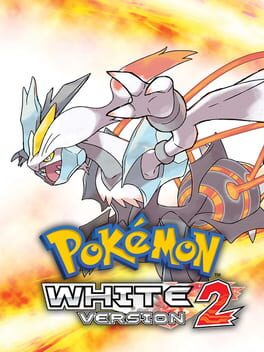
Pokémon White Version 2 and Pokémon Black Version 2 are the second and final paired versions of Generation V and are the sequels of Pokémon Black and White, respectively. Both games were revealed on Pokémon Smash! by Junichi Masuda, and subsequently the official Japanese and international Pokémon websites, on February 26, 2012. They were released in Japan on June 23, 2012, in North America on October 7, 2012, in Australia on October 11, 2012, in Europe on October 12, 2012 and in South Korea on November 8, 2012. The games feature two new forms of Kyurem that serve as the game mascots of the games: Black Kyurem for Black 2 and White Kyurem for White 2.

Role-playing (RPG) / Turn-based strategy (TBS) / Adventure / Action / Fantasy
Pokémon HeartGold Version and Pokémon SoulSilver Version are paired Generation IV remakes of the Generation II games Pokémon Gold and Silver. Much like how Pokémon FireRed and LeafGreen revisited the Generation I story of Kanto, HeartGold and SoulSilver retell the story of Johto, with the player's starting town being New Bark Town. While the games feature several expansions in key areas, the overall plot follows the same direction as the original Gold and Silver. Some aspects exclusive to Crystal are also included. Like how FireRed and LeafGreen could link up with Ruby, Sapphire, and Emerald to complete the Pokédex by trading regionally exclusive Pokémon, HeartGold and SoulSilver can link up with Diamond, Pearl, and Platinum to obtain Pokémon unavailable in Johto and Kanto (such as the Sinnoh starters) and vice versa. Kris, despite being the female counterpart of Crystal's player character, is not included as the female player character, with a new character instead taking her place. Whether she is chosen to be the player character or not, this new character will still appear in the game. The unselected protagonist will take a pseudo-rival role similar to the unselected characters of Ruby, Sapphire, Emerald, Diamond, Pearl, and Platinum. The games were released on September 12, 2009 in Japan, February 4, 2010 in Korea, March 14, 2010 in North America, March 25, 2010 in Australia and March 26, 2010 in Europe (this excludes the Netherlands, Luxembourg and parts of Belgium due to an in-game save error, with the patched copies later released on April 2, 2010).

Traverse various areas and take photographs of different types of Pokémon by discovering their secrets. Capture the perfect frame to gain bonus points from Professor Oak in order to unlock helpful items and locate and photograph the elusive Mew, a legendary Pokémon whose existence has never been recorded.