Developed by Camelot Software Planning for Tec Toy.
Role-playing (RPG) / Strategy / Turn-based strategy (TBS) / Fantasy
As a student of Astral the wizard, you and your friends study all the usual subjects: reading, writing, and sword fighting. As your time at school draws to an end, dark events are taking place on the island of Grans. The two Jewels which seal the Door to Darkness have been stolen, allowing a creature of awesome power to be unleashed. Finding where the Jewels were taken, and why, is a task only the bravest of adventurers can undertake.
In a shrine south of Granseal Castle, a thief named Slade unwittingly breaks the power of a magic seal by stealing the jewels of Light and Darkness; this unseals the demon king Zeon trapped therein. The following day, King Granseal falls sick when he is attacked by an unknown creature and Sir Astral, the court's advisor, along with his apprentices, Bowie the squire, Sarah the healer and Chester the knight, investigate these events at the castle. They find that the door to the Tower of Ancients has been unlocked and stands open. Greeting their arrival in the tower are devils named "Gizmos" springing forth to attack, though their ultimate intentions are unknown. Upon their defeat, the Gizmo that appears to be the leader flees. It is discovered thereafter to have possessed King Granseal. Sir Astral and the nascent Shining Force visit the king, finding him possessed. Sir Astral exorcises the demon, which promptly flees. The Minister, in place of King Granseal who is looking over a fainted Astral, then orders the slaying of the Gizmo by a platoon of Granseal's soldiers. When the true danger of the opened door is realized, the Shining Force must fight against the invading armies of Zeon to find the Holy Sword and the stolen jewels so that they may once again defeat and reseal the Devil King Zeon in Arc Valley.
Role-playing (RPG) / Strategy / Turn-based strategy (TBS) / Fantasy
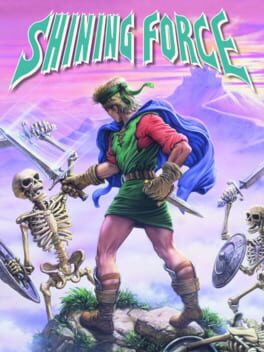
Shining Force is a turn-based tactical RPG. Battles take place in square grids, and each unit occupies 1 square. Units can belong to one of two sides: allies (controlled by the player) or enemies (controlled by the computer AI). Each unit can move up to a fixed amount of squares along the battlefield, determined by its Move statistic. Depending on its location relative to enemies and to allies, a unit also has the option to attack, cast a spell, use an item, search (if adjacent to a treasure chest), or stay and do nothing, all of which end the unit's turn. Some commands, such as equipping or dropping items, don't count as actions, and the character's turn is able to continue. The order of the turns is determined by the unit's agility score and a random seed. Units can use offensive actions, such as physical attacks or offensive magic, only on units belonging to the other side and can use supportive actions, such as healing magic, stat-enhancing magic, and items, only on units belonging to the same side.

Role-playing (RPG) / Adventure / Fantasy
Final Fantasy VI is the sixth main installment in the Final Fantasy series, developed and published by Square. It was the final title in the series to feature two-dimensional graphics, and the first story that did not revolve around crystals. The game gives players up to fourteen playable characters, the largest cast in the series, and features the Active Time Battle pseudo-turn based menu command system. A party can consist of up to four characters, though some events require the player to assemble three different parties of up to four and switch between them. Each character has a unique command ability, such as Terra's Trance, Locke's Steal, Edgar's Tools or Sabin's Blitz, and can also learn Magic spells from earning AP from battles with magicite equipped. Each character's rare Desperation Attack will randomly activate after using the Attack command when at critical health.

Puzzle / Adventure / Action / Fantasy
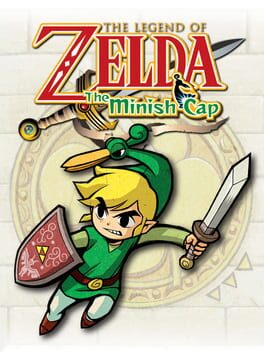
The Legend of Zelda: The Minish Cap is a top-down action adventure game that tells the origins of the evil Vaati from Four Swords. Like most other titles in the series, The Minish Cap features the fully explorable land of Hyrule, although it can be viewed from the eyes of a human or the eyes of a Minish, a race of tiny people and an alternate form that Link can transform into. Unlike the multiplayer focus of the other games in the series, The Minish Cap retains the original form of exploration and dungeons as seen in A Link to the Past, Oracle of Seasons, and Oracle of Ages, as well as returning characters and game mechanics such as Malon and the Spin Attack. New features include fusing Kinstones and shrinking to the size of a Minish.

Puzzle / Adventure / Action / Fantasy
Venture back to Hyrule and an age of magic and heroes. The predecessors of Link and Zelda face monsters on the march when a menacing magician takes over the kingdom. Only you can prevent his evil plot from shattering the land of Hyrule. In your quest, you'll venture into twisting mazes, dungeons, palaces and shadowy forests. Test your mettle with mighty swords and magical weapons. Or heft a boulder and hurl it at your enemies. If the going gets tough, dive into a river - you can swim to escape! Learn powerful spells, locate magical artifacts and solve the mysteries of the evil magician and the hidden realm of Hyrule.

Role-playing (RPG) / Adventure / Fantasy / Drama
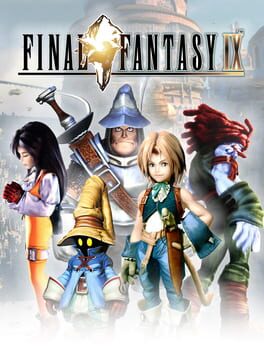
Final Fantasy IX is the ninth main installment in the FF series. The title is a return to the series's roots, with gameplay features and references to the past games featuring throughout, as well as a medieval fantasy setting and cartoonish art style as a break from the sci-fi slant style of Final Fantasy VII and Final Fantasy VIII.

Role-playing (RPG) / Adventure / Fantasy / Sandbox
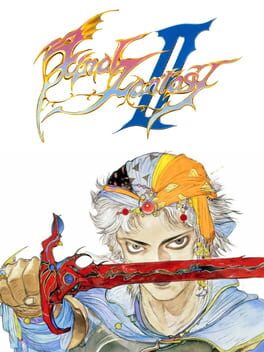
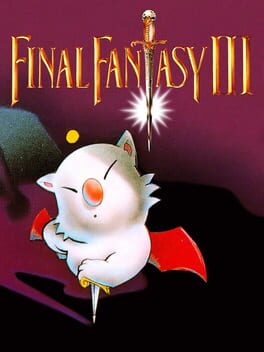
Final Fantasy II is the second installment in the Final Fantasy series, developed and published by Squaresoft. It was directed by Hironobu Sakaguchi, with Yoshitaka Amano designing the characters and Nobuo Uematsu composing the score. It was notable for being one of the first story-intensive RPGs released for console systems, and introducing many series staples, including chocobos and a character named Cid. Its story is unrelated to the original FINAL FANTASY, and its gameplay is a major departure from the previous title for eliminating the traditional experience-based progression system.

Role-playing (RPG) / Adventure / Card & Board Game / Fantasy / Science fiction
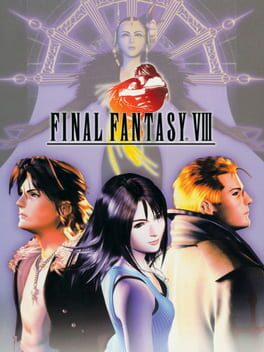
Final Fantasy VIII is the eighth main installment in the Final Fantasy series. The gameplay makes a departure from many series standards. While it still uses the Active Time Battle system, it deviates from the series' traditional means of boosting a character's power via leveling, although levels are not completely abandoned as they were in Final Fantasy II. In addition, it does not have a Magic Point-based system for spell-casting. Instead, magic is collected, drawn, and created from items, and is used to power up the characters via the junction system.

Role-playing (RPG) / Turn-based strategy (TBS) / Tactical / Fantasy
School is out for the summer, but mischievous Luso Clemens must first face detention to make up for his misbehavior. Alone in the library, he stumbles upon an ancient book with magical powers that summons him to the mystical land of Ivalice. Warped into the middle of a battlefield, Luso joins Cid and his clan to set off on an adventurous journey looking for a way home.