Developed by JP Home Computers for Masaya.
Shooter / Role-playing (RPG) / Simulator / Action / Science fiction
An early first-person role-playing shooter released by Arysis Software for the PC-88 and PC-98 in 1988, and later ported to the Sharp X68000 and Mega Drive/Genesis. Ahead of its time, it had 3D polygon graphics, FPS gameplay, strafing controls, open-world space exploration, and an epic sci-fi space opera plot.

Role-playing (RPG) / Adventure / Card & Board Game / Fantasy / Science fiction
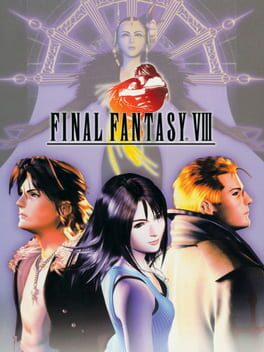
Final Fantasy VIII is the eighth main installment in the Final Fantasy series. The gameplay makes a departure from many series standards. While it still uses the Active Time Battle system, it deviates from the series' traditional means of boosting a character's power via leveling, although levels are not completely abandoned as they were in Final Fantasy II. In addition, it does not have a Magic Point-based system for spell-casting. Instead, magic is collected, drawn, and created from items, and is used to power up the characters via the junction system.

Role-playing (RPG) / Adventure / Fantasy
Final Fantasy VI is the sixth main installment in the Final Fantasy series, developed and published by Square. It was the final title in the series to feature two-dimensional graphics, and the first story that did not revolve around crystals. The game gives players up to fourteen playable characters, the largest cast in the series, and features the Active Time Battle pseudo-turn based menu command system. A party can consist of up to four characters, though some events require the player to assemble three different parties of up to four and switch between them. Each character has a unique command ability, such as Terra's Trance, Locke's Steal, Edgar's Tools or Sabin's Blitz, and can also learn Magic spells from earning AP from battles with magicite equipped. Each character's rare Desperation Attack will randomly activate after using the Attack command when at critical health.

Role-playing (RPG) / Adventure / Fantasy / Sandbox
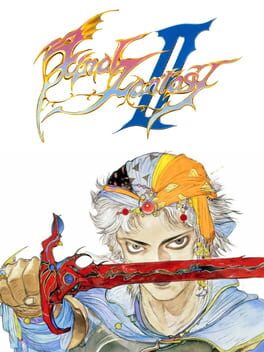
Final Fantasy II is the second installment in the Final Fantasy series, developed and published by Squaresoft. It was directed by Hironobu Sakaguchi, with Yoshitaka Amano designing the characters and Nobuo Uematsu composing the score. It was notable for being one of the first story-intensive RPGs released for console systems, and introducing many series staples, including chocobos and a character named Cid. Its story is unrelated to the original FINAL FANTASY, and its gameplay is a major departure from the previous title for eliminating the traditional experience-based progression system.

Shooter / Platform / Adventure / Action / Science fiction
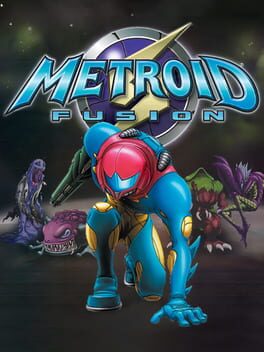
Metroid Fusion is a side-scrolling action-adventure game that combines exploration, combat, and progression within a structured environment. Players navigate distinct sectors, acquire new abilities, and unlock access to previously restricted areas as they advance. The game emphasizes guided objectives alongside ability-based traversal, with a focus on atmospheric tension, evolving threats, and progression through upgrades.

Role-playing (RPG) / Adventure / Fantasy / Drama
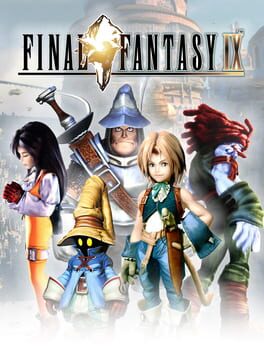
Final Fantasy IX is the ninth main installment in the FF series. The title is a return to the series's roots, with gameplay features and references to the past games featuring throughout, as well as a medieval fantasy setting and cartoonish art style as a break from the sci-fi slant style of Final Fantasy VII and Final Fantasy VIII.

Real Time Strategy (RTS) / Role-playing (RPG) / Simulator / Action / Science fiction
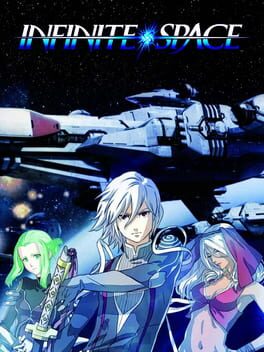
Infinite Space, a role playing game exclusively for the Nintendo DS portable handheld system, takes place in outer space and gives players the ability to control, build, outfit and customize more than 150 spaceships. Infinite Space stretches the DS hardware to the limit, offering over 200 characters and the ability to control multiple spaceships at any one time. Releasing in 2009 and currently being produced by Atsushi Inaba and directed by Hifumi Kouno (from developer Nude Maker), Infinite Space is one of the most complex RPG titles developed for the DS to date, and shows PlatinumGames commitment to teaming up with the most creative minds in gaming.

Platform / Adventure / Arcade / Action / Science fiction
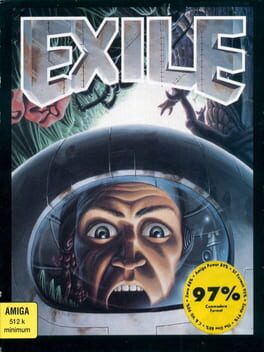
Exile is a single-player action-adventure video game originally published for the Acorn Electron and BBC Micro in 1988 by Superior Software and later ported to the Commodore 64, Amiga, CD32 and Atari ST, all published by Audiogenic. Exile's game physics engine qualifies it to be the first game to have a complete Newtonian motion model. At the time of its release it was considered to push the boundaries of what was possible on home computers, particularly on the 8-bit platforms. It remains probably the most complex game available for the BBC Micro. The game was designed and programmed by Peter Irvin (author of Starship Command, a space shoot-em-up with an innovative control system) and Jeremy Smith (author of Thrust, a game based on cave exploration with a simpler physics model).

Shooter / Tactical / Adventure / Action / Science fiction
Metal Gear Solid is a stealth game created by Hideo Kojima which follows the MSX2 video games Metal Gear and Metal Gear 2: Solid Snake. Despite a transition to 3D, Metal Gear Solid's gameplay remains similar to his predecessors. The game utilizes a traditional top-down view and the player must navigate the protagonist Solid Snake through the game's areas without being detected. Detection will set off an alarm which draws armed enemies to his location. Conversations with Snake's allies and cutscenes are used extensively to advance the plot and gain more insight into it. Metal Gear Solid is regarded as one of the greatest and most important video games of all time, and helped popularize the stealth genre and in-engine cinematic cutscenes.