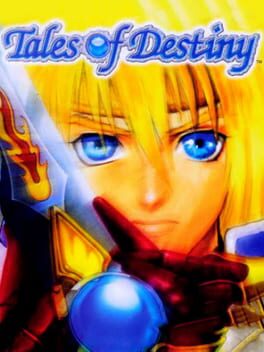

Tales of Destiny is a follow-up to Tales of Phantasia. Like its predecessor, it has the structure of traditional Japanese role-playing games, but substitutes turn-based combat for action-oriented one. Battles take place on separate side-scrolling screens and resemble those of a fighting game. The player controls the main hero, navigating him on the battle screen and performing various attacks and combos. Other party members are controlled by the game's AI, but it is possible to pause the battle at any time and assign new combat style to any one of them.
In the past, a comet crashed into the world, throwing dust clouds into the sky and shrouding the world in cold and darkness. At about the same time, the inhabitants, the Aethers, discovered a new form of energy from the meteorite's core, which they named Lens. Combining this with further research, the people were able to create cities in the sky and live in them. Unfortunately, only a select few were chosen, leaving the rest of the people to remain on the bleak surface of the planet. These people became known as the Erthers. The story of the game begins when country-boy-turned-adventurer Stahn Aileron, who seeks fame and adventure, sneaks aboard the flying ship Draconis as a stowaway. He is found out by the crew and forced to work as a deckhand, but when a large hostile force attacks the ship, the crew is overwhelmed and Stahn breaks free during the ensuing chaos. Looking for a usable weapon to fend off the attackers, he gains access to a storeroom and discovers a "junk" sword. However, the sword starts talking to him, calling itself Dymlos and claiming to be a sentient Swordian from the Aeth'er Wars. Armed with Dymlos, Stahn fights his way to an escape pod, which he uses to escape the rapidly descending ship before it crashes into the ground.
Role-playing (RPG) / Adventure / Fantasy / Drama
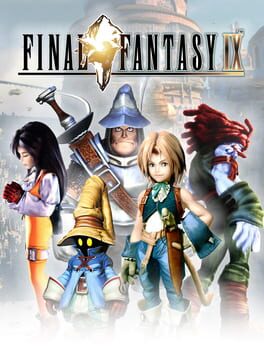
Final Fantasy IX is the ninth main installment in the FF series. The title is a return to the series's roots, with gameplay features and references to the past games featuring throughout, as well as a medieval fantasy setting and cartoonish art style as a break from the sci-fi slant style of Final Fantasy VII and Final Fantasy VIII.

Role-playing (RPG) / Adventure / Action / Science fiction
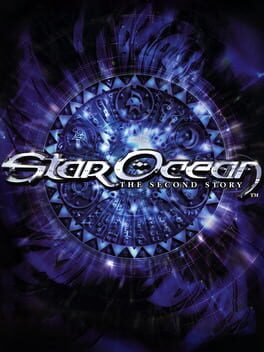
The first "Star Ocean" released outside of Japan. It was later re-released on the PSP under the name "Star Ocean: Second Evolution".

Role-playing (RPG) / Adventure / Action / Fantasy
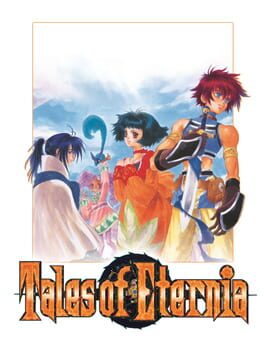
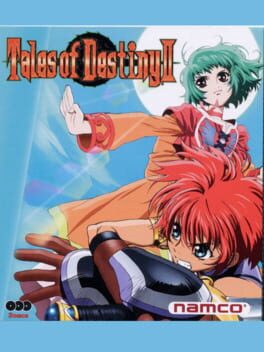
Tales of Eternia is an action japanese role playing game, with real time battle scenes (combos and spells can be assigned to the face buttons). It is a port of the original PS1 game, which was localized as Tales of Destiny II in the US (not to be confused with the Japanese Exclusive title Tales of Destiny 2, an actual sequel to Tales of Destiny) The game is set in the fantasy world of Inferia, follows the story of a young hunter named Reid Hershel and his friends, Farah and Keele, as they meet a mysterious girl who speaks an unknown language. Their subsequent quest to discover her origins leads them across a dimensional boundary to an entirely different realm known as Celestia, where they become involved in an age-old conflict between the two worlds. It would later inspire a 13-episode anime co-produced by Production I.G loosely based on the game's plot.

Role-playing (RPG) / Adventure / Fantasy / Sandbox
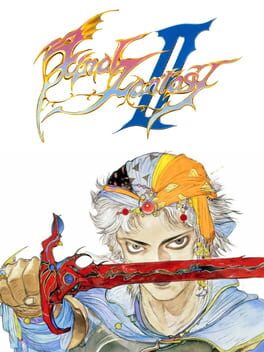
Final Fantasy II is the second installment in the Final Fantasy series, developed and published by Squaresoft. It was directed by Hironobu Sakaguchi, with Yoshitaka Amano designing the characters and Nobuo Uematsu composing the score. It was notable for being one of the first story-intensive RPGs released for console systems, and introducing many series staples, including chocobos and a character named Cid. Its story is unrelated to the original FINAL FANTASY, and its gameplay is a major departure from the previous title for eliminating the traditional experience-based progression system.

Role-playing (RPG) / Adventure / Action / Fantasy
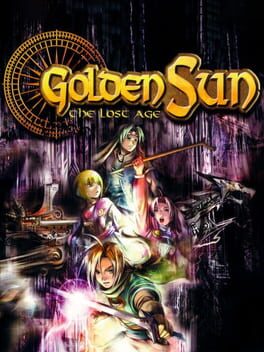
The story of Golden Sun: The Lost Age picks up right near the end of the first game. Golden Sun veterans will be surprised to learn that The Lost Age is played from the point of view of the party being chased as they try to light the remaining two lighthouses, which will unlock the power of alchemy for the world--or will it instead unlock the world's destruction? * LAN PVP mode via GBA Game Link Cable

Role-playing (RPG) / Turn-based strategy (TBS) / Adventure / Fantasy / Sandbox
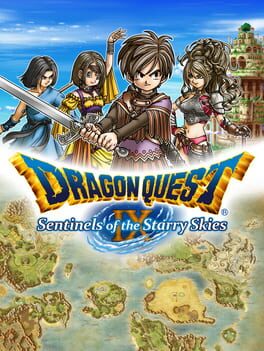
In Dragon Quest IX: Sentinels of the Starry Skies, players begin their adventure as a city guardian who is sent to retrieve a sacred trees fruits, which have the power to grant wishes. Players travel the world, conquer fearsome monsters and unravel an epic storyline. During their journey, players will encounter mighty opponents in fast-paced battles, and also interact with a colorful cast of characters.

Role-playing (RPG) / Adventure / Card & Board Game / Fantasy / Science fiction
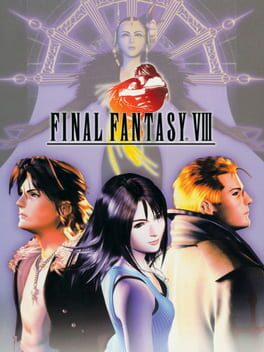
Final Fantasy VIII is the eighth main installment in the Final Fantasy series. The gameplay makes a departure from many series standards. While it still uses the Active Time Battle system, it deviates from the series' traditional means of boosting a character's power via leveling, although levels are not completely abandoned as they were in Final Fantasy II. In addition, it does not have a Magic Point-based system for spell-casting. Instead, magic is collected, drawn, and created from items, and is used to power up the characters via the junction system.

Role-playing (RPG) / Action / Fantasy
Tales of Eternia is an action japanese role playing game, with real time battle scenes (combos and spells can be assigned to the face buttons). The game is set in the fantasy world of Inferia, follows the story of a young hunter named Reid Hershel and his friends, Farah and Keele, as they meet a mysterious girl who speaks an unknown language. Their subsequent quest to discover her origins leads them across a dimensional boundary to an entirely different realm known as Celestia, where they become involved in an age-old conflict between the two worlds. It would later inspire a 13-episode anime co-produced by Production I.G loosely based on the game's plot.