Nintendo 64 / Wii / Wii U
The Legend of Zelda: Majora's Mask is a direct sequel to Ocarina of Time, it utilizes the same engine and visual style as its predecessor. The game retains the traditional elements of Zelda games as well as those introduced in Ocarina of Time, such as active blocking with a shield, various throwing items, and the usage of melodies played on the ocarina to solve puzzles. Compared to the previous Zelda games, this installment is more oriented towards interaction with NPCs and has a larger variety of items, optional quests, and mini-games. It also includes a time system that spans three days, and this cycle must be reset periodically to progress through the game.
After the events of The Legend of Zelda: Ocarina of Time, Link departs on his horse Epona in the Lost Woods and is assaulted by an imp named Skull Kid who dons a mysterious mask, accompanied by the fairies Tael and Tatl. Skull Kid turns Link into a small plant-like creature known as Deku Scrub and takes away his horse and his magical ocarina. Shortly afterward, Tatl joins Link and agrees to help him revert to his native form. A meeting with a wandering mask salesman reveals that the Skull Kid is wearing Majora's Mask, an ancient item used in hexing rituals, which calls forth a menacing moon hovering over the land of Termina. Link has exactly three days to find a way to prevent this from happening.
Puzzle / Adventure / Action / Fantasy
The Legend of Zelda: Ocarina of Time is the fifth main installment of The Legend of Zelda series and the first to be released for the Nintendo 64. It was one of the most highly anticipated games of its age, and is listed among the greatest video games ever created by numerous websites and magazines. The gameplay of Ocarina of Time was revolutionary for its time, it has arguably made more of an impact on later games in the series than any of its predecessors even though they had the same cores of exploration, dungeons, puzzles and item usage. Among the gameplay mechanics, one of the most noteworthy is the time-traveling system. The game begins with the player controlling the child Link, but later on an adult Link becomes a playable character as well and each of them has certain unique abilities. Ocarina of Time also introduces the use of music to solve puzzles: as new songs are learned, they can be used to solve puzzles, gain access to new areas and warp to different locations. Dungeon exploration is somewhat more puzzle-oriented than in earlier games but they are not too complex.

Puzzle / Adventure / Action / Fantasy
Venture back to Hyrule and an age of magic and heroes. The predecessors of Link and Zelda face monsters on the march when a menacing magician takes over the kingdom. Only you can prevent his evil plot from shattering the land of Hyrule. In your quest, you'll venture into twisting mazes, dungeons, palaces and shadowy forests. Test your mettle with mighty swords and magical weapons. Or heft a boulder and hurl it at your enemies. If the going gets tough, dive into a river - you can swim to escape! Learn powerful spells, locate magical artifacts and solve the mysteries of the evil magician and the hidden realm of Hyrule.

Puzzle / Adventure / Action / Fantasy
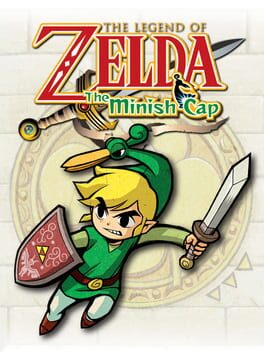
The Legend of Zelda: The Minish Cap is a top-down action adventure game that tells the origins of the evil Vaati from Four Swords. Like most other titles in the series, The Minish Cap features the fully explorable land of Hyrule, although it can be viewed from the eyes of a human or the eyes of a Minish, a race of tiny people and an alternate form that Link can transform into. Unlike the multiplayer focus of the other games in the series, The Minish Cap retains the original form of exploration and dungeons as seen in A Link to the Past, Oracle of Seasons, and Oracle of Ages, as well as returning characters and game mechanics such as Malon and the Spin Attack. New features include fusing Kinstones and shrinking to the size of a Minish.

Platform / Adventure / Action / Fantasy
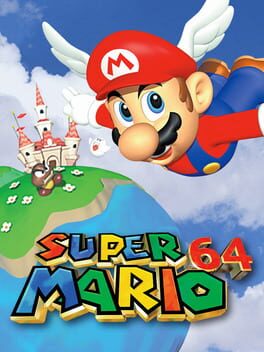
Mario is super in a whole new way! Combining the finest 3-D graphics ever developed for a video game and an explosive soundtrack, Super Mario 64 becomes a new standard for video games. It's packed with bruising battles, daunting obstacle courses, and underwater adventures. Retrieve the Power Stars from their hidden locations and confront your arch-nemesis— Bowser, King of the Koopas! • Run freely in a grassy meadow, tip-toe through a gloomy dungeon, climb to the top of a mountain, or take a swim in the moat! • Leap headfirst into a watery painting and soon you'll be searching for the surface in an underwater realm! • On-the-fly, 3-D rendered gameplay delivers the action of ruthless enemy attacks from every angle! • Find the Caps that give Mario super powers and ponder the mysteries of the pyramid; you can even race Koopas for fabulous prizes! • With the Nintendo 64 Controller and its analog Control Stick, Mario can crawl, kick down obstacles, swim, do reverse flips, and even stick the landing on his backwards somersault! • Saved game information is stored for up to four players in memory.


Puzzle / Adventure / Action / Fantasy
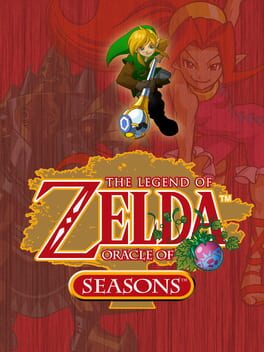
The Legend of Zelda: Oracle of Seasons is one of two Zelda titles released for the Game Boy Color, the other being Oracle of Ages. The game retain many gameplay elements from Link's Awakening such as the graphics, audio and top-view perspective. It also features eight dungeons and a large overworld to explore like in the previous games. Oracle of Seasons is said to be more action-oriented than its counterpart being more puzzle-oriented. After completing one of the two games, both can be linked to form a single linear plot with an alternate ending. Oracle of Seasons and Oracle of Ages were often credited as being two of the top games for the Game Boy Color.

Role-playing (RPG) / Adventure / Fantasy / Sandbox
Final Fantasy II is the second installment in the Final Fantasy series, developed and published by Squaresoft. It was directed by Hironobu Sakaguchi, with Yoshitaka Amano designing the characters and Nobuo Uematsu composing the score. It was notable for being one of the first story-intensive RPGs released for console systems, and introducing many series staples, including chocobos and a character named Cid. Its story is unrelated to the original FINAL FANTASY, and its gameplay is a major departure from the previous title for eliminating the traditional experience-based progression system.

Donkey Kong Country 2: Diddy's Kong Quest is the sequel to Donkey Kong Country. It was developed by Rare and is one of the best selling Super Nintendo games.