Developed by Origin Systems.
A 1986 assembly-language remake of the original 1981 Ultima, featuring improved graphics and minor content additions. Players explore the open world of Sosaria in a top-down view, descend into first-person dungeons, complete quests for the realm's lords, and engage in space combat, all in pursuit of the immortal wizard Mondain and his Gem of Immortality.
A thousand years ago, the wizard Mondain forged a gem that rendered him immortal and beyond defeat. Under his protection, monsters overran the realm of Sosaria while its lords fell to infighting. Lord British calls upon a hero from another world, known only as The Stranger, to locate a time machine, journey to the age before the gem existed, and slay Mondain before his power can take root.

Role-playing (RPG) / Fantasy / Science fiction
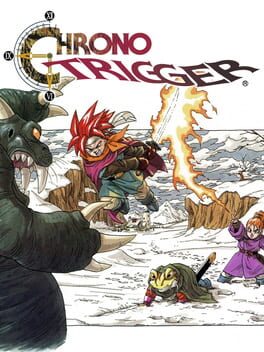
In this turn-based Japanese RPG, young Crono must travel through time through a misfunctioning teleporter to rescue his misfortunate companion and take part in an intricate web of past and present perils. The adventure that ensues soon unveils an evil force set to destroy the world, triggering Crono's race against time to change the course of history and bring about a brighter future.

Role-playing (RPG) / Adventure / Action / Fantasy
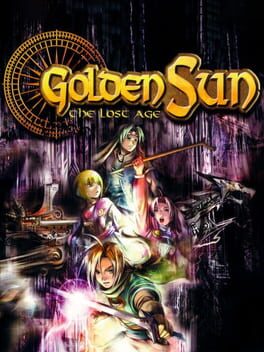
The story of Golden Sun: The Lost Age picks up right near the end of the first game. Golden Sun veterans will be surprised to learn that The Lost Age is played from the point of view of the party being chased as they try to light the remaining two lighthouses, which will unlock the power of alchemy for the world--or will it instead unlock the world's destruction? * LAN PVP mode via GBA Game Link Cable

Role-playing (RPG) / Adventure / Fantasy / Drama
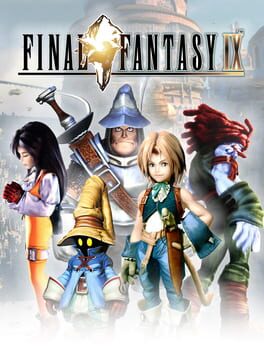
Final Fantasy IX is the ninth main installment in the FF series. The title is a return to the series's roots, with gameplay features and references to the past games featuring throughout, as well as a medieval fantasy setting and cartoonish art style as a break from the sci-fi slant style of Final Fantasy VII and Final Fantasy VIII.

Role-playing (RPG) / Adventure / Fantasy / Sandbox
A port of Final Fantasy VI for PlayStation that adds an opening and ending FMV cutscene and includes a number of bonuses, including a bestiary and artwork gallery that can be accessed from the main menu, and which are revealed as the player progresses through the game. It is largely similar to the Super Nintendo version with the only notable changes to gameplay being the revision of Vicks to Biggs, the correction of a handful of bugs, and the addition of a new "memo save" feature, which allows players to quickly save their progress to the PlayStation RAM. Due to the CD-ROM format of PlayStation it has longer load times in comparison to the Super Nintendo version. In Japan, it was available in both a standalone release and as part of Final Fantasy Collection, while in North America it was available only as part of Final Fantasy Anthology. In Europe it was sold only as a standalone release.

Role-playing (RPG) / Fantasy / Open world
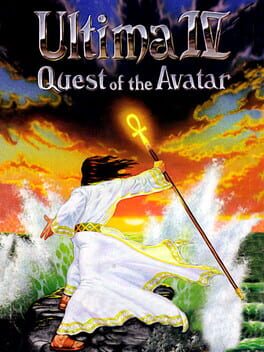
Following the defeat of the evil triad in the previous three Ultima games, the world of Sosaria changed beyond recognition: continents rose and sank, and new cities were built, heralding the advent of a different civilization. Unified by the reign of the benevolent monarch Lord British, the new world was renamed Britannia. Lord British wished to base people's well-being on the ethical principles of Truth, Love, and Courage, proclaiming the Eight Virtues (Honesty, Compassion, Valor, Justice, Sacrifice, Honor, Spirituality, and Humility) as the ideal everyone should strive for. The person who could accomplish full understanding and realization of these virtues would serve as a spiritual leader and a moral example for the inhabitants of Britannia; he alone would be able to obtain holy artifacts, descend into the Stygian Abyss, and access the Codex of Ultimate Wisdom. This person is the Avatar. The fourth game in the Ultima series features an improved game engine, with color graphics and enhanced character interaction: the player can have conversations with non-playable characters by typing names of various topics. However, the main difference between Ultima IV and its predecessors in the series (as well as other role-playing games) lies in the game's objectives and the ways to fulfill them. Instead of building up a character by any means possible in order to face a villain in the end of the game, in Ultima IV the player is trying to become the Avatar, a role model for people. This means upholding the Eight Virtues, basically trying to become a better person. Making morally conscious decisions and helping other people is not done expecting a material reward, but because it is the actual goal of the game and the main focus of its gameplay. The game frowns on behavior typical of most other RPGs, such as backstabbing fleeing enemies or picking up everything that isn't nailed down even if it does not belong to the protagonist. This different approach established the game's reputation as the first "true" Ultima, influencing the design philosophy of later installments and the overall spirit of the series. Character creation is done by choosing responses to morally ambiguous questions. Each of the Eight Virtues corresponds to a character class; by determining the player's personal priorities in the virtues, the game assigns a class and a starting location for the Avatar. After emerging in Britannia, the player is free to explore it in various ways (on foot, moongate teleportation, on horseback, by ship, etc.). Certain items must be collected in any order to enter the Stygian Abyss and complete the game. The Avatar also has to reach the highest level in all virtues. This is achieved by various means: donating blood increases Sacrifice, not fleeing from combat increases Valor, etc. The process, however, is not irreversible: should the Avatar overpay a blind seller, he gains Compassion points; should he, on the other hand, cheat the seller by underpaying, his level in several virtues would decrease. These unorthodox features of the game co-exist with plenty of traditional RPG elements, such as dungeons to explore and hostile monsters to kill. Enemies are encountered on the world map as well as in dungeons; combat takes place on separate top-down screens, allowing player-controlled and enemy parties freely move on them. Characters accumulate experience points and level up, gaining higher amount of hit points and access to stronger magic spells. Like in the previous installments of the series, world map, town exploration and combat are presented from a top-down view, while the dungeons are pseudo-3D and are explored from first-person perspective. Ultima IV also introduces several new gameplay features to the series and role-playing games in general. A number of initially non-playable characters living in various areas of the game world are able to to join the party and fight alongside the hero, replacing traditional player-generated characters or mercenaries and adventurers available only in special locations. Additional new elements include buying and combining reagents in order to cast spells, puzzle rooms in dungeons, and others.

Role-playing (RPG) / Hack and slash/Beat 'em up / Adventure / Action / Fantasy
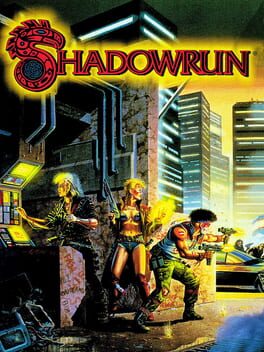
Shadowrun is an action role-playing game.It was adapted from the cyberpunk role-playing game Shadowrun.The game is the second video game adapted from Shadowrun, and has a more open ended style of gameplay than its 1993 Super NES counterpart, Shadowrun by Beam Software. The game is set in the Shadowrun universe, in the 2050s. A time where the blending of technology and human flesh is common; it is around the time the Matrix, a huge computer network, came online, with the ability to jack into its cyberspace directly. It was also a time of magic renewal: a phenomenon known as The Awakening occurred, where magic returned into the world. Sorcery was once again possible, and slowly and seemingly at random humans began to mutate into orcs, dwarves, elves or trolls. This time of upheaval was not without political conflicts: mega-corporations began to control the world. But with their magic, native shamans threatened them and the world geography came to a complete change. The Amerindians and Elves reclaimed an area called Salish-Shidhe, close to the free city of Seattle, a major city in the newly formed United Canadian and American States.

Role-playing (RPG) / Adventure / Action / Fantasy
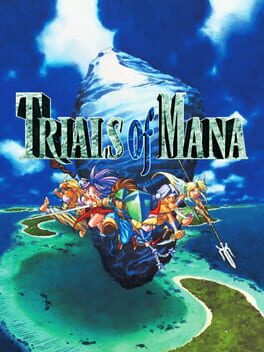
Trials of Mana is the third installment of the Mana series, developed by Square under the direction of series creator Koichi Ishii. The game takes place in a new world where, once again, the Mana Tree is under threat from an ancient evil thought sealed away. Players choose three from among six heroes as the chosen wielder of the Mana Sword and their two companions on the journey to claim the holy blade and preserve what remains of the Mana power.

Role-playing (RPG) / Turn-based strategy (TBS) / Adventure / Fantasy / Kids
Pokémon Blue is the third core series Pokémon game released as a minor revision of Pokémon Red and Green, which were released earlier that year. It was thus the first solitary version in the core series of Pokémon games. Various fixes in the game include a graphics and sound upgrade, as well as the removal of several known glitches that had been found in the original pair. Outside of Japan, its graphics, game engine and script formed the basis of Pokémon Red and Blue, while the wild Pokémon and game-exclusive Pokémon lists were changed to match Red and Green.