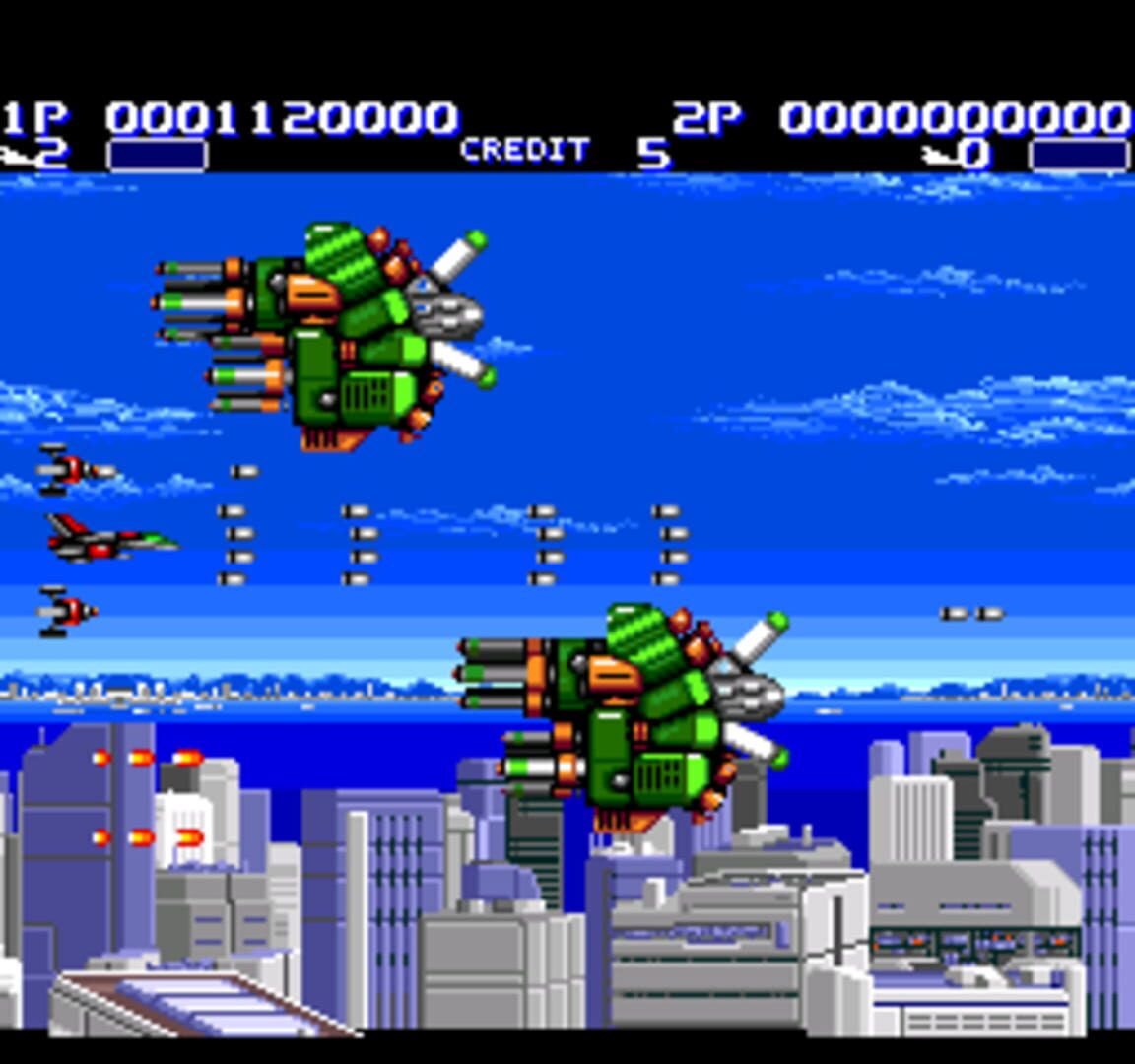
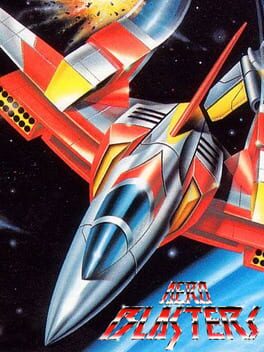

Aero Blasters: Trouble Specialty Raid Unit is a 1990 horizontally scrolling shoot 'em up video game developed and published by Kaneko and licensed to Namco. The game was originally released in the arcades in 1990 and was subsequently released for the PC Engine/TurboGrafx-16 (as Aero Blasters) and Sega Mega Drive/Genesis (as Air Buster in North America) in 1990 and 1991 respectively. In Aero Blasters, the player controls a fighter jet also designed for space travel and shoots enemies, collects power-ups, and defeats bosses to advance levels. As a console game, Aero Blasters had the distinction of being two player simultaneous, which was rare among side scrolling shooters on home consoles at the time; all games in the Thunder Force, Gradius, and R-Type series were only 1 player on the home consoles.
The year is 2040 AD, and the peaceful planet Earth is facing a tremendous crisis. A group calling themselves the "Mega Load Masters" had unexpectedly launched an invasion. Through scientific advances, the M.L.M. had figures out a was to fortify their bodies with inorganic mechanisms. It was this super power which enabled them to destroy all of the nations' armies. Now they threaten to obliterate all organic life forms on the planet's surface... But one man, Charles K. Takeda, has not given up hope. As if he had known this day was coming, Takeda and a few of his friends had moved to a secluded insland in the Atlantic Ocean. Bringing with them only a few necessities, their mission was to develop one of Takeda's greatest inventions, the "Blaster System". This Blaster System would enable its pilot to freely manipulate the building blocks of matter by amplifying the distinctive brain waves humans generate. This would make it possible for humans to transcend reality by transforming matter and destroying space. At present, two super machines, Blaster 1 and Blaster 2, have been completedand fitted with Blaster Systems. Takeda's son and daughter, Mike and Holly, have been specially trained to fly the Blaster Machines. Their mission is to defeat the M.L.M and to ultimately assist their father in building the ultimate aircraft carrier, "Blaster Base." The struggle is about to begin. The two machines blast off, propelled by hopes and dreams, seeking peace through the avenue of war...
Shooter / Arcade / Science fiction
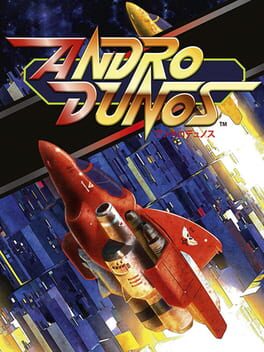
Andro Dunos is a horizontally scrolling shoot 'em up arcade game released by Visco in 1992 for the SNK Neo-Geo MVS. The player controls a futuristic fighter spacecraft with different weapon settings that you can switch between, and shoot enemies, collect power-ups, and defeat bosses to advance levels.

Shooter / Arcade / Action / Science fiction
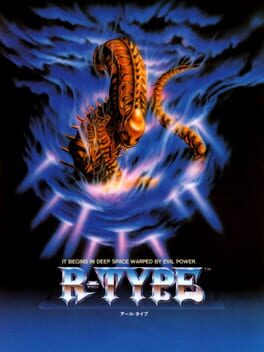
R-Type is set in the 22nd century, and the player flies a futuristic fighter craft called the R-9a "Arrowhead", named for its shape, and because it is the ninth model in the 'R' series of fighter craft (but it is the first of the series to actually be used in combat; the previous models were all prototypes). The mission is to 'blast off and strike the evil Bydo Empire'. The R- in the series title originally stood for "ray", as in a ray of light. It was a reference to the many different types of ray-like weapons in the first R-Type. his was later retconned in R-Type Final to refer specifically to the production code as well as a term of endearment for the player fighter craft, the "Round Canopy". The original R-Type was well received by most gaming critics. However, it was also infamous for its relentless difficulty. It earned 7th place in IGN's Top 10 most difficult games to beat. The gameplay of R-Type is noticeably distinct among shoot 'em ups. Invariably the player will lose, not because of an inequality in firepower, but because of the design of the levels themselves. There is usually a 'correct' way to get through a level, but players must learn these by experience - i.e. by losing and restarting from earlier in the level. The game innovated with its weapon system compared to contemporary shooters, featuring a chargeable shot (beam-meter), and detachable 'force' pod; levels were designed to require different tactics and ideal weapons (air-air, diagonal, or air-ground laser).

Shooter / Platform / Action / Fantasy
The game centers around the main character of Apollo who progresses through the game in an alternating format that switches between platform, side-scrolling action and side-scrolling shooter action. The goal of the series is, stereotypically, to destroy an evil boss Goruza, rescue a princess (in this case, Princess Maria) and save the planet.

Shooter / Action / Science fiction
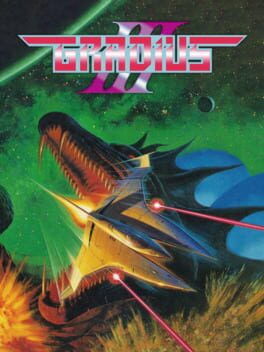
In the darkest reaches of infinite space, pure evil lies in wait ... The Dark Forces led by the god of destruction, Bacterian, prepare to launch a massive onslaught against the planet Gradius. Possessing unstoppable power, the Dark Forces threaten to plunge the Universe into total war and complete annihilation. Their invasion force smashes the Gradius defenses, and the surrounding planets soon fall like dominoes. Now Bacterian's evil grasp reaches for the heart of the resistance...planet Gradius itself... To counter the oncoming threat the United Gradius World Forces gather all their fighter craft. Half of them form a defensive net - the other half a strike team. But they are badly outnumbered and The Dark Forces easily tear through their thin frontline. No fighters survive the slaughter.... In a last gasp move, the United Gradius World Forces send out two fighters, previously considered too dangerous for combat missions: The InterDimensional VIC VIPER fighters. The Fighters take off for the heart of darkness to join the fray that will decide the fate of the Universe...

Shooter / Action / Science fiction
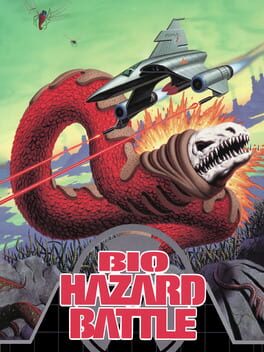
During the first global biowar, a powerful retrovirus filled the planet Avaron with new and deadly forms of life. Only a few survivors remain in O.P. Odysseus, an orbiting platform circling Avaron. Hundreds of years after the biowar, conditions on Avaron are still hostile but livable.

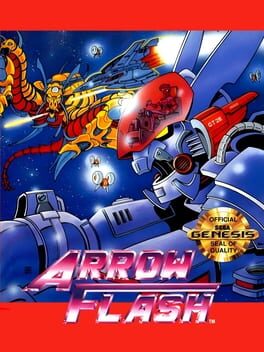
Arrow Flash is a side-scrolling space shooter. The player controls a female spaceship pilot who is sent on a mission into deep space to save the Earth from an assault by an evil dragon from another galaxy. Moving vertically or horizontally, players must avoid or kill the enemies and make it to the end of the level alive where a boss battle awaits. During gameplay, the player can switch at any time between two modes: normal spaceship and flying robot. The two forms use different weapons and also have different special abilities, called Arrow Flash. While the spaceship can fire destructive lasers for major damage, the robot can raise a shield that will protect from enemy attacks for some time and instantly kill anything that touches it. The Arrow Flash attacks can be charged by holding a button for several seconds, or collect icons during your flight to release it quickly afterwards.

Shooter / Arcade / Action / Science fiction
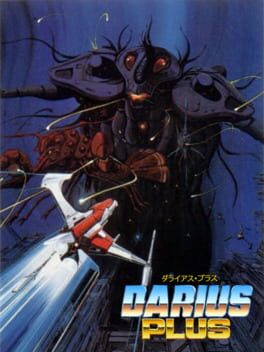
NOTE: "Darius Plus" is the TurboGrafx-16 PC-Engine port of the original Darius produced by Bits Laboratory and NEC Avenue. This is a different port than the title "Darius+", which was published by The Edge and developed by Softek for the Amiga, Atart ST, and ZX Spectrum. Amidst the clutter of arcade shooters in the late 1980s, companies needed to make their games stand out in some way. Simply flying a ship into outer space simply wasn't going to cut it anymore. Taito had an idea. Yes, there was still a spaceship. And yeah, that "outer space" part was still there too. But instead of the usual aliens, you fought fish. Yes, fish. Not even regular, aquatic fish, but robotic fish with lasers equipped to their fins, giant metal teeth and missiles firing from their gills. And not just fish either. There are squid, snails, and other undersea variations out for your blood as well. The requisite plot is about the people of the planet Darius, who are being terrorized by said intergalatic fish. Only the heroic pilots Proco Jr and Tiat Young can save the day. The constant star of the Darius series is the Silver Hawk. Much like Gradius, it has a primary, forward firing weapon, along with bombs that can be used to attack vertically, and the usual shield. The arcade game Darius games also used a unique system that attached three monitors together to create one massive horizontal playing field (also used in Taito's Ninja Warriors.) Naturally, this couldn't quite be replicated on the console system, so that nifty little gimmick is lost, but emulators can still replicate the dimensions of the screen, even if you end up looking at a tiny picture. Looking to further set itself apart from the crowd, every Darius game has multiple levels, with several branching paths throughout the game. It adds tremendously to the replay value, especially since there are usual multiple endings, depending on which final zone you end up at. Darius is a two-dimensional horizontally scrolling shoot 'em up set in a fictional future. Uniquely among shoot 'em ups, the game's screen was three times wider than conventional size, and the arcade cabinet used an arrangement of three screens to accommodate it. The player controls an ornate fighter spacecraft, named the Silver Hawk, and must navigate through scrolling terrain while battling a variety of fighter craft, ground vehicles, turrets, and other obstacles throughout the game's stages (referred to as zones in the game). The ship's arsenal consists of forward-firing missiles, aerial bombs and a protective force field, all of which can be upgraded by power-ups (in the form of large, colored orbs) that are dropped by specially-colored enemies throughout the game's zones. When the player reaches the end of a zone, a boss appears, which must be defeated to proceed. Once the boss of a zone is destroyed, the player is given a choice of which zone to play next via a branching path. While there are 28 zones in total, only seven can be played in a single run. When various ports of it were made for different consoles, Taito (and others) were forced to shrink the playfield to fit on one screen. The PC Engine saw three releases: - Darius Alpha (1990): A very rare beta release. This is one of the rarest Hu-Cards ever published. You could only get a copy of this hardcore shoot-em-up by buying Darius Plus and Super Darius and then mailing coupons to the publisher. 800 copies were made available, and names were drawn from those who mailed their info in. Some copies of the game were also given away as prizes by PC Engine Gekken and Marakatsu magazines. - Darius Plus (1990): The full game itself, again a PC Engine HuCard. The bosses that were removed in Alpha do not return here. Both Alpha and Plus were actually written for the PC Engine SuperGrafx and playing them on that console results in slightly improved graphics (less flicker and slowdown). - Super Darius (1990): A conversion of Darius for the PC Engine's Super CD-ROM, very close to the original arcade version other than being single-screen. Features new bosses, as well as a "boss rush" mode.

Shooter / Arcade / Action / Science fiction
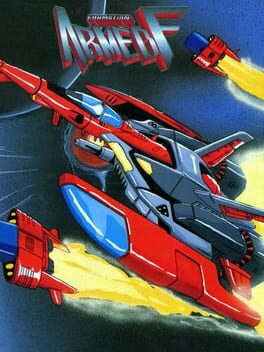
Formation Armed F is a vertically scrolling shooter. The basic gameplay principle offers no surprises: shooting a lot of aliens without getting hit by their attacks. Additionally there are environmental obstacles like poisonous gas or walls. Of course the player can collect power ups to upgrade the ship, e.g. speed-ups or a large variation of weaponry. Each of the seven levels has its own set of weaponry which suits the enemies. The big exception are smaller ships which stay near to the main ship. By pressing a second fire button, the formation can be changed. There are no continues.