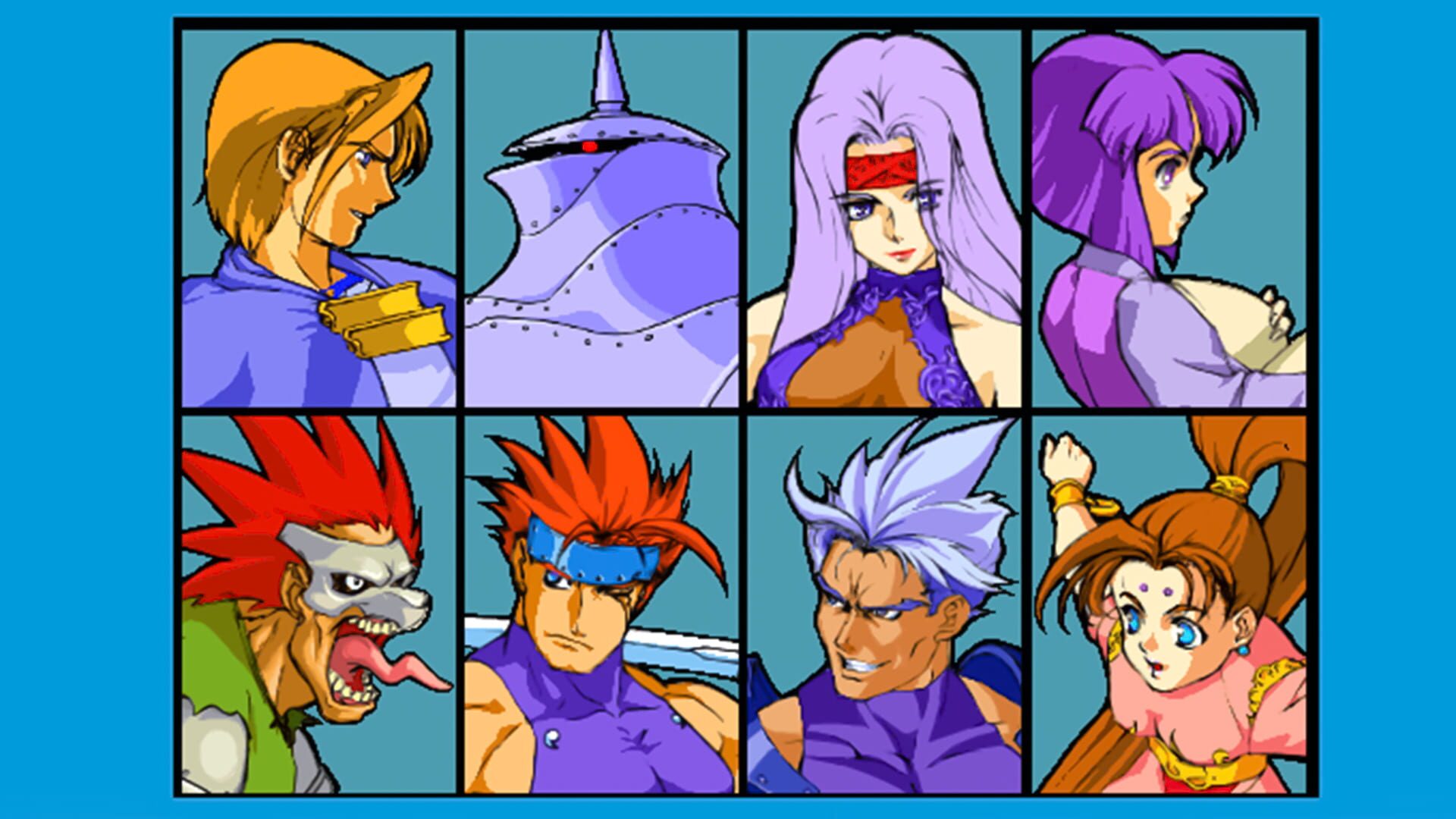
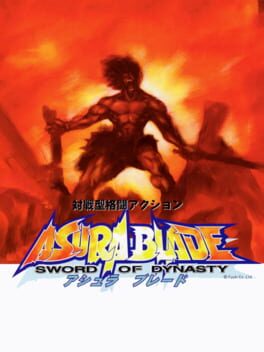

Asura Blade: Sword of Dynasty is Fuuki's first of two attempts at making a one-on-one 2D fighting game; its sequel, Asura Buster, is the second. The story revolves around the search for the eponymous Sword of Dynasty in a war-torn world. The game features eight playable characters, as well as two boss characters, only briefly usable in single-player mode using codes. It uses a simple three-button control scheme and sticks to more basic motion inputs for its roster's special moves, for greater accessibility. Its colorful visuals and detailed background art take inspiration from contemporary entries in the Darkstalkers and Street Fighter Alpha series.
In a post-apocalyptic world where fantasy and technology are seen side-by-side with each other, legends tell of a mystical and ancient weapon known only as the "Sword of Dynasty", which is said to hold the strongest power in existence and that it can easily grant its wielder any wish they so desire. It is said that the Sword of Dynasty has fallen into the hands of a cruel and ruthless fighting warlord known only as S. Geist and that he seeks to gain full control over the world by releasing an ancient sealed beast known only as the Earth Dragon so that he can harness its tremendous yet terrible power and become an unstoppable force. Eight warriors have set out to find the Sword of Dynasty for their own personal reasons, having no idea that their paths will cross with each other and that their own battles will determine the fate of the world itself.
Fighting / Arcade / Action / Fantasy
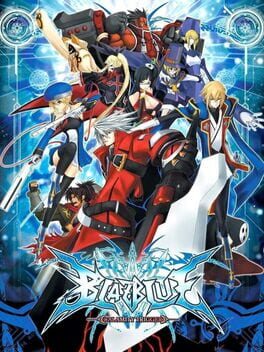
BlazBlue: Continuum Shift is a fighting game developed by Arc System Works as a direct sequel to BlazBlue: Calamity Trigger. BlazBlue: Continuum Shift retains the traditional 2D fighter gameplay of two characters participating in a duel on a two dimensional plane and features a selection of new playable characters.

Fighting / Arcade / Action / Fantasy
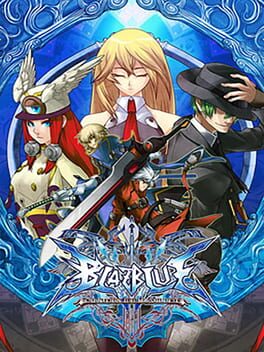
BlazBlue: Calamity Trigger is a fighting game developed by Arc System Works in 2008 and is the first game in the BlazBlue series. The game was originally developed for Japanese arcades and later received console and PC ports. The game is a traditional 2D fighter where two characters participate in a duel. Every character has a weak, medium and strong attack, as well as an "unique" technique, called a Drive attack, which is different for each character. Various combos can be performed by every character through careful input of regular and Drive attacks.

Fighting / Arcade / Action / Fantasy
Mortal Kombat Trilogy features the same gameplay and story as Mortal Kombat 3, but adds characters and stages from the other three arcade games, including Ultimate Mortal Kombat 3. Some completely new characters were also introduced. New additions to the game included the "Aggressor" bar, a meter that fills during the course of the match and temporarily makes a player character faster and stronger. It also features the Brutality, a long combination of attacks that ends with the opponent exploding.

Fighting / Role-playing (RPG) / Adventure / Action / Fantasy
The fighting system in Tobal 2 is the same as in the previous game. The player can freely navigate 3D fighting arenas under the condition that he or she faces the opponent. High, medium, and low attacks can be executed using assigned buttons. As in Tobal No. 1, the grappling and blocking system offers the player a variety of offensive and defensive maneuvers. A new unblockable fireball attack has been added for each character. Tobal 2 was released on the same day as Sony's Dual Analog Controller in Japan, noted as the first game compatible with the peripheral. Graphically, the game features Gouraud shaded and higher-resolution character models compared to Tobal No. 1, but still runs at 60 frames per second.

Fighting / Arcade / Action / Fantasy
SoulCalibur is a weapon-based 3D fighting game developed by Project Soul and produced by Namco. It is the second game in the Soul series, preceded by Soul Edge (1996). Originally released in arcades in 1998, it ran on the Namco System 12 hardware. In 1999 it was ported to the Dreamcast with improved graphics and new features. The North American version was released in September 1999 as a launch title for the Dreamcast and was part of the successful launch of the new console. It became available as a downloadable title on Xbox 360's Xbox Live Marketplace in 2008. The title brought many innovations to the fighting game genre that include a heavy emphasis on weapons and a unique eight-way movement system. Soulcalibur is widely regarded as one of the best Dreamcast titles and is one of the most critically acclaimed fighting games of all time.

Fighting / Hack and slash/Beat 'em up / Arcade / Action / Fantasy
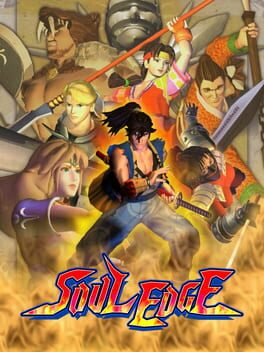
Soul Edge is a 3D arcade fighting game and the first in the Soul series, it is one of the first 3D fighting game in history that place a particular emphasis on the story of the fighters. Each character have their own weapon, allowing for a wide range of play styles. The slower, longer ranged characters try to deliver their heavy blows from a distance whereas the quicker, faster characters try to get in as close as possible and deliver quick-hitting attacks.

Fighting / Hack and slash/Beat 'em up / Adventure / Action
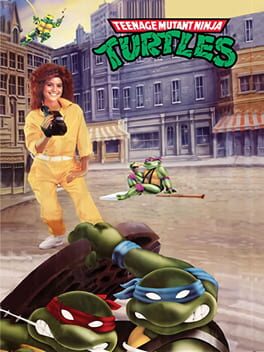
NOTE: This is the original 4-Player Arcade release, not the NES Title. The player chooses from one of the four Ninja Turtles: Leonardo, Michelangelo, Donatello, and Raphael. After Shredder kidnaps the Turtles' friend April O'Neil and their mentor Splinter, they must give chase, save their comrades, and defeat the evil Shredder. The player chooses from one of the four Ninja Turtles: Leonardo, Michelangelo, Donatello, and Raphael. Depending on the version of the game, the characters are either, chosen at the start of the game or assigned by control panel. After Shredder kidnaps the Turtles' friend April O'Neil and their mentor Splinter, they must give chase, save their comrades, and defeat the evil Shredder. Up to four players (two in some versions) can take control of any of the Turtles. Donatello has slower attacks but a longer range, Michelangelo and Raphael have faster attacks but a shorter range, and Leonardo is a well-rounded Turtle with average range and speed. The eight-way joystick controls the movements of the Turtle, the jump button makes them jump and the attack button makes them hit in front of them using their weapon. In addition to this, some combinations are possible. The Turtles can throw Foot soldiers overhead, and by pressing the jump and attack buttons, a special attack is performed. Raphael rolls along the ground and finishes with a kick, while the other Turtles do a sweeping jump attack with their weapons. Turtles can also spring off the wall in certain areas. Enemies can be defeated more quickly by slamming them into walls or solid objects. Many objects such as traffic cones, parking meters, fire hydrants and exploding oil drums can be hit or damaged with attacks in order to help defeat nearby enemies. In the attract mode, the game showed the first part of the cartoon opening, along with a portion of the Teenage Mutant Ninja Turtles theme song. Most of the enemies the Turtles face are the Foot Soldiers, all color-coded to indicate their attack patterns and weapon of choices. Some enemies, such as the standard purple-clad Foot Soldiers and Roadkill Rodney robots, have the ability to restrain the Turtles' mobility and drain their health, leaving the player open to attack for other enemies. The bosses in the game include Rocksteady and Bebop (individually at first in that order, and later the two of them together), Baxter Stockman, Granitor, General Traag, Krang, and Shredder himself.