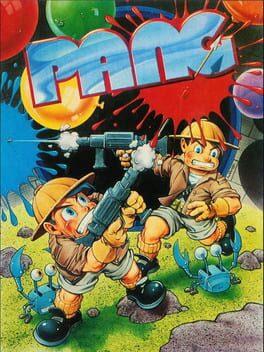
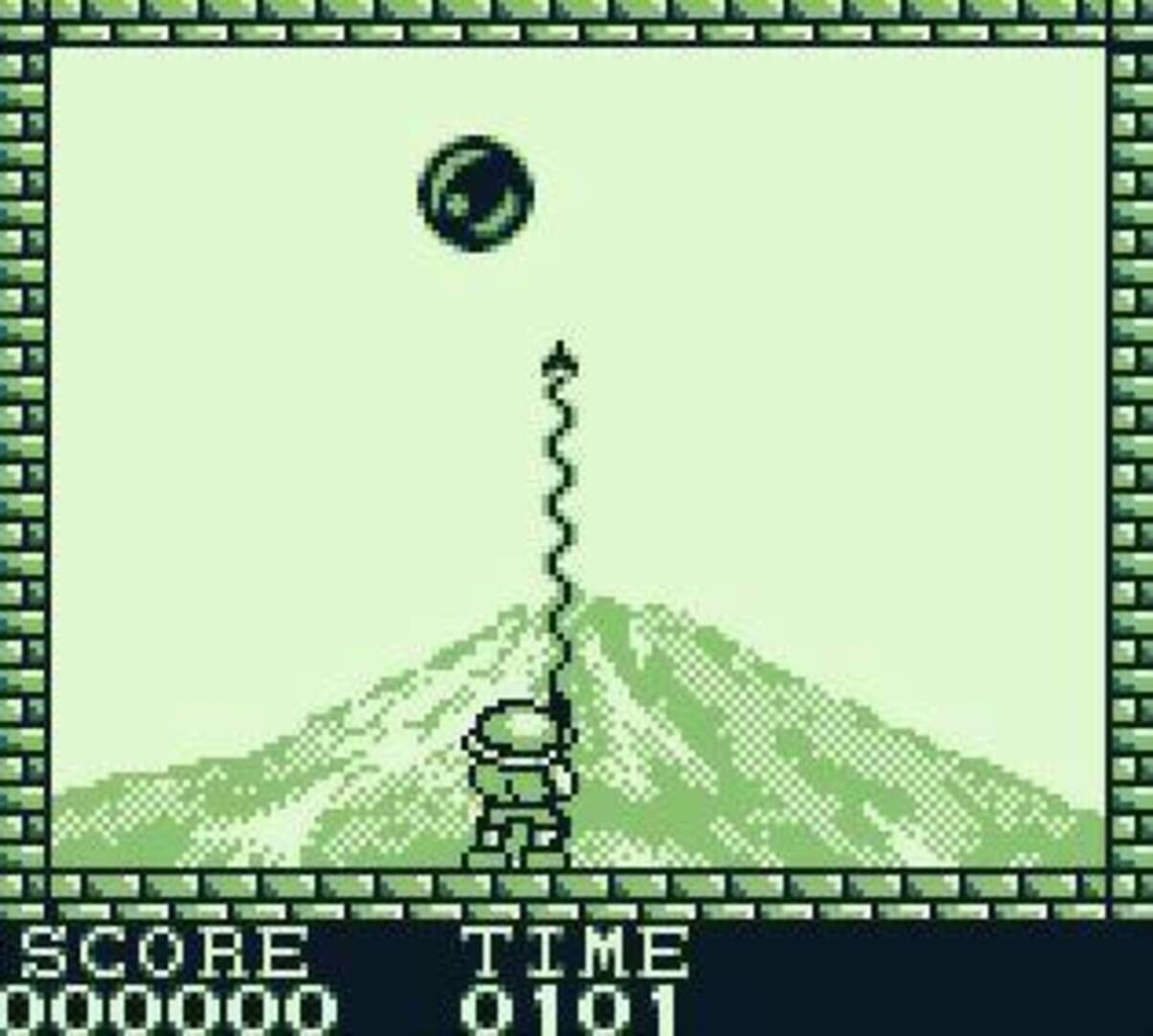
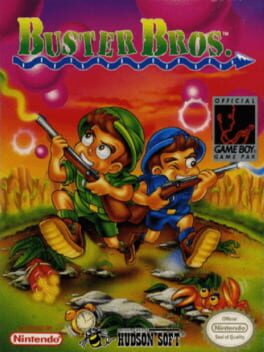
The Game Boy version of Buster Bros. (also known as Pang in some regions) is a portable adaptation of the arcade game developed by Mitchell Corporation. Released in 1990, it retains the core gameplay, where players use a harpoon gun to pop bouncing bubbles while avoiding contact. The game features multiple levels set in different world locations, but with simplified graphics and gameplay adjustments for the handheld system.

Shooter / Platform / Arcade / Action
Pang, originally released in Japan as Pomping World and in North America as Buster Bros., is a 1989 arcade action game developed by Mitchell Corporation. Its core gameplay is similar to the 1983 Japanese MSX game Cannon Ball, also released that year for the ZX Spectrum as Bubble Buster. Players embark on a round-the-world quest to destroy bouncing balloons that are threatening landmarks and cities across the globe. The game features 50 stages set in 17 locations, including Mt. Fuji, Mt. Keirin, the Temple of the Emerald Buddha, Angkor Wat, Ayers Rock, the Taj Mahal, Leningrad, Paris, London, Barcelona, Athens, Egypt, Kenya, New York, Maya ruins, Antarctica, and Easter Island. Later versions added additional locations. Each stage includes a background depicting local landmarks, along with a unique arrangement of blocks, some destructible, some permanent, and some hidden with bonus items. Stages begin with balloons of various sizes; the largest balloons split into smaller ones three times before disappearing after the fourth hit. Players start with a single harpoon, though special weapons can drop when balloons are popped. At certain points, food items worth bonus points may also appear. Contact with any balloon results in the loss of a life. In two-player mode, if both players touch a balloon at the same time, only Player 1 loses a life. Similarly, when both reach a bonus or weapon simultaneously, only Player 1 collects it. Players begin with three to five lives depending on dip switch settings, with extra lives awarded upon reaching specific score thresholds. A stage is cleared when all balloons are destroyed, and the game concludes after all stages are completed, ending with the heroes driving their jeep into the sunset on an Easter Island beach.
Shooter / Platform / Arcade / Action / Science fiction
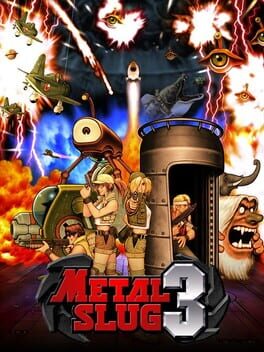
“METAL SLUG 3”, the masterpiece in SNK’s emblematic 2D run & gun action shooting game series, still continues to fascinate millions of fans worldwide to this day for its intricate dot-pixel graphics, and simple and intuitive game controls!

Shooter / Platform / Arcade / Action / Science fiction
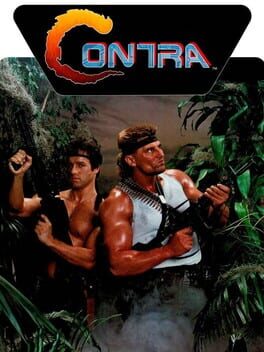
Contra (also known as Gryzor in Oceania and Europe), is a 1987 run and gun action game developed and published by Konami originally released as a coin-operated arcade game on February 20, 1987. The game had multiple ports, including for various computer formats. Several Contra sequels were produced following the original game.

Shooter / Platform / Arcade / Action / Comedy
The Peregrine Falcon Strike Force, the Ikari Warriors, and the SPARROWS are once again on a search for General Morden and his army. Their mission is to catch General Morden and prevent his attempts at another coup d'état on the government. However, as soon as Morden was defeated, a strange army from the future came to his aid. Now, they must face Morden once again and this time, put a stop to his plans once and for all.

Shooter / Platform / Arcade / Action
The players are members of a covert counter-terrorist team of mercenaries known as the "Wolf Force". The aim of the game was to rescue the former President from rebels in the fictional African country of Zutula, which bears resemblance to the apartheid regime in South Africa. The game has six main levels, plus the final level where your mission is to rescue the former U.S. president from the Hercules Transport. The game's arsenal include real-world machine guns, shot guns, flame throwers, and grenade launchers. Several missions even have pilotable vehicles available.

Shooter / Platform / Arcade / Action / Historical
Empire Interactive's Taito Legends series of compilations moved onto handheld in Europe and the US with Taito Legends Power-Up. It is slightly different from Taito's own Taito Memories Pocket, which was only released in Japan. Most notable is the inclusion of Space Invaders and Space Invaders Part 2 and the absence of Rainbow Islands Extra.

Shooter / Platform / Arcade / Action / Stealth
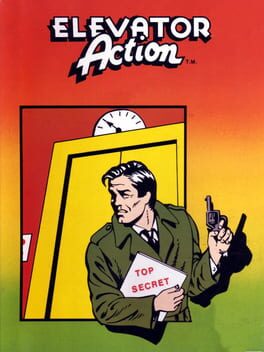
Elevator Action is a 1983 arcade game by Taito. It debuted during the "Golden Age of Arcade Games". Innovative in gameplay, the game was very popular for many years. In the game, the player assumes the role of a spy who infiltrates a building filled with elevators. He must collect secret documents from the building and traverse the 30 floors of the building using an increasingly complex series of elevators. The player is pursued by enemy agents who appear from behind closed doors. These agents must be dealt with via force or evasion. Successful completion of a level involves collecting all the secret documents and traversing the building from top to bottom. In the lower floors of the building, the elevator systems are so complex that some puzzle-solving skills are needed. The game was available as a standard upright cabinet The controls consist of a 4-way joystick and two buttons, one for "shoot" and the other for jumping and kicking. The maximum number of players is two, alternating turns. The graphics are extremely simple, 2D color graphics and in-game music was composed by musician Yoshio Imamura. The game was followed by a sequel, Elevator Action II (also known as Elevator Action Returns).