The story has the solar system under threat from Myon invaders. MAT ("Mission: Alien Termination") is a teenager implanted with all the combined tactical skills of the planetary leaders. MAT pilots a prototype spacecraft, the USS Centurion, in an attempt to defend the system from the alien's all-out attack.[6] The game's action takes place in a realtime 3D representation of MAT's view from the ship. The player has access to forward and rear views, which switch automatically if the tracking computer is active. Threats come in the form of Myon Fighters which engage the player immediately, Cruisers which only engage at short range, and Starbases which also attack immediately but withdraw when their shields are damaged.[6] The player's ship can suffer damage. If the Centurion's energy is reduced to zero, it is destroyed and the game ends. The ships instruments, engines and weapons can also be damaged; these can be repaired if the ship docks at a planet.[6]
For decades the Myons have sought to dominate the Solar System but they may well have met their match in the USS Centurion, the revolutionary space craft developed to wipe out the Myons.
Shooter / Simulator / Strategy / Action / Stealth
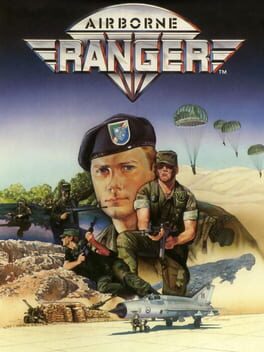
One soldier on action-packed missions behind enemy lines. Get ready for a fast-paced, easy-to-learn combat game featuring intelligent challenges, suspenseful scenarios and endless action- perfect for arcade gamers, combat strategists and simulation fans alike. Nobody but Microprose could pack so many kinds of fun into just one game. Go in with guns blazing, or try a subtle approach by crawling through trenches and natural cover- the choice is yours! Leap into combat with an M-16, grenades, anti-tank rockets and timed plastic explosives. Overcome enemy soldiers, machine gun nests, minefields, robot mini-tanks and more! Run, walk, crawl and shoot in any direction across full-scrolling, 3-D terrain that changes every time you play.

Shooter / Simulator / Strategy / Action / Science fiction
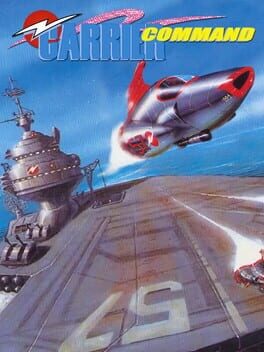
Carrier Command is a landmark 1980s computer game available on Amiga, Atari ST, PC, ZX Spectrum, Apple Macintosh, Commodore 64 and Amstrad CPC computers. Described by The Games Machine as a "seminal game destined to change the state of gaming", Carrier Command won accolades from across the industry.

Shooter / Simulator / Strategy / Action / Science fiction
In 480 B.C. a small Spartan force held off Xerxes and the entire Persian army, in the famous Battle of Thermopylae. The Spartans chose to die defending the pass into Greece, to give their allies time to prepare for attack. SPACE SPARTANS reenacts this battle in space, in a heroic adventure that pits you against overwhelming alien odds. You are the elite force. Stop the first alien onslaught and a new alien force appears. Hold the aliens back as long as you can and give your home galaxy time to repare for attack! Score as many points as possible by shooting down alien ships, before your ship is destroyed or you run out of energy. Repair damaged ship systems and re-energize at your 3 starbases. Destroy all aliens on the Sector Grid and a new round starts with more aliens. YOU HAVE ONE SHIP AGAINST A CONTINUOUS ONSLAUGHT OF ALIEN ATTACKERS.

Shooter / Simulator / Strategy / Action / Science fiction
1st person space shooter and strategy game.

Simulator / Strategy / Turn-based strategy (TBS) / Action / Science fiction
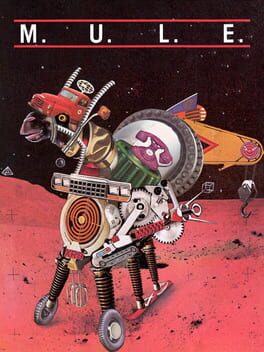
M.U.L.E. is about four hopeful explorers trying to make a fortune on a virgin planet. This is done by producing various goods (Food, Energy, Smithore, Crystite). Each of these goods have their uses: if you don't have enough food, you will have less time during your turn. If you don't have enough energy, your output will be lower. If enough smithore isn't produced, there will be a shortage of M.U.L.E.s. Crystite is the big earner that can make or break your game. You start the game by selecting your race. Some are easier to play, some harder. There are three levels of difficulty, in the easiest the game only lasts 6 turns, but the real game is 12 turns. Crystite is not available at the easiest level. Each turn starts with land claim. Each player gets to choose a spot of land for themselves from the map. If two players choose the same spot, the player with less money wins. The map consists of different landscape. River is best for producing food, plains for energy, mountains for smithore. Crystite is hidden and must be first found by taking a land sample to the town. After the land claim each player takes turns in cultivating their land and do other tasks. They can buy M.U.L.E.s to start production on their land, sabotage other players by buying M.U.L.E.s and letting them loose, try to catch the Wumpus for cash and try to find crystite veins. The time to do these things depends on if the player has enough food. Finally the player goes to the casino and wins a small amount of money, depending on how much time was left.

Shooter / Simulator / Strategy / Action / Science fiction
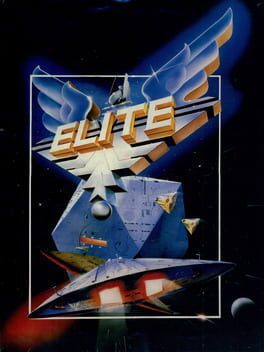
Elite is a space trading video game, written and developed by David Braben and Ian Bell and originally published by Acornsoft for the BBC Micro and Acorn Electron computers in September 1984. Elite's open-ended game model, and revolutionary 3D graphics led to it being ported to virtually every contemporary home computer system, and earned it a place as a classic and a genre maker in gaming history. The game's title derives from one of the player's goals of raising their combat rating to the exalted heights of "Elite". Elite was one of the first home computer games to use wire-frame 3D graphics with hidden line removal. It added graphics and twitch gameplay aspects to the genre established by the 1974 game Star Trader. Another novelty was the inclusion of The Dark Wheel, a novella by Robert Holdstock which gave players insight into the moral and legal codes to which they might aspire.