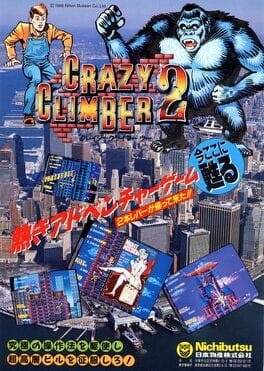
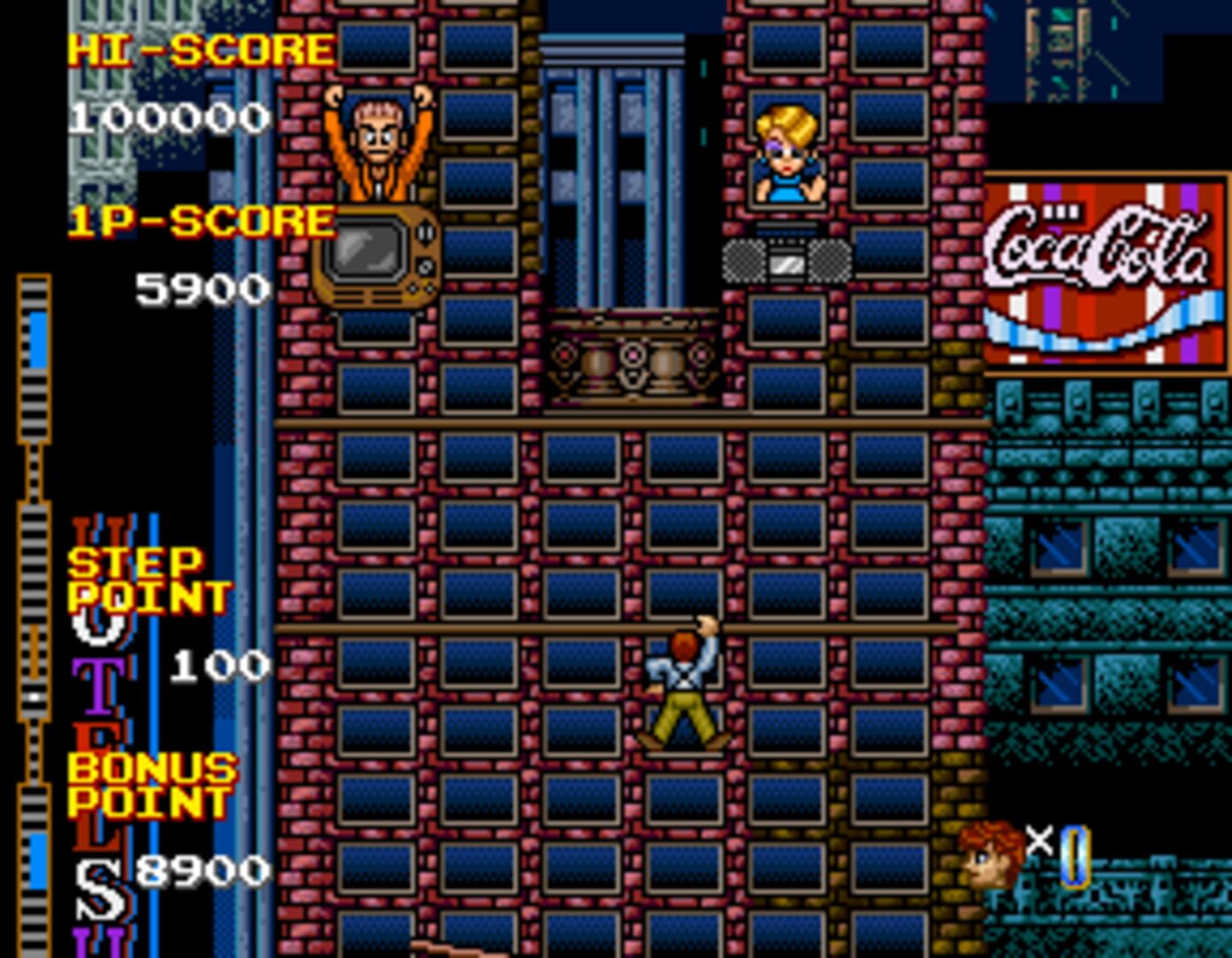
Crazy Climber 2 (クレイジークライマー2?) is a 1988 arcade game developed and published by Nichibutsu. It is the sequel to the 1980 arcade game Crazy Climber. The gameplay is mostly identical to that of its predecessor, but there some significant differences. Unlike its predecessor, Crazy Climber 2 was only released in Japan.

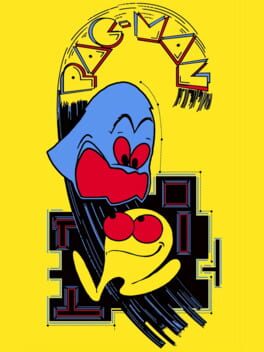
Pac-Man is a 1980 maze action video game developed and released by Namco for arcades. It is considered one of the classics of the medium, virtually synonymous with video games, and an icon of 1980s popular culture. Players control Pac-Man, who must eat all the dots inside an enclosed maze while avoiding four colored ghosts. Eating large flashing dots called Power Pellets causes the ghosts to temporarily turn blue, allowing Pac-Man to eat them for bonus points.

Shooter / Arcade / Action / Science fiction
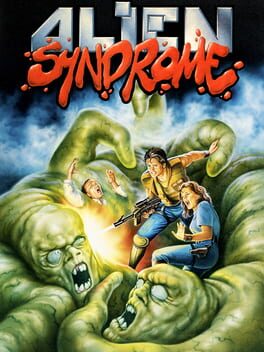
The time bomb is set. It's the only sure way to get rid of these aliens. For good. They're vile. Vicious. And villainous. And they've infested our outcolony. They're holding hundreds of inhabitants hostage. Some of them your friends. So get in there. And get blasting. Inside, you'll find state-of-the-art weaponry. It's yours for the taking. There's sector after sector to purge. Each more intricate than the one before it. And there are Super Aliens to confront. Each more hideous than the one before it. Get the hostages out. And get as many aliens as you can. Before the blast gets all of you.

Fighting / Platform / Hack and slash/Beat 'em up / Action / Science fiction
It is the late 21st century, and the world has come under the control of a single federal government. One day a new threat known as Abdullah the Slaver appears, causing widespread terror and panic. The fear in men's hearts incites the abandonment of all economic activity. The federal government, which is the foundation of capitalism and modern civilization, has become nothing less than an insidious idea that corrupts the foundations of society itself. It destroys the idiosyncrasies and variations among national viewpoints, stifling them in the name of "freedom" and its own internal ideals. Judicial Affairs Director Jack Layzon alone grasps the situation, fearing the worst. He summons the lone assassin who had mastered the 'secret style'...

Shooter / Arcade / Action / Science fiction
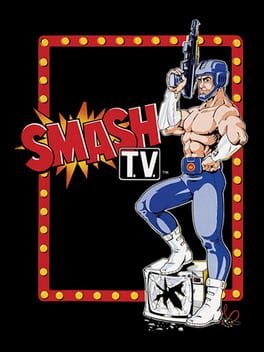
Moving from one room to the next within the studio/arena, players have to shoot down hordes of enemies as they advance from all sides, while at the same time collecting weapons, power-up items, and assorted bonus prizes until a final show down with the show's host where you are finally granted your prizes, your life and freedom. One of the enemies is fat and is named Mr. Shrapnel who roams aside of the walls of some rooms and after a short period of time he explodes.

Platform / Indie / Arcade / Action / Science fiction
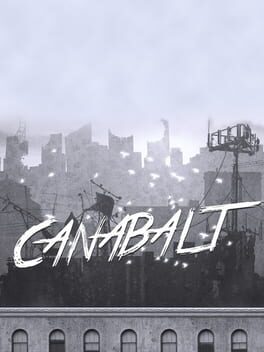
Use your Parkour skills to outrun the destruction of your city with just one button! One of the most popular and best-loved Flash games of 2010, Canabalt was created in 5 days for the Experimental Gameplay Project, and features a rad soundtrack by superstar indie composer Daniel Baranowsky (Super Meat Boy).

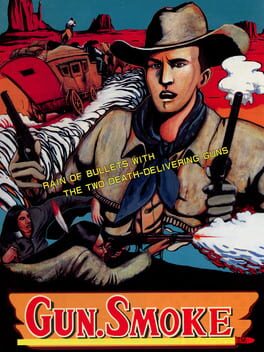
Gun.Smoke is very similar to Commando, another Capcom game, but with several differences. Whereas Commando is a run and gun game, this game is a scrolling shooter in which the screen scrolls upward automatically and players only have three ways to shoot, using three buttons for left, right, and center shooting. However, a player can also change the way the gunman shoots through button combinations. A player can still die by getting shot or struck by enemies like in Commando but improve protection by getting special items, including a horse, for protection up to three hits; boots, for speed of movement; bullets, for faster shots; and rifles, for shot length. These items are found by shooting barrels and rifles, boots, and bullets can stock up to five. It was brought to the Sega Master System in South Korea without a license by Prosoft in 1990.
Shooter / Platform / Arcade / Action / Stealth
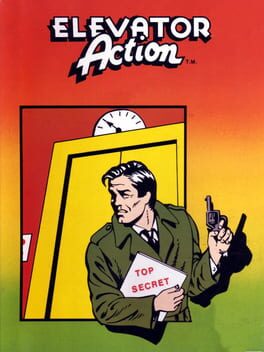
Elevator Action is a 1983 arcade game by Taito. It debuted during the "Golden Age of Arcade Games". Innovative in gameplay, the game was very popular for many years. In the game, the player assumes the role of a spy who infiltrates a building filled with elevators. He must collect secret documents from the building and traverse the 30 floors of the building using an increasingly complex series of elevators. The player is pursued by enemy agents who appear from behind closed doors. These agents must be dealt with via force or evasion. Successful completion of a level involves collecting all the secret documents and traversing the building from top to bottom. In the lower floors of the building, the elevator systems are so complex that some puzzle-solving skills are needed. The game was available as a standard upright cabinet The controls consist of a 4-way joystick and two buttons, one for "shoot" and the other for jumping and kicking. The maximum number of players is two, alternating turns. The graphics are extremely simple, 2D color graphics and in-game music was composed by musician Yoshio Imamura. The game was followed by a sequel, Elevator Action II (also known as Elevator Action Returns).