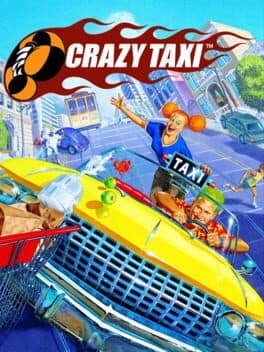
Hey hey, come on over and have some fun with Crrrrrazy Taxi! Barrel through traffic packed streets, hurdle off parking garages, and Crazy Combo your way to Crazy Money in a wild frantic race to scare up the most fares. In Crazy Taxi, time is money, and only the Craziest Cabbies come out victorious.

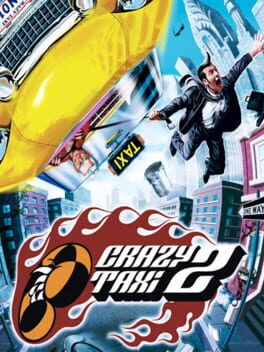
Much like the original, the core gameplay in Crazy Taxi 2 centers around picking people up at destinations which are highlighted with colored rings, and dropping them off at stated destinations. Crazy Taxi 2 added multiple pickups, which enabled the player to carry multiple passengers, (previously it was restricted to one passenger per journey). The game also saw the introduction of the "Crazy Hop" feature, which allows the player to jump over certain surfaces to save time, as they taxi passengers around the locations. By performing moves such as the "Crazy Hop" and the "Crazy Dash", the driver accumulates tips from their passengers, which increases the total score. This sequel includes a modified soundtrack with rock bands The Offspring and Methods of Mayhem. The game also has some online modes in the form of a scoreboard, and replay-sharing.

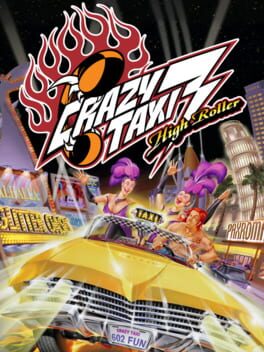
After New York, what city could be screwy enough for a CRAZY TAXI game? You guessed it, an amped-up version of Las Vegas serves as the backdrop for this chapter in this ultra-tense driving game. As with previous series installments, the object of the game is to collect as much fare money as possible by picking up and delivering passengers at record speeds. You'll have to create a few shortcuts of your won in order to win, and that will mean causing a few crashes and knocking down a few buildings.

Racing / Adventure / Action / Comedy
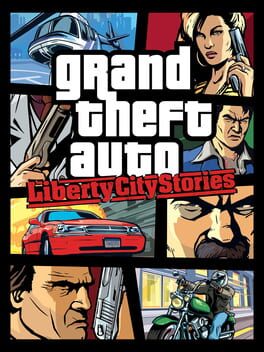
Grand Theft Auto: Liberty City Stories is an action-adventure game set in Liberty City in 1998, serving as a prequel to Grand Theft Auto III. Players assume the role of Toni Cipriani, a member of the Leone crime family, as he returns from hiding to reestablish his position within the organization. The game features open-world exploration, mission-based progression, and various side activities, maintaining the series' hallmark gameplay elements.

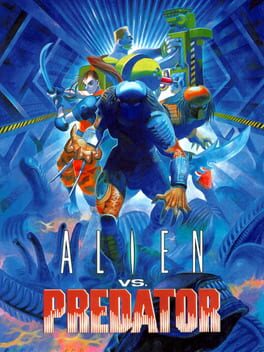
Shooter / Hack and slash/Beat 'em up / Arcade / Action / Science fiction
Alien vs. Predator is a 1994 beat 'em up video game developed and released by Capcom for the CPS-2 arcade game system. It is based on the science fiction franchise of the same name. Introducing an original fighter to the game: Lt. Kurosawa, the players take control of up to three from the selection of four cyborgs and Predator characters in a battle against the Xenomorph hordes and rogue human soldiers.

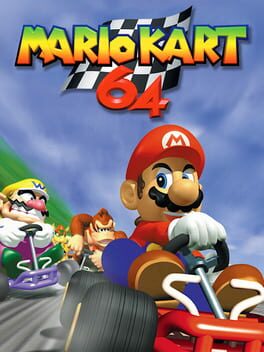
Racing / Arcade / Action / Kids
Mario Kart 64 is the second main installment of the Mario Kart series. It is the first game in the series to use three-dimensional graphics, however, the characters and items in this game are still two-dimensional, pre-rendered sprites. The game offers two camera angles and three engine sizes: 50cc, 100cc and 150cc. Each kart has distinctive handling, acceleration and top speed capabilities. Shells that you fire at rival racers, Bananas that make them skid out and Lightning Bolts that make them small and very slow are just a few of the game's unique power-ups.

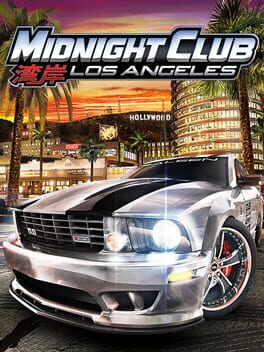
Racing / Arcade / Open world
Midnight Club: Los Angeles is an open-world racing game developed by Rockstar San Diego and published by Rockstar Games. Set in a recreation of Los Angeles, the game lets players take part in street races, time trials, and freeway battles while earning money and reputation to unlock vehicles, upgrades, and customization options. The game features licensed cars and motorcycles, with performance tuning and visual modification systems. Its open-world structure lets players drive through the city without loading separate tracks, using streets, traffic, and shortcuts as part of each race.

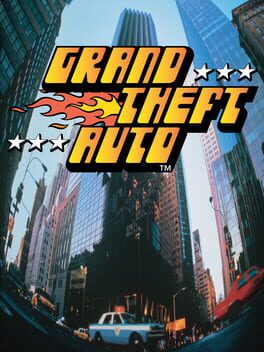
Shooter / Racing / Adventure / Action / Sandbox
Grand Theft Auto is the first game in the Grand Theft Auto series and a sandbox-crime game published by Rockstar Games. The original Grand Theft Auto is made up of a series of levels each set in one of the three cities in the game. In each level, the player has a target number of points to achieve, and five lives to attain the score. The score counter doubles as a money meter; the player can spend this money on paint jobs and various other things. However, any money spent is of course taken away from the score, making the goal that little bit further away. On obtaining the target number of points, the player must then drive to a certain location to complete the level, which allows progress to the next one.