

Dragon Beat: Legend of Pinball1997
A pinball game from Map Japan featuring three distinct tables: Castle, Old Town and Legend.
Screenshots & Artwork
Featured in
A pinball game from Map Japan featuring three distinct tables: Castle, Old Town and Legend.
Fantasy-themed Pinball game, which puts the player in control of a trio of heroes out to prevent the Lord of the Underworld from taking over the world. From the same developer as the Devil's Crush port for Sega Genesis/Mega Drive.
Role-playing (RPG) / Pinball / Fantasy
Pinball Power (referred to as "Golden Logres" in-game and Japan) is another pinball simulator by LittleWing. A sequel to both Tristan and Crystal Caliburn, the game features three tables based on the Arthurian legends: Camelot, Land's End and Fisher King. After completing all the missions on one table, the game moves to the next one. A practice mode is available to test the last two tables and prepare to the full game.
Role-playing (RPG) / Adventure / Fantasy / Science fiction
Final Fantasy VII International is a direct port of the North American version, including all of its gameplay and storyline tweaks. It came with an extra fourth disc that includes bonus background information about the game itself.
Role-playing (RPG) / Adventure / Action / Fantasy
King's Field is a first-person 3D RPG which takes place in the underground tomb of the kingdom of Verdite. The player takes the role of Jean who explores 3D dungeons all alone in this dark fantasy-world with his sword and magic spells. A lot of challenges await Jean. The player will gain a great sense of accomplishment when overcoming tough situations in the game.
Role-playing (RPG) / Tactical / Fantasy
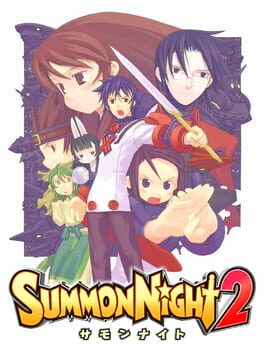
Summon Night 2 is a Japanese tactical RPG and the second entry in the Summon Night series. The story follows a young Summoner apprentice of the Blue faction, who has to go on a journey to be recognized as a full-fledged summoner. It’s during this journey that a war between the Old Kingdom and the Saint Kingdom that would be the start to unveil the truth behind an ancient weapon and the demon's conspiracies. The gameplay is for the most part unchanged from the first game.
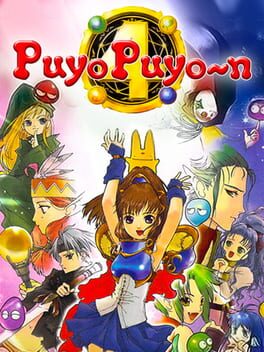
This game was released only in Japan. It is the fourth game in the Puyo Puyo series and the last set during the Madou-era in the main series. Continuing the trend of naming the games after puns, the name comes from a pun on "yon", the Japanese word for the number 4, but this time this is the only reference to the pun. The gameplay in is similar to that of Puyo Puyo 2, but adds super attacks. Clearing chains now builds up a "charge meter" which allows players to use them. The only other addition was a new game mode which could be played with a number of different field sizes, smaller or bigger than the standard 6x12, however, it removes several game modes that were present in Puyo Puyo Sun, i.e. the tournament, task and chain training modes. The art is also vastly different to the previous game in the series and, of course, the Fever series; this style was only otherwise used for Minna de Puyo Puyo.
Turn-based strategy (TBS) / Tactical / Fantasy / Science fiction
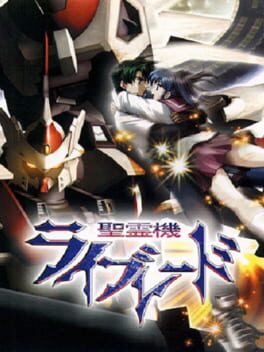
Seireiki Rayblade (pronounced as "rye-blade") is a turn-based tactical RPG in a very similar vein to Super Robot Wars/Taisen and Fire Emblem. The player controls pilots of robots throughout the entire campaign, battling against various types of enemies on an isometric field. All main characters possess powers that can give them a necessary edge in the battle. When enemy units are defeated, characters earn "prāna", their willpower. When prāna increases to a certain level, characters can perform more powerful attacks on the enemy. This game is actually a spiritual successor to the Masou Kishin: The Lord of Elemental, previously developed by Banpresto and Winky Soft. Banpresto went to develop the Super Robot Wars/Taisen franchise, while Winky Soft decided to make a game reminiscent of the original Masou Kishin. As such, the game shares many similarities with each other, including the combat, the gameplay, its mechanics, the science-fantasy setting, and even the design of the protagonist. However, the main story, while similar, plays out differently. Also, all combat in the game is performed on the playing field itself, i.e. it does not cut to a separate combat screen. The biggest addition to the genre is the character progression system in a "visual novel" style. After missions, players can talk to various characters and, depending on the choices, increase their loyalty levels. Such changes can have an impact on the performance of their teammates in battle. The game was also released for the Dreamcast console and got a sequel in Playstation 2.
The direct sequel to 1996's PoPoLoCrois Monogatari. Picking up two years after the events of the first game, the game sees series protagonist Prince Pietro tasked with retrieving a crown from a nearby cave as part of his rite of succession. But after finding the crown, he encounters a mysterious figure. Identifying himself as Baskal, the figure delivers a strange prophecy to Pietro, and asks the prince a question. "What do you think the true treasure of kings is?" With this question begins a touching, romantic, and sometimes tragic journey that will reunite Pietro with familiar faces, introduce him to new companions, and forever change the boy prince of the Kingdom of PoPoLoCrois. A much beloved sequel that many fans remember as the high point of the series, PoPoLoCrois Monogatari II builds on the already beautiful pixel art graphics of the first game, with detailed, lovingly crafted environments and some outstanding sprite animation. Spread across three discs, the game also features full voice acting for its story sequences, which was a series first, and a relative rarity for RPGs of the era. The battle system broadly resembles that of its prequel, with combat taking place directly within the game's environments, and movement and positioning playing a key role in battles. But certain features have been simplified and streamlined compared to the first game, and the level of difficulty is generally a lot lower. Many of the game's events were loosely adapted in the third chapter of the 2005 PSP title PoPoLoCrois. The opening segments also appear as part of the same title's second chapter.