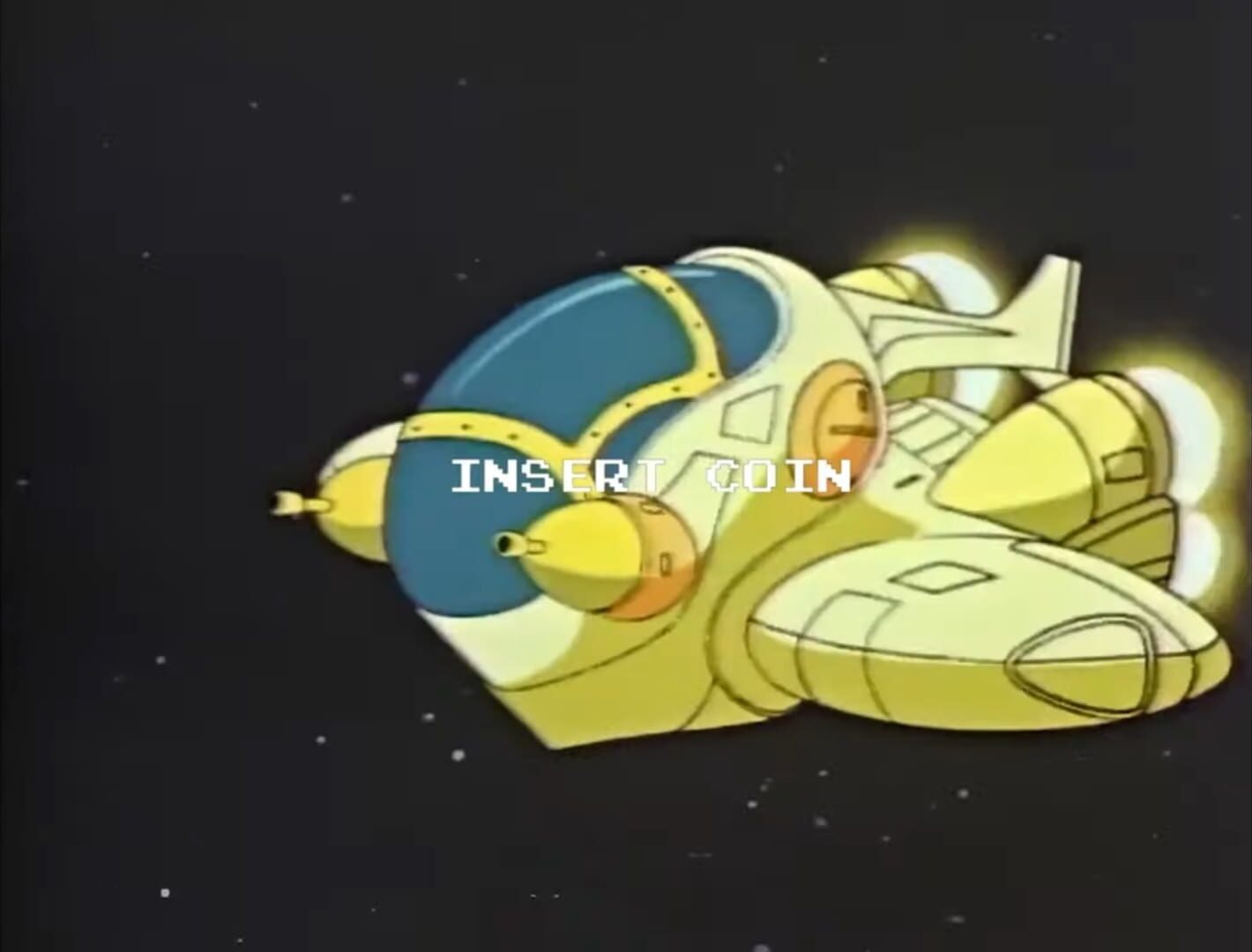
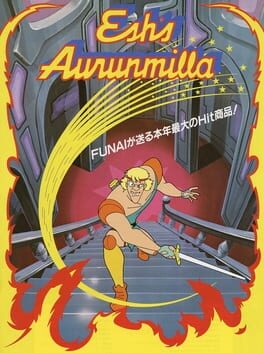
Esh's Aurunmilla was produced by Funai in 1984. Funai released 3 different machines under this trade name, starting in 1983. Other machines made by Funai during the time period Esh's Aurunmilla was produced include Interstellar, and Zangus.

Arcade / Action / Science fiction
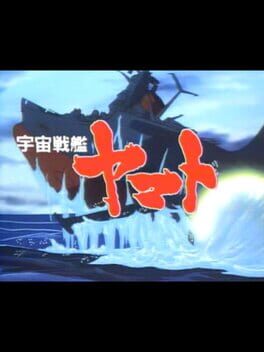
1985 Japanese exclusive Laserdisc video game designed by Taito which was based on the television series of the same name. Game Machine listed Space Battleship Yamato on their August 1, 1985 issue as being the second most-successful upright/cockpit arcade unit of the month.

Shooter / Arcade / Action / Science fiction
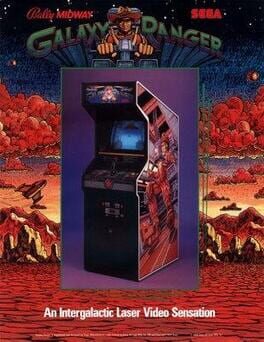
Interactive Laser Disc space battle game with computer-generated overlaid graphics. Control a space craft to defend against attacking enemy waves then destroy the enemy command ship. Huge explosions. Video images are from a Toei film - Message From Space.

Shooter / Arcade / Action / Science fiction
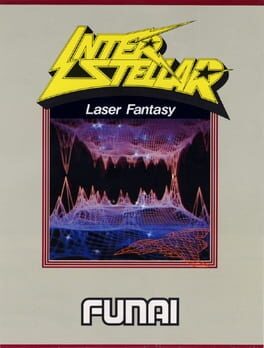
You are Frald Rancer and control a space ship which must journey from your home planet to outer space to defeat enemy invaders. Once all the enemies are defeated then return home. The game moves in a forward direction where the screen objects move towards and down to the player. Approaching enemy ships are small, in the distance, and become larger and move faster as they approach the player. The player controls a fighter at the bottom of the screen, which can only move from side to side. Shots can be fired at a diagonal, as well as straight, by twisting the joystick from side to side. At certain stages, ground targets will appear and can be destroyed by using the "Burn" button. The laser disc generated backgrounds are largely non-interactive during game play. They form the backgrounds on which the game is played on. Scenes do work in with the backgrounds, however that is the extent. Some backgrounds appear as they should have elements of interactively, however, were not used in the release of the game. These include scenes where the player is going through an asteroid field and asteroids fly towards the player. Another scene is in the crystal caverns, where there are many obstacles which could have been made to be avoided. These are only two of many scenes which could have had interactive elements. The game may have been decided to have been too hard to play with these background obstacles and computer fighters to play. Hence removing the background interactively to make the game more playable. The game starts with the player in Frald Rancer's home city, then taking off into outer space via a fly-by of the city. The backgrounds are very Sci-Fi and are fantasy themed. They are very interesting, more so than the game. The music from the laser disc also complements the laser disc video very well and makes up for the sometimes annoying, computer generated sounds.
Shooter / Arcade / Action / Science fiction
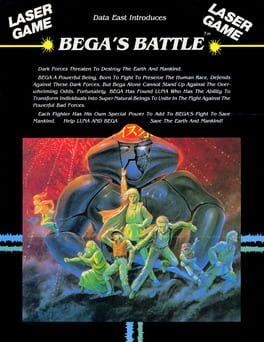
Data East used footage from the film Harmagedon to create a laserdisc video game titled Bega's Battle. It was released in June 1983. In the game, the player to take on the role of the robot Bega (Vega) whose goal was to stop the invasion forces of the alien Varga (Genma), while also rescuing his three friends who had been kidnapped by them. Even among laserdisc games Bega's Battle has become somewhat rare because many of the machines were converted into Cobra Command machines as part of a discount deal offered by Data East in exchange for the internals of the Bega's Battle arcade cabinet. Similar to Astron Belt, the game used the footage mainly for backgrounds, while the actual gameplay was a shooting game with sprites laid over the video. Bega's Battle also used brief full-motion video cut scenes to develop a story between the game's shooting stages. Years later, this would become the standard approach to video game storytelling. Bega's Battle also featured a branching storyline. The Twin Galaxies world record for Bega's Battle was set by Steve Harris (later the founder of Electronic Gaming Monthly) on July 18, 1983.

Shooter / Arcade / Action / Science fiction
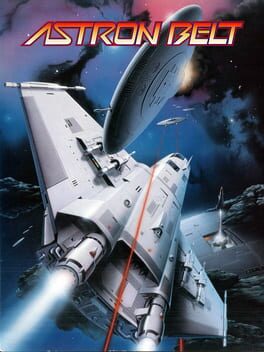
The player controls a lone spacecraft on a mission to singlehandedly take down the entire enemy armada. Enemy fighters and ships shoot at the player, and there are mines and other objects that must be shot or avoided. The game is divided into waves. At the end of each wave is a command ship that must be destroyed. In later waves the enemy fighters move and shoot more aggressively, and their shots are more accurate. Some waves take place in open space, while others require the player to battle enemies while flying through narrow trenches and tunnels. The player is on a timer at the beginning of the game, with an unlimited number of lives available. The length of the timer can be adjusted by the machine operator, but is normally 60 seconds. After the timer expires, the player is given a limited number of additional lives. When all of those lives are lost, the game ends.

Shooter / Arcade / Action / Science fiction
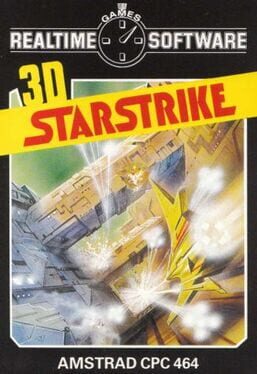
3D Starstrike is a clone of the original wireframe Star Wars game.

Fighting / Role-playing (RPG) / Adventure / Action / Fantasy
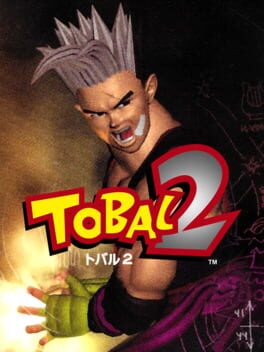
The fighting system in Tobal 2 is the same as in the previous game. The player can freely navigate 3D fighting arenas under the condition that he or she faces the opponent. High, medium, and low attacks can be executed using assigned buttons. As in Tobal No. 1, the grappling and blocking system offers the player a variety of offensive and defensive maneuvers. A new unblockable fireball attack has been added for each character. Tobal 2 was released on the same day as Sony's Dual Analog Controller in Japan, noted as the first game compatible with the peripheral. Graphically, the game features Gouraud shaded and higher-resolution character models compared to Tobal No. 1, but still runs at 60 frames per second.