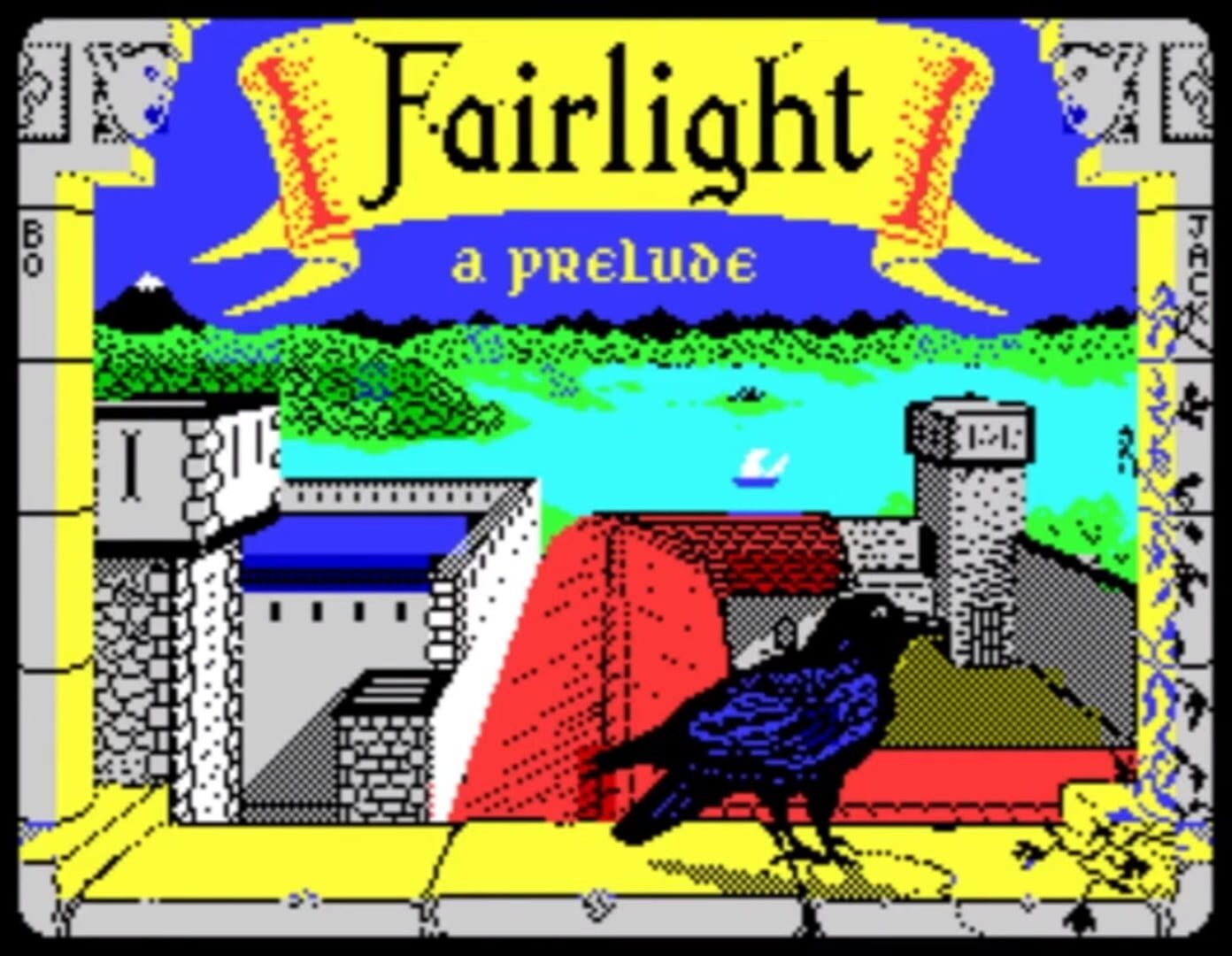

The player controls an adventurer named Isvar that can be moved in a castle which is not only three-dimensional isometric view, but realistic in terms of the way objects behave. Each object has its own physical properties and resultant characteristics in terms of how much else can be carried alongside it. Certain objects have special uses (e.g. keys open certain doors), and there is a puzzle element to the game to discover how some of these objects relate to the world in order to help the player solve the game. In addition to carrying objects, they could also be stacked on top of each other to enable Isvar to climb up to rooms above him or to reach important objects perched high above on platforms. There are also a number of secret areas in the castle that are not visually obvious to the player and can only be discovered through exploration. During Isvar's exploration of the castle he is accosted by its guards and monsters - trolls, monks, guards, tornadoes, man-eating plants, bubbles, etc. all of which weaken Isvar's energy. The castle also contains food and magical potions which will restore his health. In addition, certain game objects can affect the enemies, (by either killing them, distracting them, or freezing them, depending on the object and the type of enemy they are used upon) Once defeated in combat a guard disappears leaving only his helmet behind. Helmets can be picked up and carried by Isvar, and placed somewhere else out of harms way (or into the path of a tornado, that destroys any object it touches). If Isvar leaves the room, the guard will regenerate from the helmet.
Platform / Puzzle / Role-playing (RPG) / Action / Fantasy
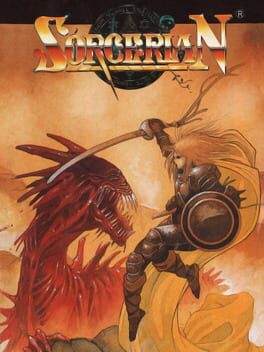
Sorcerian is a side-scrolling action-RPG. The player can create up to ten characters, from whom up to four members can be present in a party at the same time. Each character is highly customizable, with four different classes/races (fighter, wizard, elf, and dwarf) and over 60 possible jobs/occupations (ranging from clown to exorcist) available for them to perform; each has its own strengths and weaknesses, affecting the seven primary attributes (strength, intelligence, protection, magic resistance, vitality, dexterity, and karma) in different ways, as well as different equipment limitations. The player can choose from fifteen different scenarios, or quests, to play through in the order of their choice. The party must battle enemies and perform tasks within the given levels to clear each scenario, before moving onto another scenario of their choice. The player controls the entire party at the same time, with all four members running in a line, jumping in sequence, and attacking in unison. The party members follow behind in a manner similar to the Options in the arcade shooter Gradius (1985). Sorcerian also employs class-based puzzles, such as using a high-strength character to force open doors. All the characters have a default starting age of 16. Each time a player begins a new scenario, a year passes by, while additional time passes by in towns as a character goes through training or enchants items. The characters age at different rates depending on their race, with humans reaching old age at 60, dwarves at 100, and elves at 200. Upon reaching old age, for every year that passes, a character can die permanently at a random time. There is also an “Advance Time” to speed up the flow of time. Another new feature of Sorcerian was its episodic format that extended across various expansion packs. Besides the default fifteen scenarios that come with the game, there were a number of additional scenario packs released. The aging system was created with the additional scenario packs in mind.

Puzzle / Role-playing (RPG) / Adventure / Action / Fantasy
Prince Ali has excavated a gold armlet which belonged to a powerful sorcerer. As soon as Ali tried on the armlet, a strange fire with a face appeared and spoke to him. “The power of the gold armlet is now your’s to wield. Find the four spirits this gold armlet governs and stop the evil ambitions of the one with the silver armlet.”

Puzzle / Adventure / Action / Fantasy
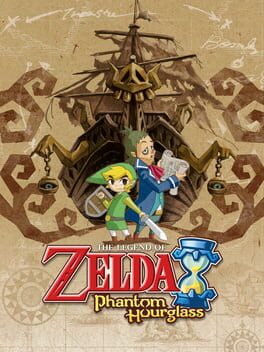
The Legend of Zelda: Phantom Hourglass is the first Zelda game for the Nintendo DS and a direct sequel to The Wind Waker. The art direction is the same cel-shaded style as the Wind Waker but is displayed from a classic top-down perspective. The gameplay is structured similarly to other games in the series and is divided into two major gameplay sections: sailing between islands and exploring the islands and their dungeons on foot. The touch screen is used to make Link move and attack instead of buttons, you can also make notes of secret treasures and items on the map simply by writing them down. The game received critical acclaim from reviewers, who agreed that the game was a worthy sequel to The Wind Waker.

Puzzle / Adventure / Action / Fantasy
Venture back to Hyrule and an age of magic and heroes. The predecessors of Link and Zelda face monsters on the march when a menacing magician takes over the kingdom. Only you can prevent his evil plot from shattering the land of Hyrule. In your quest, you'll venture into twisting mazes, dungeons, palaces and shadowy forests. Test your mettle with mighty swords and magical weapons. Or heft a boulder and hurl it at your enemies. If the going gets tough, dive into a river - you can swim to escape! Learn powerful spells, locate magical artifacts and solve the mysteries of the evil magician and the hidden realm of Hyrule.

Puzzle / Adventure / Action / Fantasy
The Legend of Zelda: Ocarina of Time is the fifth main installment of The Legend of Zelda series and the first to be released for the Nintendo 64. It was one of the most highly anticipated games of its age, and is listed among the greatest video games ever created by numerous websites and magazines. The gameplay of Ocarina of Time was revolutionary for its time, it has arguably made more of an impact on later games in the series than any of its predecessors even though they had the same cores of exploration, dungeons, puzzles and item usage. Among the gameplay mechanics, one of the most noteworthy is the time-traveling system. The game begins with the player controlling the child Link, but later on an adult Link becomes a playable character as well and each of them has certain unique abilities. Ocarina of Time also introduces the use of music to solve puzzles: as new songs are learned, they can be used to solve puzzles, gain access to new areas and warp to different locations. Dungeon exploration is somewhat more puzzle-oriented than in earlier games but they are not too complex.


Puzzle / Adventure / Action / Fantasy
The Legend of Zelda: Link's Awakening is the first title in the series to be released on a handheld system and the only Zelda title on the original Game Boy. The gameplay is mostly similar to its predecessor with a top-down perspective, however there are short sections in dungeons where the game switches to a side-scrolling view with platforming elements. For this new adventure, Link must go onto each of the 7 temples to retrieve a musical instrument that will help awaken the Wind Fish. Along the way, he must search the land and uncover hidden treasures and items that will allow him to progress on his journey. Since its release, Link's Awakening has been popular among fans and critics.

Puzzle / Adventure / Action / Fantasy
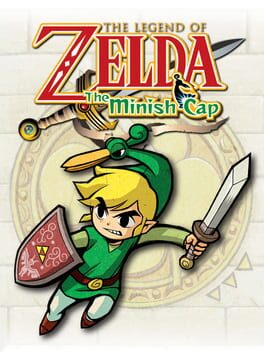
The Legend of Zelda: The Minish Cap is a top-down action adventure game that tells the origins of the evil Vaati from Four Swords. Like most other titles in the series, The Minish Cap features the fully explorable land of Hyrule, although it can be viewed from the eyes of a human or the eyes of a Minish, a race of tiny people and an alternate form that Link can transform into. Unlike the multiplayer focus of the other games in the series, The Minish Cap retains the original form of exploration and dungeons as seen in A Link to the Past, Oracle of Seasons, and Oracle of Ages, as well as returning characters and game mechanics such as Malon and the Spin Attack. New features include fusing Kinstones and shrinking to the size of a Minish.