Mystery box
?
Sealed
Mystery Box
Every game in your current results, in one box. Add it to a quest and each run draws a fresh game from it, revealed on release day.
PC-88
2020
This side out
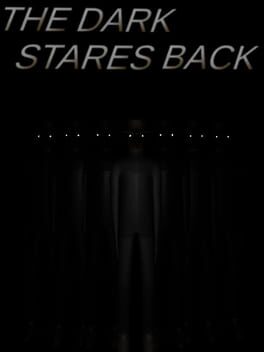
The Dark Stares Back is an Indie horror strategy game where you must carefully plan your movement in a house with no power or escape against multiple home invaders with no purpose but to hunt you. Each of them behaves in their own unique way, from being in the room you were in last, to waiting for you to open doors to ambush you, and more. You must learn from your experience to evade them long enough to survive until 7 AM to win. It's all about learning, strategy, and execution.
PC-88
1990
This side out
Adventure / Visual Novel / Erotic
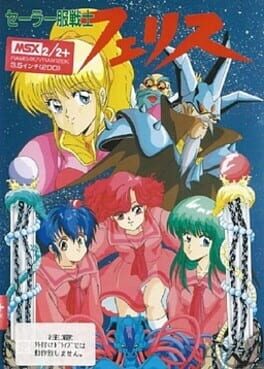
A UFO came and abducted three girls. Their classmate rode her grandfather fighter spaceship and hurried to rescue!
Apple II
1980
This side out
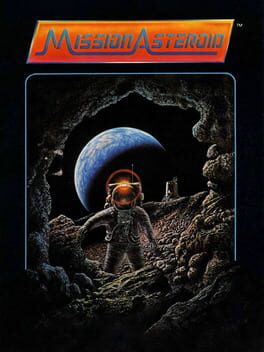
An asteroid is on collision course with Earth and it's up to the player to prevent the inevitable catastrophe. "Mission Asteroid" is the third text adventure with graphical illustrations by Sierra. But due to its easy difficulty level it was released as number zero in Sierra's Hi-Res Adventure series. The game's parser only understands simple one- or two-word commands.
PC-88
1984
This side out
Role-playing (RPG) / Action / Fantasy
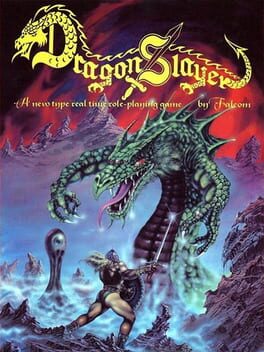
Dragon Slayer is an action RPG designed by Yoshio Kiya and developed by Nihon Falcom. The title helped to pioneer the action RPG genre in Japan and spawned many sequels that would spin-off into their own franchises over time.
Apple II
1982
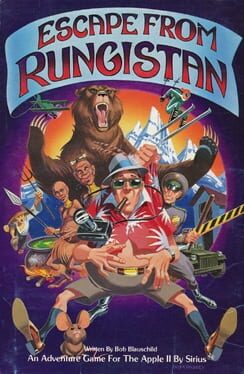
This side out
A graphical text-adventure in which the player has to escape from the mid-African nation of Rungistan.
PC-88
1985
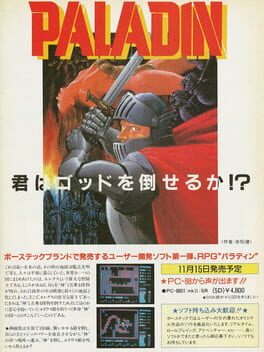
This side out
Released in 1985 on PC-8800 Series.
MSX2
1987
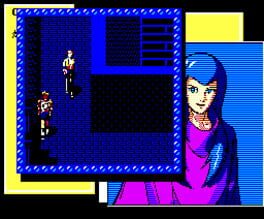
This side out
Reviver: The Real-Time Adventure is an adventure game designed by Katsunori Yoshimura and released by Arsys Software in July 1987. It featured the concept of a real-time persistent world.
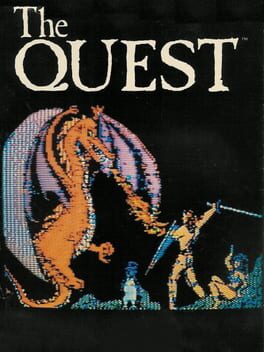
PC-88
1988
This side out
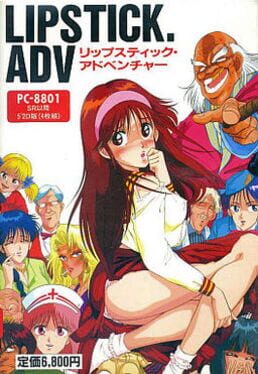
In Lipstick. ADV the player takes the role of Gorou, a young Japanese private detective. One day, a wealthy and powerful old man contacts him and asks him to find a box which - according to him - contained a family treasure. The young detective thinks that fortune has finally smiled to him, but when his pretty girlfriend Otomi disappears, he realizes that the mystery is bigger than he thought...
PC-6000
1982
This side out
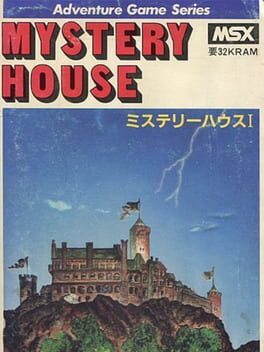
The first Japanese developed graphical adventure game created by Micro Cabin in 1982. Although it features the same name, it is otherwise unrelated to On-Line Systems' game. Mystery House, or Mystery House I (ミステリーハウスI) as it is written in Japanese on the box, is an adventure game developed by Micro Cabin in June 1982 for the Sharp MZ-80B followed by various ports for other computers. While Micro Cabin's Mystery House is clearly inspired by the seminal Mystery House created by On-Line Systems in 1980, sharing the same name and similar gameplay, it bares no connection to that title nor its official Japanese port created by StarCraft in 1983. A direct sequel to Micro Cabin's Mystery House was released later in the same year called Mystery House II.
PC-88
1987
This side out
Platform / Puzzle / Role-playing (RPG) / Action / Fantasy
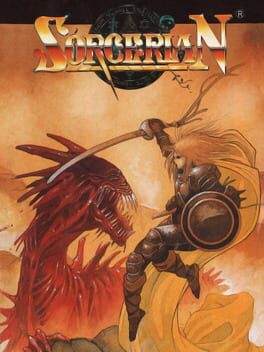
Sorcerian is a side-scrolling action-RPG. The player can create up to ten characters, from whom up to four members can be present in a party at the same time. Each character is highly customizable, with four different classes/races (fighter, wizard, elf, and dwarf) and over 60 possible jobs/occupations (ranging from clown to exorcist) available for them to perform; each has its own strengths and weaknesses, affecting the seven primary attributes (strength, intelligence, protection, magic resistance, vitality, dexterity, and karma) in different ways, as well as different equipment limitations. The player can choose from fifteen different scenarios, or quests, to play through in the order of their choice. The party must battle enemies and perform tasks within the given levels to clear each scenario, before moving onto another scenario of their choice. The player controls the entire party at the same time, with all four members running in a line, jumping in sequence, and attacking in unison. The party members follow behind in a manner similar to the Options in the arcade shooter Gradius (1985). Sorcerian also employs class-based puzzles, such as using a high-strength character to force open doors. All the characters have a default starting age of 16. Each time a player begins a new scenario, a year passes by, while additional time passes by in towns as a character goes through training or enchants items. The characters age at different rates depending on their race, with humans reaching old age at 60, dwarves at 100, and elves at 200. Upon reaching old age, for every year that passes, a character can die permanently at a random time. There is also an “Advance Time” to speed up the flow of time. Another new feature of Sorcerian was its episodic format that extended across various expansion packs. Besides the default fifteen scenarios that come with the game, there were a number of additional scenario packs released. The aging system was created with the additional scenario packs in mind.
MSX2
1986
This side out
Point-and-click / Role-playing (RPG) / Adventure / Fantasy
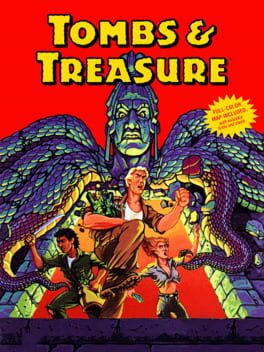
In Tombs & Treasure, you'll have to use your wits in order for your party to successfully make its way through the ruins. As you enter such sites as El Castillo and the Ball Court, you'll have to use collected items in innovative ways in order to attain vital clues and progress. Each screen you encounter will feature items and peculiarities that must been looked at, taken, pushed, pulled, moved, smashed, joined, and/or washed in order to advance. Occasionally, you will confront monsters and engage in a classic RPG-style fight, your final battle versus the demon Tentacula. Be sure to refer to Professor Imes' journal in order to gain essential clues. You'll need them in order to survive the Tombs & Treasure.
FM-7
1986
This side out
Adventure / Visual Novel / Erotic
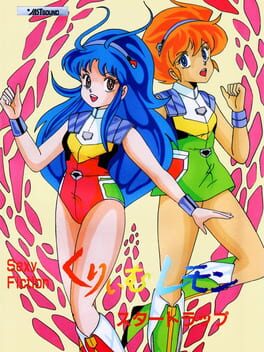
This visual novel faithfully follows the story of Star Trap, the 10th episode of the adult OVA (Original Video Animation) series Cream Lemon while featuring some additional scenes.
PC-88
1989
This side out
Adventure / Visual Novel / Erotic
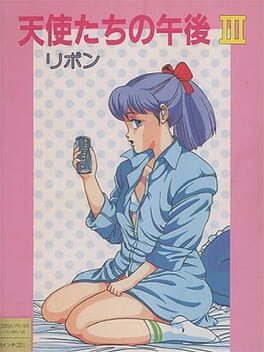
The third game in the Tenshitachi no Gogo series is not connected to its predecessors story-wise. In this installment, the player assumes the role of a male teacher in a high school. Many pretty female students (and pretty female teachers) surround the hero, but he only has one girl in mind: Haru Okamoto, whom he calls "his angel". In order to win her love, the hero will have to know her better - which also means knowing the secrets of students and teachers alike... Tenshitachi no Gogo 3: Ribbon is a Japanese-style (puzzle-less) adventure game. The player interacts with the environment by choosing verb commands ("Look", "Ask", "Search", etc.), which lead to sub-menus with object choices. The game mostly advances in a linear way, but at certain points the story can end prematurely, depending on the player's choice.
PC-88
1987
This side out
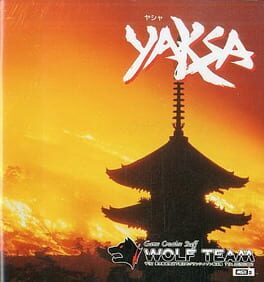
Yaksa is an action game with RPG elements where you play as one out of two characters - Saikuu or Iori in case Saikuu is killed. The game takes place in Japan in the Sengoku period. The old master, mortally wounded by Nobunaga's assassin calls Saikuu close to him to say his last words. A dark cloud is about to overshadow this Japan. Saikuu must stop the eight demons brought back from the dead by Nobunaga and defeat the god of destruction. Players have a world map where they can move the character to travel to locations and play levels in any order. Once they pick their destination, the game switches to a side-scrolling mode with demons lunging to attack from all sides, giving players experience points, as well as characters they can talk to who will aid them in their quest. There are various weapons and spells for players to use in combat.
Apple II
1982
This side out
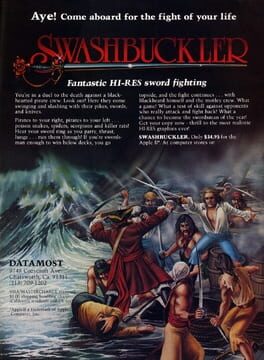
Swashbuckler is an early fighting game for the Apple II family of computers, created by Paul Stephenson and published by Datamost in 1982. The player controls a sword-wielding swashbuckler who must fight and dispatch various attackers. Combat occurs in a wooden-beamed ship's hold littered with skeletons and cobwebs, which the player views from the side.
PC-88
This side out
Single-screen shooter for PC88.
MSX
1985
This side out
Role-playing (RPG) / Adventure / Action / Science fiction
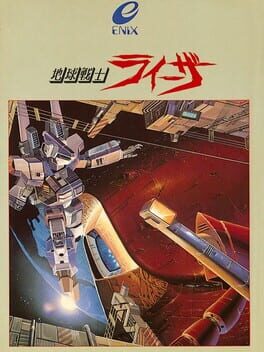
The Earth Fighter Rayieza is a role-playing game.
Still plenty of games...