Mystery box
?
Sealed
Mystery Box
Every game in your current results, in one box. Add it to a quest and each run draws a fresh game from it, revealed on release day.
PC-6000
1982
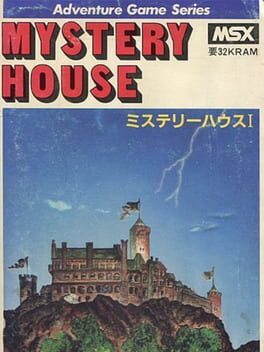
This side out
The first Japanese developed graphical adventure game created by Micro Cabin in 1982. Although it features the same name, it is otherwise unrelated to On-Line Systems' game. Mystery House, or Mystery House I (ミステリーハウスI) as it is written in Japanese on the box, is an adventure game developed by Micro Cabin in June 1982 for the Sharp MZ-80B followed by various ports for other computers. While Micro Cabin's Mystery House is clearly inspired by the seminal Mystery House created by On-Line Systems in 1980, sharing the same name and similar gameplay, it bares no connection to that title nor its official Japanese port created by StarCraft in 1983. A direct sequel to Micro Cabin's Mystery House was released later in the same year called Mystery House II.
PC-88
1984
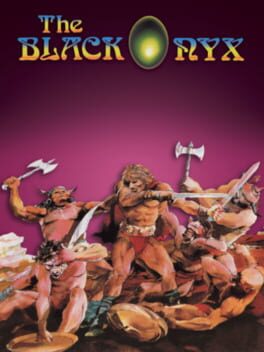
This side out
The Black Onyx is a role-playing game developed by Bullet Proof Software. It was released, among other consoles and computers, for the SG-1000 in 1987. It was the last SG-1000 game to be released in card form, and the last to be published by Sega, but it is currently unknown as to whether it was the last SG-1000 game. MSX and PC-8801 versions had been released in 1983 and 1984, respectively, meaning this version is unusually late. The game was followed by The Black Onyx II: Search For The Fire Crystal, which saw its original MSX release in 1984.
MSX
1983
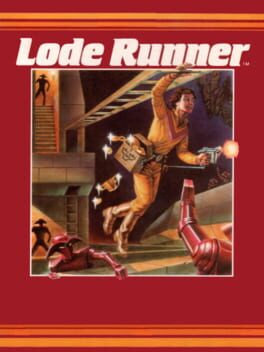
This side out
Platform / Puzzle / Action / Science fiction
Lode Runner is a 1983 puzzle video game, first published by Brøderbund. It is one of the first games to include a level editor, a feature that allows players to create their own levels for the game. This feature bolstered the game's popularity, as magazines such as Computer Gaming World held contests to see who could build the best level.
PC-88
1982
This side out
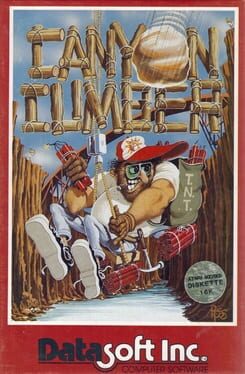
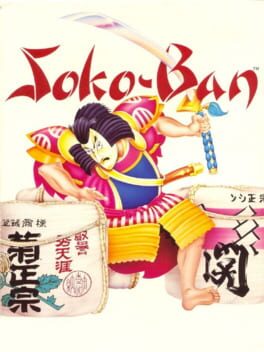
Sokoban ("warehouse keeper") is a is a classic puzzle game created in 1981 by Hiroyuki Imabayashi, and published in 1982 by Thinking Rabbit, a software house based in Takarazuka, Japan. In 1984 the ASCII Corporation published a version produced by Khaled Bentebal. It was the basis of numerous clones in the later years. It is set in a warehouse. On each level, the player must push crates (from square to square) to get them onto designated spots; once each crate is on a marked spot, the level is complete. Crates can only be pushed one at a time (so two crates next to each other cannot be pushed together), and cannot be pulled--so it's possible to get a crate stuck in a corner, where it cannot be retrieved! By the last levels, you must plan 40 steps in advance.
Arcade
1982
This side out
Shooter / Platform / Puzzle / Action
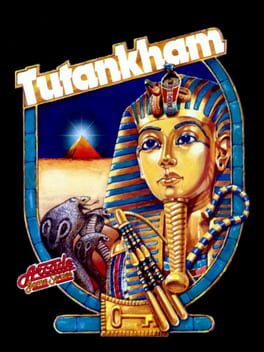
Tutankham is a combination of the maze, action and shoot 'em up genres. Taking on the role of an explorer grave robbing Tutankhamun's tomb, the player is chased by creatures such as asps, vultures, parrots, bats, dragons, and even curses, all that kill the player on contact. The explorer can fight back by firing lasers at the creatures, but he can only cover the left and right directions. The player is also endowed with a single screen-clearing "flash bomb" per level or life. Finally, each level has warp zones that teleport the player around the level, which enemies cannot use. To progress, the player collects keys open locked doors throughout the levels, searching for the large exit door. Optional treasures can be picked-up for bonus points. Each level has a timer; when it reaches zero the explorer can no longer fire lasers, and once a level is cleared the remaining time is converted to bonus points.
PC-88
1984
This side out
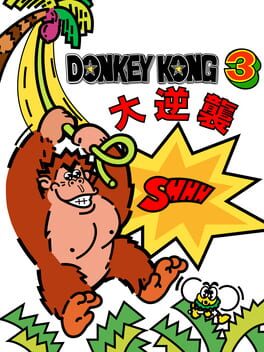
A semi-sequel to Donkey Kong 3, using different play mechanics and a completely new set of levels. Like Mario Bros. Special and Punch Ball Mario Bros., the game is not a port, but more of a semi-sequel to Donkey Kong 3. Stanley the Bugman's ability to jump is removed, along with the need to protect plants, making it much closer to a traditional shooter, à la Galaga. Enemies come down from the top of the screen in groups of five, swooping to the bottom and trying to target Stanley. After swooping around a bit, the enemies will exit the screen (usually from the bottom, though sometimes from the sides) and loop back around to the top. This will continue until Stanley dies, shoots Donkey Kong to the top of the screen, thus completing it, or kills the five insects, all of which take two hits apiece to kill. If Stanley kills all five insects before any of them loop back to the top of the screen, a flag reminiscent of one from Rally-X will appear, and shooting it will net him 1,000 points.
Arcade
1982
This side out
Shooter / Strategy / Arcade / Action / Science fiction
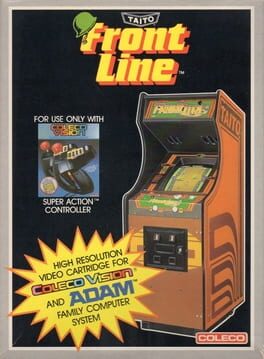
Front Line is a vertically scrolling action game. Your mission is to infiltrate enemy territory and destroy their fortress. To reach the fortress, you will have to make your way through varied and dangerous terrain. Jungles, deserts, brush, and rocks all slow your progress, plus each area has numerous enemy fighters and tanks trying to stop you. To help get past these obstacles, you are armed with a machine gun and grenades; at some points in the game you may even come across an abandoned tank which you can control to increase your odds of survival. When you reach the end of the level and successfully destroy the fortress, the game will repeat at a higher level of difficulty. Gameplay is for one or two players, and four different skill levels are available.
Sharp X1
1983
This side out
Real Time Strategy (RTS) / Role-playing (RPG) / Strategy / Action / Historical
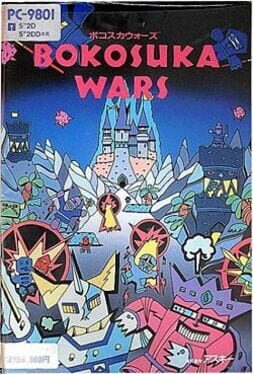
This game revolves around a leader who must lead an army in phalanx formation across a battlefield in real-time against overwhelming enemy forces while freeing and recruiting soldiers along the way, with each unit able to gain experience and level up through battle. The player must make sure that the leader stays alive, until the army reaches the enemy castle to defeat the leader of the opposing forces. The game was responsible for laying the foundations for the tactical role-playing game genre, or the "simulation RPG" genre as it is known in Japan, with its blend of role-playing and strategy game elements. The game has also variously been described as an early example of an action role-playing game, an early prototype real-time strategy game, and a unique reverse tower defense game. In its time, the game was considered a major success in Japan.
NES
2021
This side out
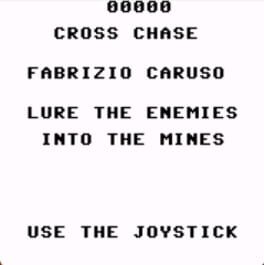
Chase is somehow similar to Gnome Robots but in real-time game and with several items and power-ups.
FM-7
1982
This side out
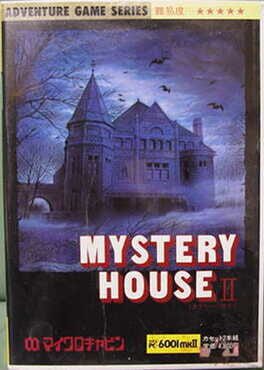
Mystery House II is an adventure game in Japanese and the sequel to the 1982 title Mystery House, which is in turn inspired by the 1980 title Hi-Res Adventure #1: Mystery House. Just like in the first game the goal is to explore a mysterious house and discover the treasure hidden inside by gathering four notes that provide clues. Exploration is similar to the first game, using N/S/E/W to move through the environments shown using a first-person perspective and drawn with outlines. At the bottom commands are entered, such as TAKE, READ or SEARCH. Items can be picked up and used elsewhere to solve puzzles. Compared to the first game the environment is now much larger as the house consists of three floors and the environment can be explored as well.
MSX
1983
This side out
Platform / Puzzle / Action / Survival
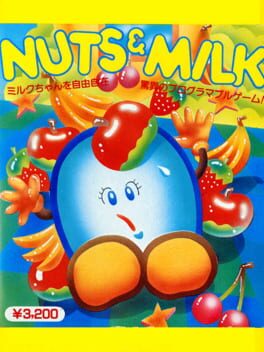
Nuts & Milk is a platform-style puzzle game developed and published by Japanese software developer Hudson Soft in 1983. The game was released initially on the FM-7, MSX, NEC PC-8801, NEC PC-6001, and later to the Famicom in Japan. It was the first third party video game to be released on a Nintendo console.
PC-6000
1983
This side out
Puzzle / Strategy / Fantasy / Comedy
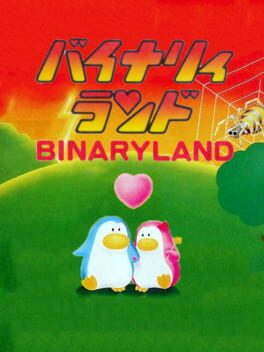
Binary Land is a puzzle video game developed by Hudson Soft in 1983 for the MSX, FM-7, NEC PC-6001, NEC PC-8801, and in 1985 for the Famicom. The MSX version saw release in Japan by Kuma Computers Ltd in 1984. While the Famicom version has a grand total of 99 levels; there is no ending screen implemented in the game.
PC-6000
2020
This side out
Shooter / Action / Science fiction
A vertically scrolling shooter developed by Inofuto for a variety of systems.
PC-88
1984

This side out
Role-playing (RPG) / Action / Fantasy
An evil demon named Varalys casts a curse upon the princess Ann, turning her into three fairies. You control Sir Jim and set out to find the fairies, and then slay Varalys. Only by vanquishing Varalys can the curse be lifted. Once the princess is restored the kingdom will be saved. The fighting is a little more in-depth than hack and slash. You can either fight with a defensive or offensive stance, or you can use magic spells.
Sharp X1
1983
This side out
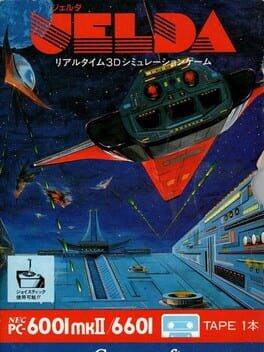
Jelda is an aerial combat game with wireframe graphics, released in Japan in 1983.
Still plenty of games...