Mystery box
?
Sealed
Mystery Box
Every game in your current results, in one box. Add it to a quest and each run draws a fresh game from it, revealed on release day.
PC-88
1984
This side out
Role-playing (RPG) / Action / Fantasy
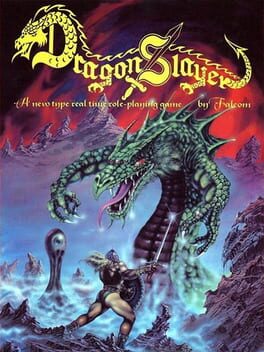
Dragon Slayer is an action RPG designed by Yoshio Kiya and developed by Nihon Falcom. The title helped to pioneer the action RPG genre in Japan and spawned many sequels that would spin-off into their own franchises over time.
MSX2
1987
This side out
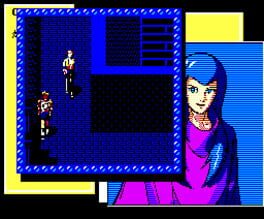
Reviver: The Real-Time Adventure is an adventure game designed by Katsunori Yoshimura and released by Arsys Software in July 1987. It featured the concept of a real-time persistent world.
PC-88
1987
This side out
Platform / Puzzle / Role-playing (RPG) / Action / Fantasy
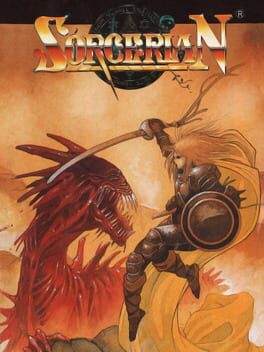
Sorcerian is a side-scrolling action-RPG. The player can create up to ten characters, from whom up to four members can be present in a party at the same time. Each character is highly customizable, with four different classes/races (fighter, wizard, elf, and dwarf) and over 60 possible jobs/occupations (ranging from clown to exorcist) available for them to perform; each has its own strengths and weaknesses, affecting the seven primary attributes (strength, intelligence, protection, magic resistance, vitality, dexterity, and karma) in different ways, as well as different equipment limitations. The player can choose from fifteen different scenarios, or quests, to play through in the order of their choice. The party must battle enemies and perform tasks within the given levels to clear each scenario, before moving onto another scenario of their choice. The player controls the entire party at the same time, with all four members running in a line, jumping in sequence, and attacking in unison. The party members follow behind in a manner similar to the Options in the arcade shooter Gradius (1985). Sorcerian also employs class-based puzzles, such as using a high-strength character to force open doors. All the characters have a default starting age of 16. Each time a player begins a new scenario, a year passes by, while additional time passes by in towns as a character goes through training or enchants items. The characters age at different rates depending on their race, with humans reaching old age at 60, dwarves at 100, and elves at 200. Upon reaching old age, for every year that passes, a character can die permanently at a random time. There is also an “Advance Time” to speed up the flow of time. Another new feature of Sorcerian was its episodic format that extended across various expansion packs. Besides the default fifteen scenarios that come with the game, there were a number of additional scenario packs released. The aging system was created with the additional scenario packs in mind.
MSX2
1986
This side out
Point-and-click / Role-playing (RPG) / Adventure / Fantasy
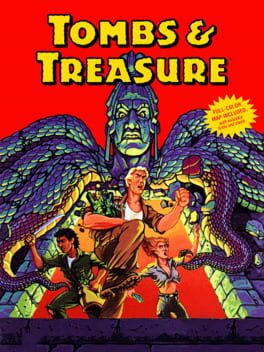
In Tombs & Treasure, you'll have to use your wits in order for your party to successfully make its way through the ruins. As you enter such sites as El Castillo and the Ball Court, you'll have to use collected items in innovative ways in order to attain vital clues and progress. Each screen you encounter will feature items and peculiarities that must been looked at, taken, pushed, pulled, moved, smashed, joined, and/or washed in order to advance. Occasionally, you will confront monsters and engage in a classic RPG-style fight, your final battle versus the demon Tentacula. Be sure to refer to Professor Imes' journal in order to gain essential clues. You'll need them in order to survive the Tombs & Treasure.
MSX
1985
This side out
Role-playing (RPG) / Adventure / Action / Science fiction
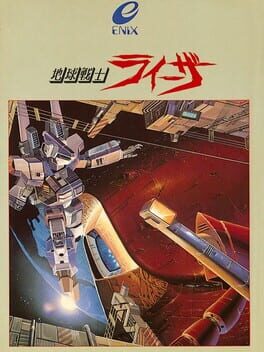
The Earth Fighter Rayieza is a role-playing game.
PC-88
1986
This side out
Role-playing (RPG) / Simulator / Strategy / Fantasy / Historical
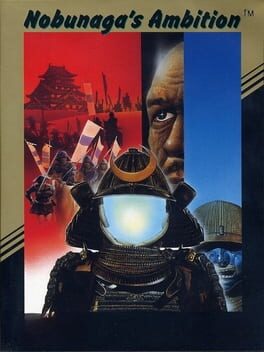
The second game in the series, previously released as Nobunaga's Ambition in the West. Players take on the role of one of the main characters of the period, Nobunaga Oda, Shingen Takeda, Kenshin Uesugi, or others and try to unite the 50 kingdoms of Japan, from Ezo in the north to Kyushu in the south, under their own rule.
PC-88
1984
This side out
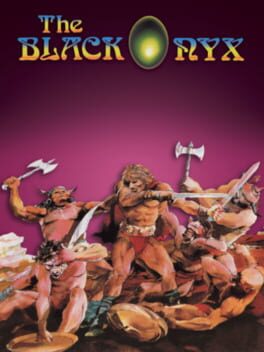
The Black Onyx is a role-playing game developed by Bullet Proof Software. It was released, among other consoles and computers, for the SG-1000 in 1987. It was the last SG-1000 game to be released in card form, and the last to be published by Sega, but it is currently unknown as to whether it was the last SG-1000 game. MSX and PC-8801 versions had been released in 1983 and 1984, respectively, meaning this version is unusually late. The game was followed by The Black Onyx II: Search For The Fire Crystal, which saw its original MSX release in 1984.
PC-88
1985
This side out
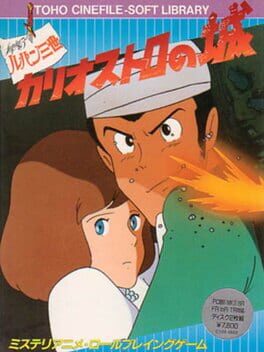
A video game adaption of Hayao Miyazaki's Lupin III anime film of the same name. Released for NEC PC-88, Sharp X1, and FM 7.
Sharp X1
1983
This side out
Shooter / Role-playing (RPG) / Adventure / Action / Science fiction
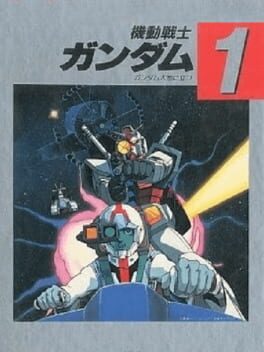
Kidou Senshi Gundam Part 1: Gundam Daishi ni Tatsu!! (機動戦士ガンダム PART 1 ガンダム大地に立つ!! "Mobile Suit Gundam Part 1: Gundam Stands on the Ground!!") is an adventure/shooter/RPG from 1983, based on the popular Mobile Suit Gundam anime television series.
PC-88
1987
This side out
Turn-based strategy (TBS) / Tactical / Fantasy / Warfare
Gaia no Monshō (also known as the 'Crest of Gaia') is a fantasy round-based strategy game by NCS and conversion of a game originally released for the NEC PC-8801 in 1987. Gaia no Monshō is a turn-based strategy game at heart - the player moves troops around a battlefield and attacks nearby enemy units. An Auto Battle mode is also available and gives the option to let the AI figure out of the player's next move. The game offers several play modes - the first one (Scenario Mode) gives the player the chance to jump straight into battle using predefined troops. The second (Construction Mode) allows him to build his own army using unit points. The last one (Campaign Mode) conveys story plot elements and starts in the siege town of Dirl, where king Sieghart battles the fierce Böser. This mode requires more complex strategy and the player must assemble his own troops using unit points and units lost in battle don't come back during the campaign. Unlike the other two modes, it offers a password system to save the player's progress through the game.
MSX2
1988

This side out
The game is based on the manga Maison Ikkoku by Rumiko Takahashi. The game is a "puzzle-less" adventure, the gameplay mostly focusing on simply depleting all the verb commands at every given screen and moving between locations. The commands include the usual "Look", "Talk", and Move" typical for Japanese adventures (no "Think" command), but also context-sensitive commands "Eat", "Drink", etc., as well as the possibility to use certain inventory items.
Arcade
1985

This side out
Players assume the role of an angry cop on a wild ride as he pursues a gang of bikers who killed his wife. Players need to race through oncoming traffic, squeeze between trucks, trash motorcycles and steer through lots of explosions. The only thing needed are quick reflexes to follow the instructions on the screen (with an increasing difficulty) in order to keep the animation going.
Famicom
1984
This side out
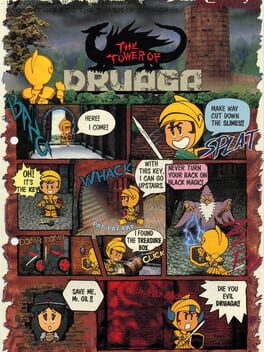
The story still's the same: Ishtar sends Gilgamesh up the 60 maze levels of the Druaga's tower to rescue Ki and retrieve the Blue Crystal Rod. He must find each level's key to proceed to the next one.

PC-88
1985
This side out
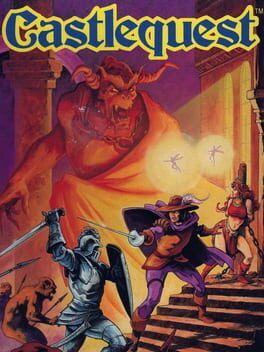
The object of the game is to navigate through Groken Castle to rescue Princess Margarita. The player can push certain objects throughout the game to accomplish progress. In some rooms, the prince can only advance to the next room by aligning cement blocks, Honey Jars, Candle Cakes, and Elevator Controlling Block.
MSX
1983
This side out
Platform / Puzzle / Action / Science fiction
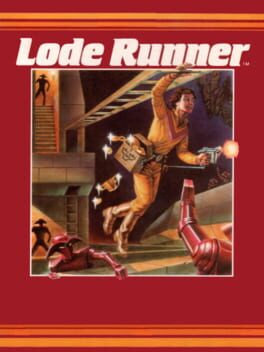
Lode Runner is a 1983 puzzle video game, first published by Brøderbund. It is one of the first games to include a level editor, a feature that allows players to create their own levels for the game. This feature bolstered the game's popularity, as magazines such as Computer Gaming World held contests to see who could build the best level.
PC-88
1985
This side out
Shooter / Arcade / Action / Science fiction
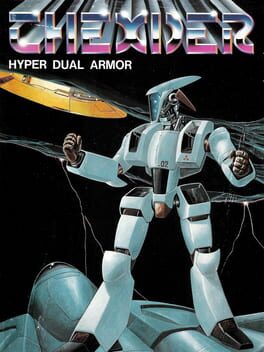
Thexder is a robot capable of transforming into a jet whose job is to destroy the central computer to save the planet.15 stages are waiting you for in this shooting game.
C64
1983
This side out
Simulator / Strategy / Turn-based strategy (TBS) / Action / Science fiction
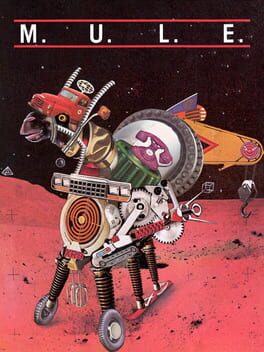
M.U.L.E. is about four hopeful explorers trying to make a fortune on a virgin planet. This is done by producing various goods (Food, Energy, Smithore, Crystite). Each of these goods have their uses: if you don't have enough food, you will have less time during your turn. If you don't have enough energy, your output will be lower. If enough smithore isn't produced, there will be a shortage of M.U.L.E.s. Crystite is the big earner that can make or break your game. You start the game by selecting your race. Some are easier to play, some harder. There are three levels of difficulty, in the easiest the game only lasts 6 turns, but the real game is 12 turns. Crystite is not available at the easiest level. Each turn starts with land claim. Each player gets to choose a spot of land for themselves from the map. If two players choose the same spot, the player with less money wins. The map consists of different landscape. River is best for producing food, plains for energy, mountains for smithore. Crystite is hidden and must be first found by taking a land sample to the town. After the land claim each player takes turns in cultivating their land and do other tasks. They can buy M.U.L.E.s to start production on their land, sabotage other players by buying M.U.L.E.s and letting them loose, try to catch the Wumpus for cash and try to find crystite veins. The time to do these things depends on if the player has enough food. Finally the player goes to the casino and wins a small amount of money, depending on how much time was left.
Still plenty of games...