Mystery box
?
Sealed
Mystery Box
Every game in your current results, in one box. Add it to a quest and each run draws a fresh game from it, revealed on release day.
MSX2
1987
This side out
Reviver: The Real-Time Adventure is an adventure game designed by Katsunori Yoshimura and released by Arsys Software in July 1987. It featured the concept of a real-time persistent world.
PC-88
1987
This side out
Platform / Puzzle / Role-playing (RPG) / Action / Fantasy
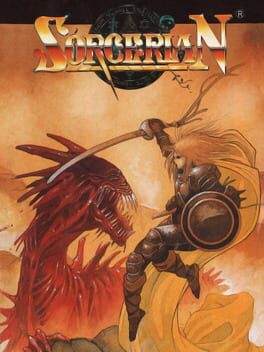
Sorcerian is a side-scrolling action-RPG. The player can create up to ten characters, from whom up to four members can be present in a party at the same time. Each character is highly customizable, with four different classes/races (fighter, wizard, elf, and dwarf) and over 60 possible jobs/occupations (ranging from clown to exorcist) available for them to perform; each has its own strengths and weaknesses, affecting the seven primary attributes (strength, intelligence, protection, magic resistance, vitality, dexterity, and karma) in different ways, as well as different equipment limitations. The player can choose from fifteen different scenarios, or quests, to play through in the order of their choice. The party must battle enemies and perform tasks within the given levels to clear each scenario, before moving onto another scenario of their choice. The player controls the entire party at the same time, with all four members running in a line, jumping in sequence, and attacking in unison. The party members follow behind in a manner similar to the Options in the arcade shooter Gradius (1985). Sorcerian also employs class-based puzzles, such as using a high-strength character to force open doors. All the characters have a default starting age of 16. Each time a player begins a new scenario, a year passes by, while additional time passes by in towns as a character goes through training or enchants items. The characters age at different rates depending on their race, with humans reaching old age at 60, dwarves at 100, and elves at 200. Upon reaching old age, for every year that passes, a character can die permanently at a random time. There is also an “Advance Time” to speed up the flow of time. Another new feature of Sorcerian was its episodic format that extended across various expansion packs. Besides the default fifteen scenarios that come with the game, there were a number of additional scenario packs released. The aging system was created with the additional scenario packs in mind.
MSX2
1986
This side out
Point-and-click / Role-playing (RPG) / Adventure / Fantasy
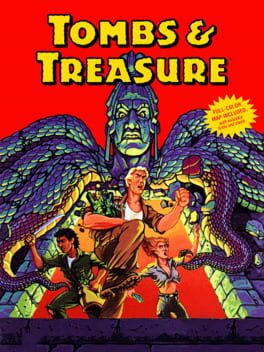
In Tombs & Treasure, you'll have to use your wits in order for your party to successfully make its way through the ruins. As you enter such sites as El Castillo and the Ball Court, you'll have to use collected items in innovative ways in order to attain vital clues and progress. Each screen you encounter will feature items and peculiarities that must been looked at, taken, pushed, pulled, moved, smashed, joined, and/or washed in order to advance. Occasionally, you will confront monsters and engage in a classic RPG-style fight, your final battle versus the demon Tentacula. Be sure to refer to Professor Imes' journal in order to gain essential clues. You'll need them in order to survive the Tombs & Treasure.
MSX2
1988
This side out
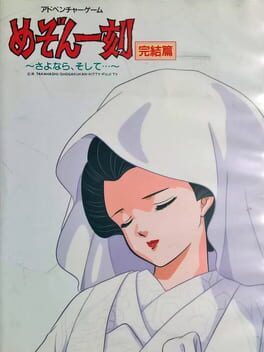
The game is based on the manga Maison Ikkoku by Rumiko Takahashi. The game is a "puzzle-less" adventure, the gameplay mostly focusing on simply depleting all the verb commands at every given screen and moving between locations. The commands include the usual "Look", "Talk", and Move" typical for Japanese adventures (no "Think" command), but also context-sensitive commands "Eat", "Drink", etc., as well as the possibility to use certain inventory items.
MSX2
2019
This side out
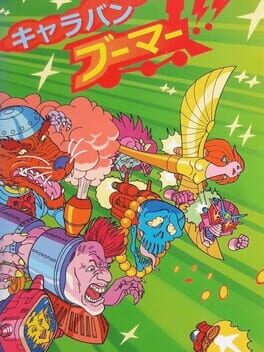
Caravan Boomer is a new shooter in development for MSX2, It uses PSG and MSX-MUSIC sounds. the game has 2 modes: caravan (time attack) and normal.
MSX2
1990
This side out
Role-playing (RPG) / Card & Board Game / Fantasy
Released in 1990 on MSX2, by Tenmaru Planning Factory.
MSX2
1988
This side out
Role-playing (RPG) / Adventure / Action / Fantasy
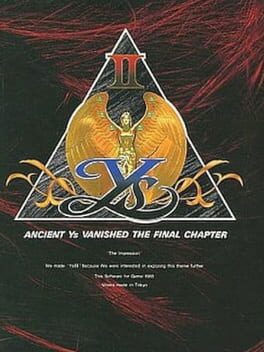
Ys II: Ancient Ys Vanished - The Final Chapter is a direct sequel to Ys: The Vanished Omens. The game continues to utilize the action role-playing combat style of the first installment, which requires the player to make the protagonist run into the enemy in order to cause damage, without the need to press an attack button. The player should choose the angles and the measure of contact with the enemy carefully, otherwise the hero will be killed. The player character can (and should) level up, perform quests for village people, gather money, and upgrade weapons and inventory, like in most other RPGs.
FDS
1987
This side out
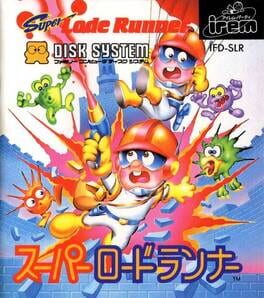
The game keeps the typical gameplay of the Lode Runner series. Players have to collect all the gold on the stage, while either avoiding or trapping the robotic guards who are constantly giving them chase. The game also features a level editor so players can create their own stages to play on.
MSX2
1988
This side out
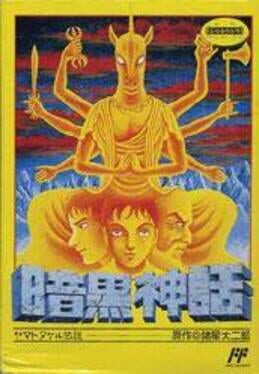
The game is based on old Japanese legends about Yamato Takeru, a legendary hero of ancient Japan. The game starts when Yamato Takeru is a thirteen-year-old boy. His father was killed under mysterious circumstances. Searching his things, the boy found a postcard that gave him his first clue for the investigation. From that moment, his adventure begins.
PC-88
1987
This side out
Role-playing (RPG) / Adventure / Action / Fantasy
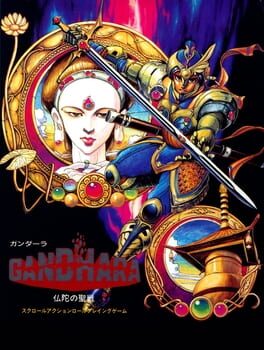
Gandhara refers to the capital of the Kushan Empire, (today's Pakistan and Afghanistan), founded in 1st century BC, whose rulers were Buddhists; it was one of the most flourishing Buddhist states in history. The story of the game, however, is based on pure mythology, featuring Buddhist deities in their distinctly Japanese incarnations. The protagonist is contacted by the bodhisattva Akasagarbha (known as Kokūzō in Japan, from the Chinese Xukongzang), who tells him that the world is in danger: the king of demons is trying to locate and neutralize the holy Ashes of Buddha, whose power protects the eight worlds. The hero's task is to find the ashes and defeat whomever the king of demons might send to stop him. One of Enix's works that were unreleased outside of Japan, Gandhara is an action RPG with rather simple gameplay mechanics. The player navigates the hero through hostile top-down areas, fighting constantly respawning enemies with sword or magical spells. Rations must be bought in order to keep the hero alive. Defeated enemies grant the protagonist experience points; once a certain amount of those is accumulated, the hero levels up and grows stronger.
MSX2
2025
This side out
The name of the game is "RESCUED". The goal of the game is to save as many people as possible. How? By having them cross a street full of pirate cars that won't hesitate to run them over. The first crossing will be very simple; you'll see the cars stopped, but the more people you get across, the more the cars will increase their speed. The game ends when a pedestrian is hit. There will be a counter at the top left of the screen that adds up all the rescued people. There will also be a drum sound that increases with the speed of the cars, like a warning. There will also be a plane flying over the highway, but only as a decoration. After the game over, the game will restart, resetting everything, and this will be infinite. The keys to play are the two cursor keys, right and left.
MSX2
1986
This side out
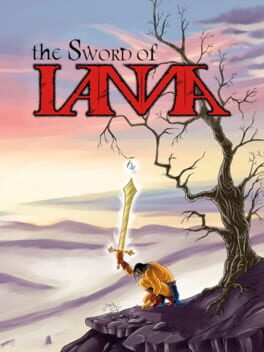
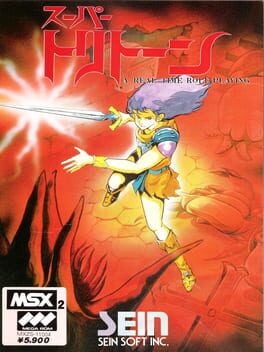
Super Tritorn is an enhanced port of Tritorn for MSX2, released by XAIN Soft in 1986. Tritorn is an early progenitor of the Action RPG genre and the first game in the Tritorn trilogy.
MSX2
1992
This side out
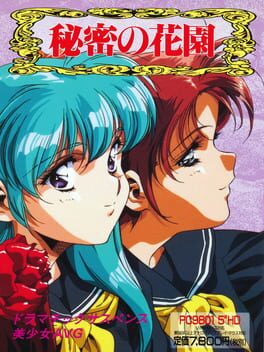
Himitsu no Hanazono is essentially a visual novel. There are no verb commands and no real interaction with the environment. The choices are rather frequent and fairly numerous (usually four or five choices at most screens). Most of these choices, however, do not affect the plot, though they may alter subsequent dialogue. The player is also able to navigate the protagonist on school grounds and inside the main building in a top-down fashion, visiting locations in any order.
Apple II
1987
This side out
Role-playing (RPG) / Adventure / Fantasy
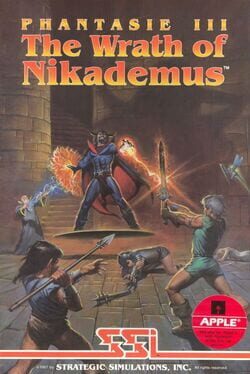
Released in 1987 on Apple II, by Westwood Associates.
Still plenty of games...