Developed by Koei.
Role-playing (RPG) / Simulator / Strategy / Fantasy / Historical
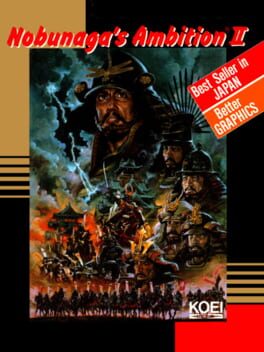
The second game in the series, previously released as Nobunaga's Ambition in the West. Players take on the role of one of the main characters of the period, Nobunaga Oda, Shingen Takeda, Kenshin Uesugi, or others and try to unite the 50 kingdoms of Japan, from Ezo in the north to Kyushu in the south, under their own rule.

Simulator / Strategy / Turn-based strategy (TBS) / Fantasy / Historical
Nobunaga's Ambition II is the sequel to Nobunaga's Ambition. The setting is 16th century feudal Japan, a period when ruthless daimyo (feudal lords) contended with each other for dominance. Ultimately, the winner in this struggle will become Shogun and hold actual power over the islands, while being nominally subject to the Emperor. The game casts the player as one of the daimyo, allowing them freedom to decide the fate and future of feudal Japan, through diplomacy and ultimately war. The objective is to unify Japan under the player's rule. If the player fails through death on the battlefield, assassination at the hands of a ninja, or through natural causes, they can choose a successor and play on. Functionally, the first job is to let prosper the fief (province) under the player's control through agricultural development and town investment.

Role-playing (RPG) / Strategy / Turn-based strategy (TBS) / Fantasy / Historical
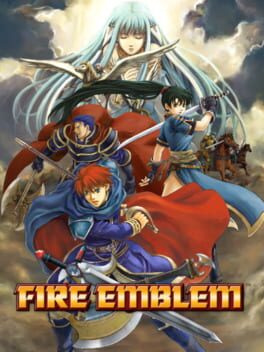
It is the seventh game of the Fire Emblem series, the second game in the series to be released for the Game Boy Advance, and the first to be released in both North America and Europe. It features a prologue storyline designed to introduce newcomers to Fire Emblem gameplay and tactical basics. The overall narrative is a prequel to the events of the previous game, Fire Emblem: The Binding Blade, which is set twenty years later. The game was first released under the localized title "Fire Emblem" in the West, but it was later rebranded as "Fire Emblem: The Blazing Blade" when Fire Emblem Heroes was released.

Role-playing (RPG) / Adventure / Fantasy
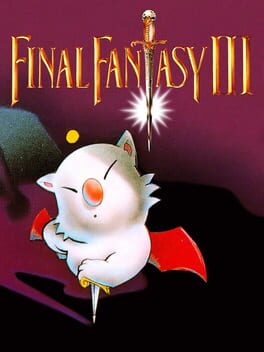
Final Fantasy VI is the sixth main installment in the Final Fantasy series, developed and published by Square. It was the final title in the series to feature two-dimensional graphics, and the first story that did not revolve around crystals. The game gives players up to fourteen playable characters, the largest cast in the series, and features the Active Time Battle pseudo-turn based menu command system. A party can consist of up to four characters, though some events require the player to assemble three different parties of up to four and switch between them. Each character has a unique command ability, such as Terra's Trance, Locke's Steal, Edgar's Tools or Sabin's Blitz, and can also learn Magic spells from earning AP from battles with magicite equipped. Each character's rare Desperation Attack will randomly activate after using the Attack command when at critical health.

Role-playing (RPG) / Adventure / Card & Board Game / Fantasy / Science fiction
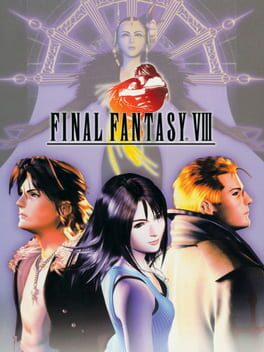
Final Fantasy VIII is the eighth main installment in the Final Fantasy series. The gameplay makes a departure from many series standards. While it still uses the Active Time Battle system, it deviates from the series' traditional means of boosting a character's power via leveling, although levels are not completely abandoned as they were in Final Fantasy II. In addition, it does not have a Magic Point-based system for spell-casting. Instead, magic is collected, drawn, and created from items, and is used to power up the characters via the junction system.

Simulator / Strategy / Turn-based strategy (TBS) / Fantasy / Historical
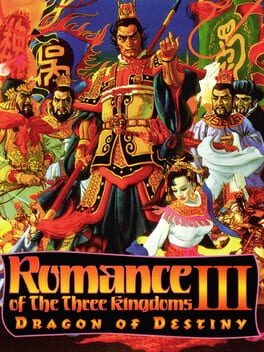
The player takes control of a master, a general capable of commanding as many states as he can acquire, and, if successful, unifies China. As many as eight may play, but only one can succeed. There are five chronologically arranged scenarios. The first has China in its most disorganized period and the last has virtually all of China controlled by one of three generals. The precise requirements for success in each of these scenarios differs, but in all cases the goal is to rule as many states as possible. After the completion of any scenario but number five the game will automatically advance to the next. You may start the game at any scenario. The third edition of this game with more game improvements.

Simulator / Strategy / Turn-based strategy (TBS) / Historical / Warfare
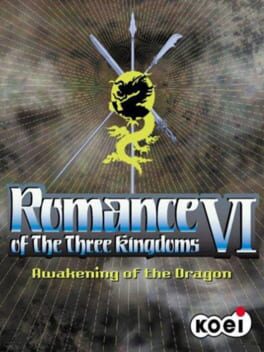
Romance of the Three Kingdoms VI: (Sangokushi VI in Japan) is the sixth game in Koei's Romance of the Three Kingdoms series. Romance of the Three Kingdoms VI follows in the tradition of its predecessors with an emphasis of world domination and management of an established empire. Continuing in a seasoned ancient Chinese setting, characters and units are taken from other Romance of the Three Kingdoms titles and placed in the palm of your hand. Your overall objective is to destroy rival lands and create a continent wide empire.

Role-playing (RPG) / Strategy / Turn-based strategy (TBS) / Fantasy / Historical
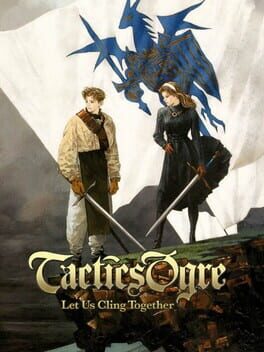
Tactics Ogre is a 3D isometric tactical role-playing game. The player starts out with a band of troops, builds a small army and fights many battles with choices to make in between, that will determine which one of the eight possible endings will be reached in a non-linear storyline. The player has the option to recruit characters, control individual equipment of each character, with over six male character classes, six female character classes, three demi-human classes, and more. It is also possible to train at safe locations to prepare the army before the next battle or storyline advancement.

Strategy / Turn-based strategy (TBS) / Tactical / Historical / Warfare
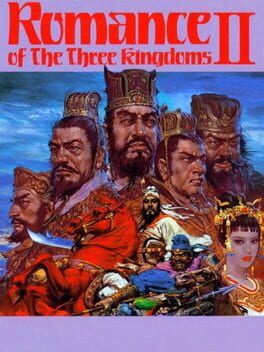
The player takes control of a master, a general capable of commanding as many states as he can acquire, and, if successful, unifies China. As many as eight may play, but only one can succeed. There are five chronologically arranged scenarios. The first has China in its most disorganized period and the last has virtually all of China controlled by one of three generals. The precise requirements for success in each of these scenarios differs, but in all cases the goal is to rule as many states as possible. After the completion of any scenario but number five the game will automatically advance to the next. You may start the game at any scenario.