Developed by Genki.
Hack and slash/Beat 'em up / Adventure / Action / Historical
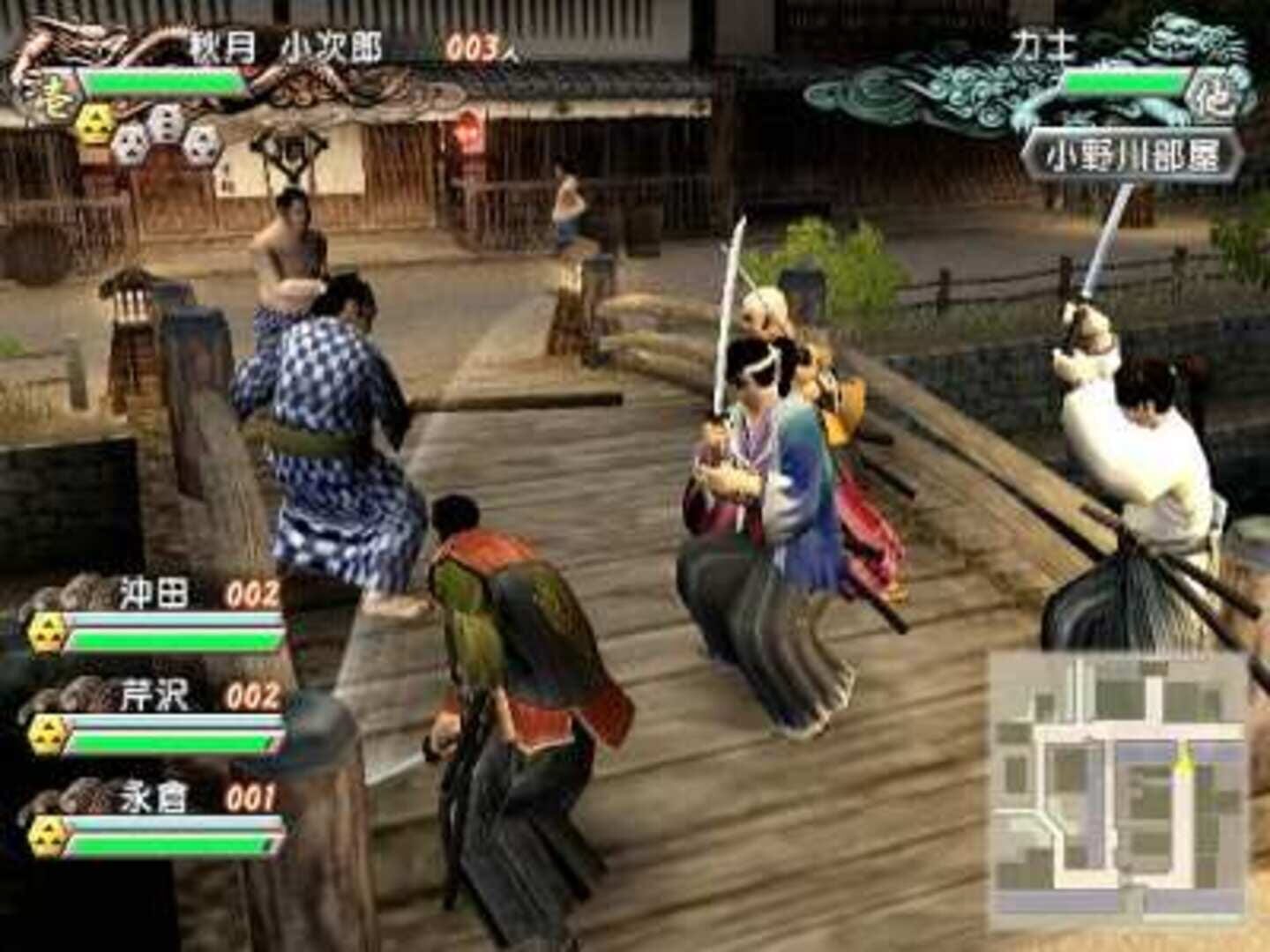
Fu-un Bakumatsu-den is a 2005 PlayStation 2 action game from Genki Co. and the follow-up to Fu-un Shinsengumi. Set during Japan’s Bakumatsu era, it lets players join the Shinsengumi in stylized beat ’em up combat.

Role-playing (RPG) / Strategy / Hack and slash/Beat 'em up / Action / Historical
Dungeon Maker: Hunting Ground is an action RPG where the player creates their own unique dungeon using purchased pre-crafted pieces. Each day, as the player adds to his dungeon, wandering monsters come to inhabit it. The deeper the player builds his dungeon, the more deadly the monsters and their treasures. A deep and well-crafted dungeon might attract the ultimate evil creature for you to try and defeat using a variety of items, weapons, and spells that have been acquired along the way. The nearby city offers equipment, food, quests, and quirky characters to aid you in your adventure.

Hack and slash/Beat 'em up / Adventure / Action / Fantasy
"Marking Kratos' second foray into portable gaming, God of War: Ghost of Sparta stands as a spin-off nestled between the events of God of War and God of War II. Despite ascending to the title of the god of war, Kratos remains haunted by nightmarish visions. One such vision compels him to embark on a new journey when he witnesses his mother, Callisto, imprisoned in Atlantis under the dominion of the sea god Poseidon. Against Athena's counsel to ignore the vision, Kratos sets forth to unravel his past and, in the process, rescue his long-lost brother, Deimos, from the clutches of the god of death, Thanatos. This second instalment for the PlayStation Portable (PSP) maintains a gameplay style akin to its predecessor, introducing a handful of new mechanics. Kratos wields his trusty Blades of Athena in this quest, now augmented with a new magic known as Thera's Bane, amplifying the potency of his attacks. The game also introduces several new magical items and a fresh secondary weapon. In addition to the captivating story mode, Ghost of Sparta offers the "Temple of Zeus," a location where players can spend orbs acquired in the Battle Arena to acquire various art and other bonuses."

Platform / Hack and slash/Beat 'em up / Adventure / Action / Fantasy
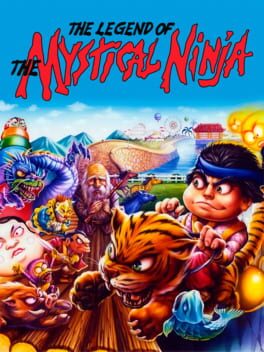
The Legend of the Mystical Ninja is a light-hearted action-adventure game for 1-2 players by Konami, and was released for the Super Nintendo Entertainment System in 1991. It is the first game in the Japanese video game series Ganbare Goemon to have a Western release. It underwent several changes compared to its Japanese counterpart Ganbare Goemon: Yukihime Kyuushutsu Emaki. The protagonists were renamed for the Western release, and some content was altered to comply with Nintendo’s strict censorship policies at the time, such as the removal of certain characters and cutscenes.

Hack and slash/Beat 'em up / Adventure / Action / Fantasy
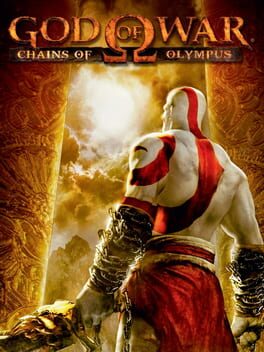
Kratos makes his inaugural appearance on a portable gaming platform in the third instalment of the God of War series. Chains of Olympus serves as a prequel, unfolding its narrative a decade before the events in the original God of War. While retaining the familiar gameplay dynamics of its predecessors, subtle modifications enhance the overall experience. Kratos embarks on a journey through various levels, engaging in relentless combat against foes and formidable bosses, deciphering puzzles based on manipulating boxes, and participating in quick-time events. Throughout his odyssey, he amasses red orbs to fortify his weapons and abilities, secures Gorgon eyeballs to augment his health, and acquires Phoenix feathers to amplify his magical prowess. The game's controls underwent refinement to harmonize with the reduced button configuration of the PSP. Dodging, for instance, now necessitates the utilization of both shoulder buttons and the analogue stick. The iconic Blades of Chaos, synonymous with the God of War series, make a return, accompanied by an array of new weapons and magical spells such as the Sun Shield, Efreet spell, and Light of Dawn. The narrative unfolds as the Gods dispatch Kratos to the city of Attica, charging him with the defence against an encroaching Persian army. However, as Morpheus unleashes chaos, Kratos finds himself compelled to harness his formidable powers to once again rescue the world from impending doom.

Platform / Hack and slash/Beat 'em up / Adventure / Action / Fantasy
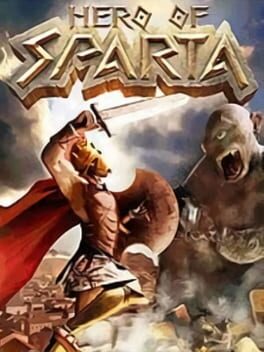
Take up the fiercest challenge and fight from the Oracle's island to the summit of Olympus. Hero of Sparta features an innovative double-view system combining absolute action and platforming. Face legions of enemies across eight levels of action, with the most impressive mythical creatures standing in your path -- Cerberus, the Colossus, etc. Upgrade your equipment to gain the the Chronos Sword, the Medusa Shield, and more.

Fighting / Hack and slash/Beat 'em up / Adventure / Action / Fantasy
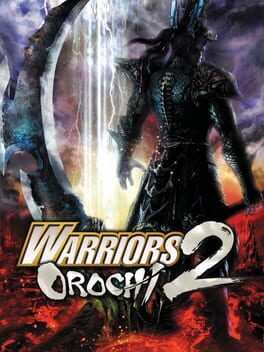
Warriors Orochi 2 is a 2008 video game developed by Koei (now Tecmo Koei) and Omega Force for the PlayStation 2. It is the sequel to Warriors Orochi, a crossover video game of the Dynasty Warriors and Samurai Warriors series. The game was released on September 23 in North America and September 19 in Europe. A version for the Xbox 360 was released on September 4, 2008 in Japan, and alongside the PS2 releases in North America and Europe. A PlayStation Portable version has been released in Japan, North America and Europe.

Fighting / Strategy / Hack and slash/Beat 'em up / Action / Fantasy
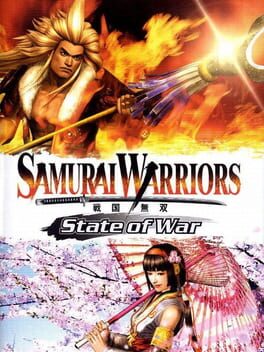
Samurai Warriors: State of War is a portable version of Samurai Warriors, however, it is not a straight conversion and is made to more resemble Dynasty Warriors, giving it an "Samurai Warriors Empires" style of playing. The gameflow is mainly separated into two stages: the Strategy phase and the Action phase. During the first stage, the map is separated into colored squares and the player is asked to move their character in a turn-based fashion. Terrain affects how the player can act during this stage. What usually follows is the action phase, which asks the player to defeat as many opponents possible within 60 seconds. These stages can tip the battle in the player's favor. There are four main armies for the player to participate in: the Takeda (Western), Uesugi (Eastern), Nobunaga, or the solo army. Completing the game with these four factions unlocks the final stage in the game. It guest stars characters from Dynasty Warriors 4. The game features a Story mode, Free mode and VS mode.

Role-playing (RPG) / Hack and slash/Beat 'em up / Adventure / Action / Fantasy
Koei brings us again a new addition to the Dynasty Warriors series. This installment still features the same storyline based on the Romance of the Three Kingdoms, with the various officers as playable characters. The character list and appearance is the same as in Dynasty Warriors 6, meaning some of the previous game's characters are not available. The difference in this one is that the player is allowed to choose only one character for the chosen force (either Wei, Wu or Shu) who starts in a village that will act as the hub, or camp, from which the game battles are accessed. By completing story missions, some characters are added and can be played as without starting a new game, meaning all acquired weapons, items and materials will be kept. The chosen character can be customized in various ways. Apart from the main weapon, one sub weapon, chosen from many weapon types, can be equipped. Both weapons can be switched anytime during battle, to accommodate the situation. A new addition is the Chi system which allows to set special abilities to the character, there are four slots to equip Chi (the two arms and legs). Weapons can also be customized by adding Orbs that give different abilities, such as elemental properties. In the village, the player can exchange materials, buy weaponry, items for use in battle, Chi skills and Orbs. Some NPC's may appear in the village, some giving materials or items, or Officer cards, which can be set to help the Village's growth. Over time, better items can be acquired from the shops. By talking to the quest board or the Guard at the village's gate, main Missions or Requests can be chosen. Each battle is a series of small maps where various enemy soldiers and weaponry are fought, eventually leading to the commander of the enemy army. The goal of each battle can vary, some are classic goals like "Defeat the Commander" and some, less battle oriented, like "Retrieve all treasure boxes". In addition, there also are bonus missions that require the player to defeat a particular unit, reaching a certain point before a certain time, etc. Each bonus mission gives extra experience points upon completion. Other new additions to the battle system are the possibility to have aerial battles, and the main feature of the game: the Fury Mode, unleashed when the Fury gauge (replacing the traditional Musou gauge) is full. The furied character has better stats and move sets, and can unleash the infamous Musou attack to deal some extra damage. To add to the surreal look of the game, some new bosses are actually massive beast-like weapons, and usually require the help of other players to defeat them. Multiplayer mode is available only via AdHoc connection, and can connect up to four players.