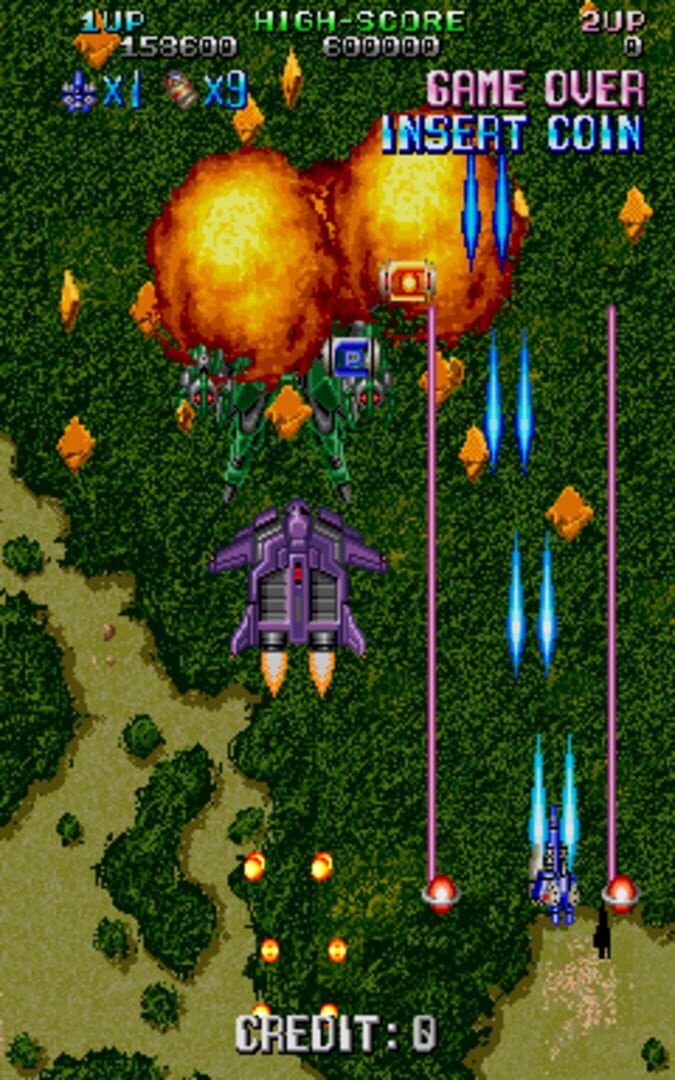

Japanese vertical shoot-'em-up. Released only in Japan in 1996.
Screenshots
Featured in
Japanese vertical shoot-'em-up. Released only in Japan in 1996.
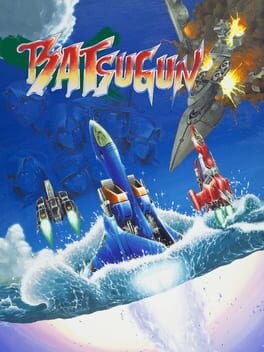
Shooter / Arcade / Action / Fantasy
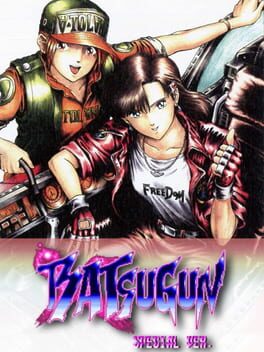
Batsugun is a vertically scrolling shoot 'em up video game created by the now-defunct Japanese game developer Toaplan. The title translates to "exceptional" or "extraordinary". It was the final game created before Toaplan's dissolution, and has been regarded as a key title in the development of the modern manic shooter, with elements of the game such as the size of the player's hitbox, the scale of their firepower, and the complexity of enemy bullet patterns all having an influence on future titles in the sub-genre. Members of the development team also went on to work on other successful manic shooters, most notably lead artist Junya Inoue.
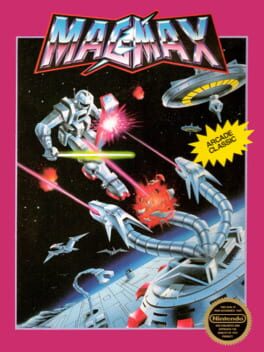
Shooter / Adventure / Arcade / Action / Science fiction
A horizontal scrolling shooter, players control the title hover ship in an attempt to completely construct the ship into a giant robot and to destroy any enemies attempting to stop it. The three-headed mechanical dragon found as a boss character in the game, known as Babylon, strongly resembles Mecha-King Ghidorah from the Godzilla franchise.

Shooter / Platform / Adventure / Action / Science fiction
The player takes on the role of Golgo 13 (also known as Duke Togo), an assassin whose objective is to destroy the leader of the Drek group. On the way, Golgo 13 must pass through several areas, including East Berlin, Athens, and Alexander Island, which is located off the coast of Antarctica. It is necessary to navigate several mazes in order to win, but one maze is a fake base with no way out. The mazes account for a large amount of the frustration players encounter with this game. The instruction manual contains maps for the mazes.
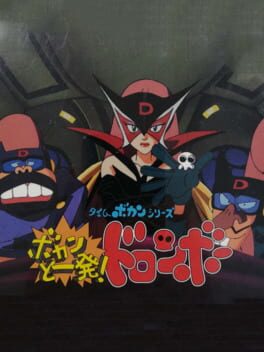
Shooter / Arcade / Action / Science fiction
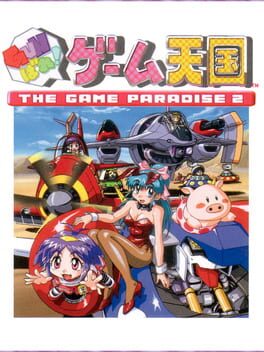
Play as the Drombones and prove you're the strongest villains in the Time Bokan series. Pilot restored evil mechas from across the series' history and take on legendary heroes in this vertical scrolling shooter. Switch between different mechas between stages, each with unique weapons and abilities, and charge up your devastating Skull Bomb for area-wide destruction.
Shooter / Arcade / Science fiction / Comedy
PlayStation-only sequel to Jaleco's crossover cute-'em-up. The system uses a gun controller connected to the 2P controller socket to provide cover fire for the shooter. The title of the game is therefore a combination of Gun and the Japanese word Ganbare (Don't give up!). Even if you don't have a gun controller, you can use a DualShock controller to shoot for cover.
Shooter / Arcade / Action / Fantasy
A second edition, titled Batsugun Special Version, was showcased to attendees at the 1994 AOU Show in Japan but it was never officially released in arcades, as Toaplan slid into bankruptcy and this special version appeared on the secondary video game collecting market after the company vanished. The special version featured a number of changes compared to the original version including a much smaller hitbox, a shield protecting the player from one hit, more powerful bombs, new scoring items, and the addition of multiple loops of increasing difficulty after completing the initial loop, among other changes.
Shooter / Arcade / Action / Science fiction
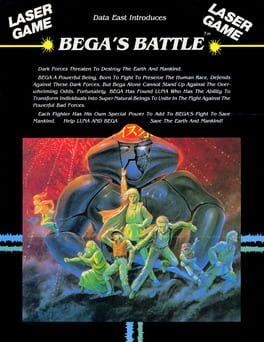
Data East used footage from the film Harmagedon to create a laserdisc video game titled Bega's Battle. It was released in June 1983. In the game, the player to take on the role of the robot Bega (Vega) whose goal was to stop the invasion forces of the alien Varga (Genma), while also rescuing his three friends who had been kidnapped by them. Even among laserdisc games Bega's Battle has become somewhat rare because many of the machines were converted into Cobra Command machines as part of a discount deal offered by Data East in exchange for the internals of the Bega's Battle arcade cabinet. Similar to Astron Belt, the game used the footage mainly for backgrounds, while the actual gameplay was a shooting game with sprites laid over the video. Bega's Battle also used brief full-motion video cut scenes to develop a story between the game's shooting stages. Years later, this would become the standard approach to video game storytelling. Bega's Battle also featured a branching storyline. The Twin Galaxies world record for Bega's Battle was set by Steve Harris (later the founder of Electronic Gaming Monthly) on July 18, 1983.

Shooter / Puzzle / Indie / Action / Science fiction
In this vertical scrolling spaceship shooter, you control a ship that can change its polarity at will. As blue/white, the ship can easily destroy red/black enemies, and vice versa. Bullets of your polarity can be collected to fuel your energy gauge, but those opposite will kill you. Destroying an enemy ship causes them to fire revenge bullets which can be absorbed and fired back by the player. Different difficulties exist to change exactly how you interact with polarized points, or how they appear. It is the spiritual successor to Radiant Silvergun, featuring similar level and boss design, as well as it's buddhism inspired themes and aesthetics. Both are directed by Hiroshi Iuchi, who also composed Ikaruga's soundtrack.