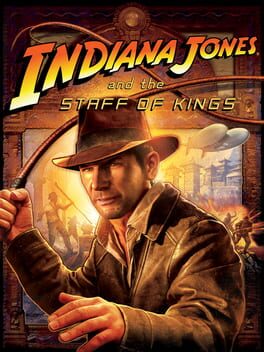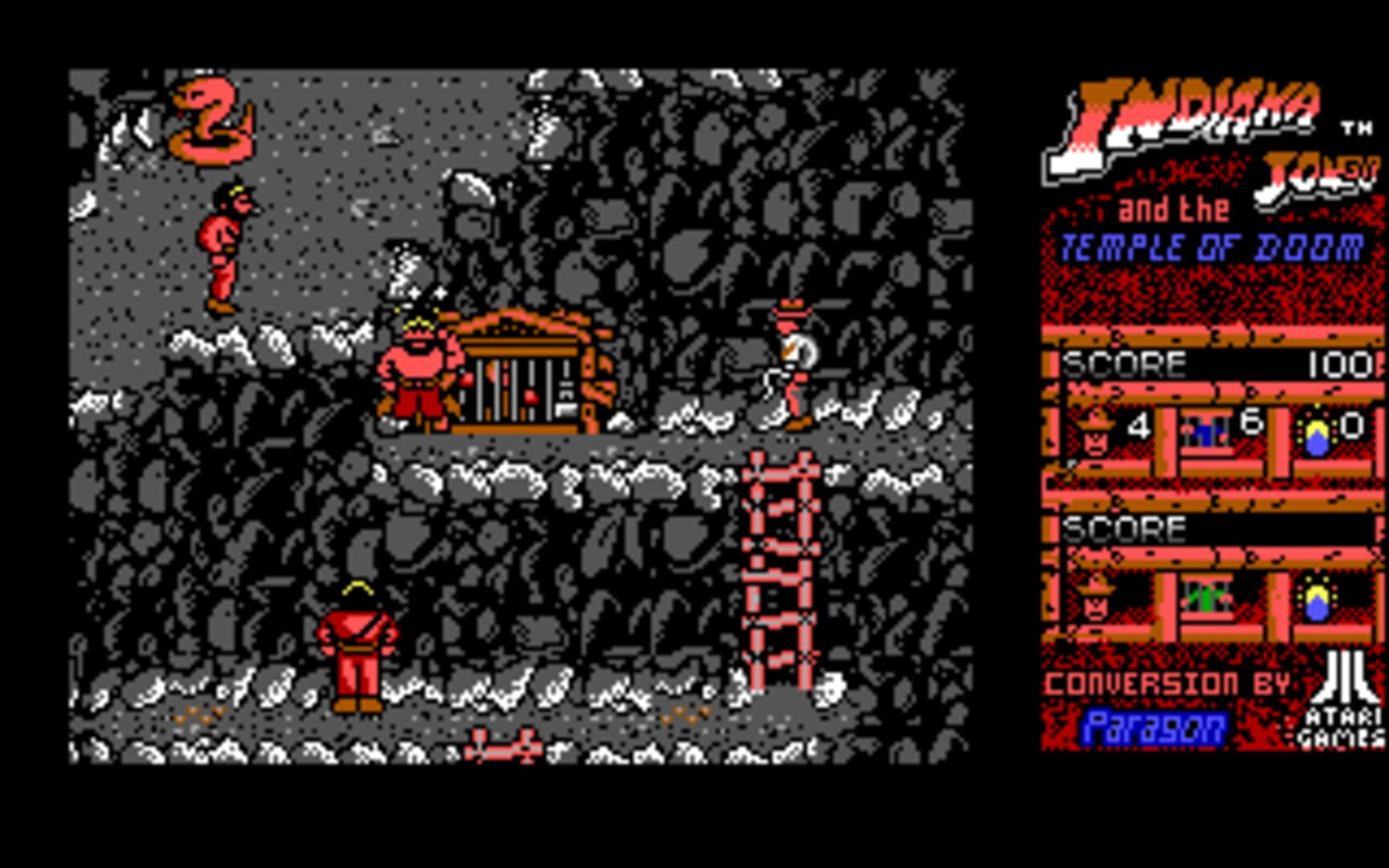


As Indy, the player must complete several cycles of the following three types of levels: 1.Mine level: Whip your way through a mine in order to free children that are held captive. Use your whip to swing across chasms, climb ladders, ride along conveyor belts and defend yourself against attacks from Thuggee guards, bats, snakes and the fireball-throwing Mola ram. Escape with the mine cart after you've freed all children. 2.Mine cart level: Pick the right route through a network of tracks while riding in a mine cart. Avoid potholes, broken tracks & guards in carts and safely reach the end of the track. 3.Temple level: Make your way to the altar and grab the Sankara stone while Mola Ram, bats and Thuggee guards attack you. Watch out for that lava.

Platform / Arcade / Action / Fantasy
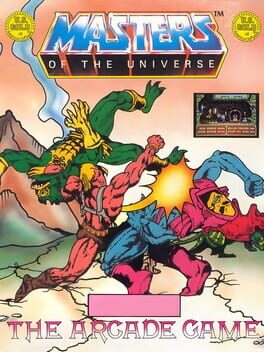
Masters of the Universe: The Arcade Game is a platform game developed by Adventure Soft for the Amstrad CPC, BBC Micro, Commodore 64, and ZX Spectrum and published by U.S. Gold in 1987. The game is part of the Masters of the Universe media franchise. The Commodore 64 version is titled He-Man and the Masters of the Universe: The Ilearth Stone.

Platform / Arcade / Action / Science fiction
All the Adventure and Excitement of the 16-bit Game -- are you ready to challenge the dark side? Choose your Rebel warrior: Luke Skywalker, Leia Organa, Han Solo, Chewbacca or Wicket the Ewok. Relive the action of the movie as you rescue Han from Jabba the Hutt, destroy the power generator on the forest moon of Endor, challenge Darth Vader and the evil Emperor and lead the Rebel assault fleet in the final battle to destroy the new Death Star! The Force will be with you as you struggle to defeat the Empire once and for all!

Platform / Adventure / Action / Fantasy
The plot centers around Indy's search for the Staff of Moses. The game is mostly about a quest which takes you around the world on various quests, fighting Nazis, Panamanian hunters, and Tong thugs, and trying to find artifacts which will unlock other possible things for you to get and do. Although the staff of Moses is never mentioned in the beginning of the game, the plot is set about finding the staff, but the actual part of the story where the quest about finding the staff of Moses first start taking place is a lot further on in the game

Shooter / Platform / Arcade / Action / Fantasy
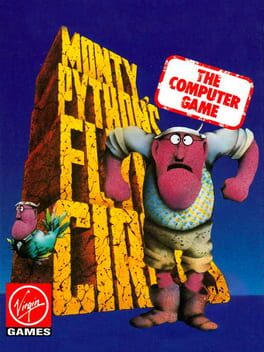
You control Mr. D.P Gumby and, understandably, you have to get back his 4 pieces of brain. This is not easy. If it was, this game would not be a game of skill and fun, now would it? There are four skill levels to this game, a piece of brain is being held on each skill and fun level. The levels are all quite different in a skill and fun sort of way, but all have different things in common. Good things like sausages, eggs, beans, spam (skill) and cheese (fun) and bad things like dead parrots. Because each level is quite different in a skill and fun sort of way, Mr. Gumby cannot always walk, so, his body is changed to suit the surroundings. Like on the first level, where he is changed into a fish to swim in the maze like underwater caverns. When each level runs out there is no more, Mr. Gumby is changed back to normal (well normal for him) and he is sick, all the good things picked up along the way go in a big hole and are counted for points. Best of all though if you got 16 lots of spam Mr. Gumby can have a piece of his brain back. Then you have to do it all again.

Platform / Adventure / Arcade / Action / Science fiction
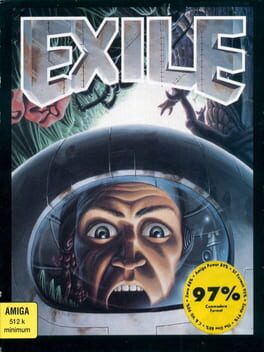
Exile is a single-player action-adventure video game originally published for the Acorn Electron and BBC Micro in 1988 by Superior Software and later ported to the Commodore 64, Amiga, CD32 and Atari ST, all published by Audiogenic. Exile's game physics engine qualifies it to be the first game to have a complete Newtonian motion model. At the time of its release it was considered to push the boundaries of what was possible on home computers, particularly on the 8-bit platforms. It remains probably the most complex game available for the BBC Micro. The game was designed and programmed by Peter Irvin (author of Starship Command, a space shoot-em-up with an innovative control system) and Jeremy Smith (author of Thrust, a game based on cave exploration with a simpler physics model).