An action game based on a Spanish animated series broadcasted between 1989 and 1990.
In the imaginary Double Sun System, composed of seven planets and twelve moons, lived happily the inhabitants of the third planet ruled by King Brigail, accompanied by his son Zaik and the great magician Rahman. The evil witch Idun took possession of the Magic Crown and after invading the planet ordered Zohak, the sinister vizier of her armies, to pursue Zaik and Rahman. Both venture to get the Magic Plant to put an end to the spells of the witch Idún.

Hack and slash/Beat 'em up / Adventure / Arcade / Action / Fantasy
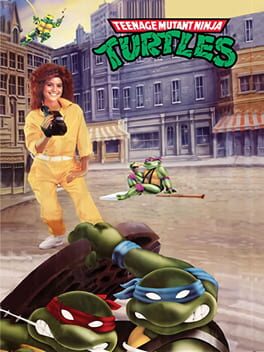
Teenage Mutant Ninja Turtles III: The Manhattan Project is a side-scrolling beat-'em-up. The game features play mechanics similar to the previous game, Teenage Mutant Ninja Turtles II: The Arcade Game, but it is an original title for the NES without any preceding arcade version.

Fighting / Hack and slash/Beat 'em up / Arcade / Action / Fantasy
Xena shall choose the defenders of the world. We have seen them in the memories of her exploits. So come together, Earth's greatest heroes and villains. Choose your weapons wisely and let the battles begin! Just remember, each victory only brings you closer to challenging the embodiment of darkness... Despair himself! Each of Xena's 10 characters possess their own unique weapons, attitudes and fighting techniques. Exclusive multi-player feature includes a roster mode, plus team and single battles.

Hack and slash/Beat 'em up / Arcade / Action / Science fiction
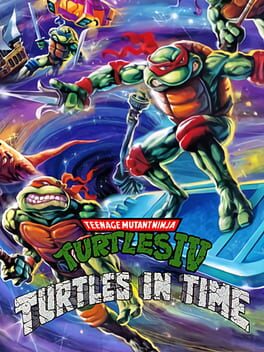
Teenage Mutant Ninja Turtles IV: Turtles in Time, developed by Konami, is a side-scrolling beat ’em up for up to two players. It is the fourth game in the series, following Teenage Mutant Ninja Turtles III: The Manhattan Project on the Nintendo Entertainment System. Originally released as an arcade game, it was later ported to the Super Nintendo Entertainment System in 1992.

Fighting / Hack and slash/Beat 'em up / Arcade / Action / Fantasy
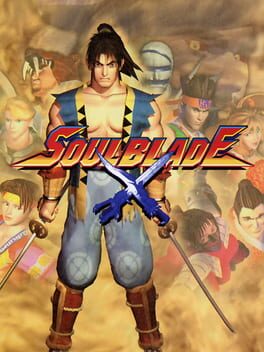
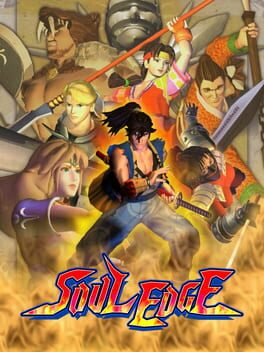
The console version of Soul Edge adds more content to the original arcade game such as new characters and additional game modes. Added features - The inclusion (besides the standard "Arcade" mode) of "VS", "Survival", "Team Battle", "Time Attack" and "Training" modes. - A new RPG-styled mode called "Edge Master Mode". - Seven extra weapons per character, which have different designs and statistics. - The original ten selectable characters received a new PlayStation-exclusive costume.

Fighting / Hack and slash/Beat 'em up / Arcade / Action / Fantasy
Soul Edge is a 3D arcade fighting game and the first in the Soul series, it is one of the first 3D fighting game in history that place a particular emphasis on the story of the fighters. Each character have their own weapon, allowing for a wide range of play styles. The slower, longer ranged characters try to deliver their heavy blows from a distance whereas the quicker, faster characters try to get in as close as possible and deliver quick-hitting attacks.

Role-playing (RPG) / Hack and slash/Beat 'em up / Arcade / Action / Fantasy
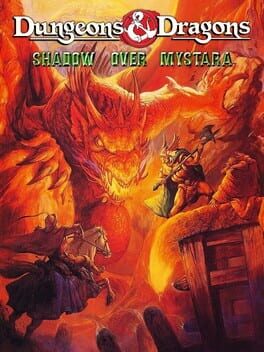
Shadow over Mystara is a side-scrolling beat-'em-up with role-play elements that make it stand out from other similar games released at the time. In addition to the original four heroes found in its predecessor, Dungeons & Dragons: Tower of Doom (Cleric, Dwarf, Elf and Fighter), Shadow of Mystara adds a Thief and a Magic-User to the selection. Furthermore, with the inclusion of two separate versions of each character's sprite set, the game allows up to two players to select the same character (in Tower of Doom each of the characters could only be selected once), effectively giving the game 12 "different" characters to choose from. The two Clerics and two Magic Users also have subtle differences within their spell books. The controls are using four buttons: Attack, Jump, Select (brings up a small inventory ring around the character allowing the player to choose what item is set in the Use slot) and Use. The Cleric, Elf and Magic-User also have two extra rings for their spells, with the Jump button used to switch from ring to ring. While the game uses the same kick harness as the previous game, the Select and Use buttons are reversed. Shadow over Mystara also introduced a selection of special moves which are executed by moving the joystick and tapping the buttons in certain combinations, in a way similar to the Street Fighter series. The characters (except for the Magic-User) have a Dashing Attack as well as a Rising Attack which can be used to combo monsters or even juggle them in the air. Most characters (again, with the exception of the Magic-User and also Cleric) also have a Megacrush, a move common to nearly all of Capcom side-scrollers, which damages all enemies standing close enough to the character but in turn also damaging the player themselves.

Fighting / Hack and slash/Beat 'em up / Adventure / Action
NOTE: This is the original 4-Player Arcade release, not the NES Title. The player chooses from one of the four Ninja Turtles: Leonardo, Michelangelo, Donatello, and Raphael. After Shredder kidnaps the Turtles' friend April O'Neil and their mentor Splinter, they must give chase, save their comrades, and defeat the evil Shredder. The player chooses from one of the four Ninja Turtles: Leonardo, Michelangelo, Donatello, and Raphael. Depending on the version of the game, the characters are either, chosen at the start of the game or assigned by control panel. After Shredder kidnaps the Turtles' friend April O'Neil and their mentor Splinter, they must give chase, save their comrades, and defeat the evil Shredder. Up to four players (two in some versions) can take control of any of the Turtles. Donatello has slower attacks but a longer range, Michelangelo and Raphael have faster attacks but a shorter range, and Leonardo is a well-rounded Turtle with average range and speed. The eight-way joystick controls the movements of the Turtle, the jump button makes them jump and the attack button makes them hit in front of them using their weapon. In addition to this, some combinations are possible. The Turtles can throw Foot soldiers overhead, and by pressing the jump and attack buttons, a special attack is performed. Raphael rolls along the ground and finishes with a kick, while the other Turtles do a sweeping jump attack with their weapons. Turtles can also spring off the wall in certain areas. Enemies can be defeated more quickly by slamming them into walls or solid objects. Many objects such as traffic cones, parking meters, fire hydrants and exploding oil drums can be hit or damaged with attacks in order to help defeat nearby enemies. In the attract mode, the game showed the first part of the cartoon opening, along with a portion of the Teenage Mutant Ninja Turtles theme song. Most of the enemies the Turtles face are the Foot Soldiers, all color-coded to indicate their attack patterns and weapon of choices. Some enemies, such as the standard purple-clad Foot Soldiers and Roadkill Rodney robots, have the ability to restrain the Turtles' mobility and drain their health, leaving the player open to attack for other enemies. The bosses in the game include Rocksteady and Bebop (individually at first in that order, and later the two of them together), Baxter Stockman, Granitor, General Traag, Krang, and Shredder himself.