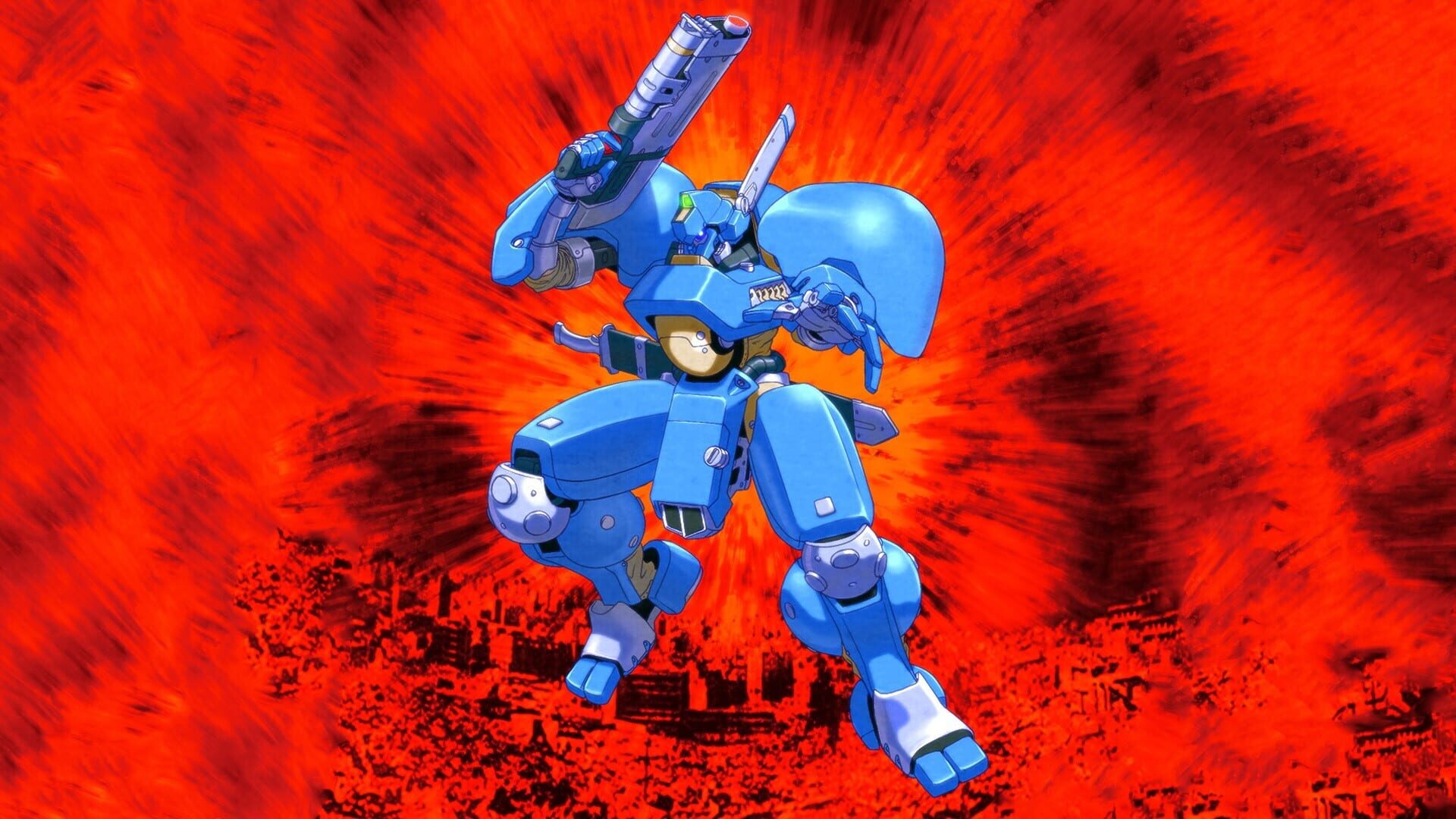
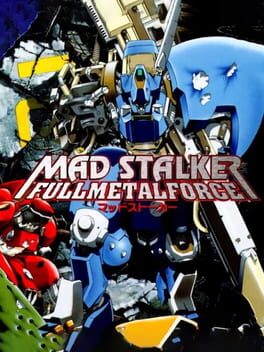

Mad Stalker: Full Metal Force is a PS1 remake of Mad Stalker: Full Metal Forth. It adapts the system so it’s closer to Panzer Bandit, also released by Fill-In Cafe in the same year. With the revamped controls, the action is much, much smoother. Like Panzer Bandit, there’s an auto guard when the controls are left in neutral, and you can also deflect enemy attacks by hitting them at the same time. Dashing and boost jumping have been assigned their own separate buttons, too. A few other things have been added as well, like an “overdrive” power gauge that can be discharged for more powerful maneuvers. Enemies also regularly drop health restoratives, whereas the previous versions only provided them at certain points in the stages. The sprites here are all the same, but the backgrounds are now 3D, and look entirely different. Despite the visual makeover, however, the stages and bosses are all still pretty similar. The music has been rearranged, though, with some tracks taken from a Mad Stalker soundtrack album released alongside the X68k game in 1994.
2142 A.D. Artemis City. People were about to forget all those disasters. A war ship probably built during the late war time was discovered by the military. There were a few hundred SlaveGears aboard the war ship, and were to be put under the control. Under the intention of the ruling government in power. Two SlaveGears were put under the management of the police for the purpose of experimental use. These two models were named "Hound Dog" and "Rising Dog". The manned test of Hound Dog. The main computer "Omega" of the war ship stored within the premises of military facilities suddenly began operations. "Omega" conducted network access through military channels. Omega froze all functions of Artemis City, and gave a command to the SlaveGear to put the entire city under control. "Exterminate the enemy!" Rising Dog which had not yet been modified for manned use, also had started operations under the command of Omega. The research facilities were destroyed, and one SlaveGear disappeared into the city. The police had recognized the emergency of Artemis, and had begun operations for settlement. "Code name Hound Dog. Alert! Terminate all tests immediately, and join with the forces in the city. Repeating..."

Hack and slash/Beat 'em up / Action
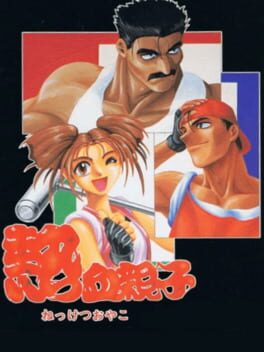
Nekketsu Oyako is a beat-'em-up by Technosoft released for the PlayStation in 1994 and the Sega Saturn in 1995. Neither version was released outside Japan. The title roughly translates to "Burning-Blood Family." The game is noted for its humorous presentation. For example, one stage takes place inside a whale, and alcoholic beverages (a healing item) can only be consumed by Rando while his two kids get an "adult only" message instead.

Hack and slash/Beat 'em up / Action
Full of magic and mecha fighting action takes place in a different world turns. Set in 2D with depth of field, with a comical action Ri Gemasu melee battle finishing moves and colorful quirky characters who are in disarray. In addition to story mode, and up to four people can play simultaneously mode also comes with VS.

Hack and slash/Beat 'em up / Action
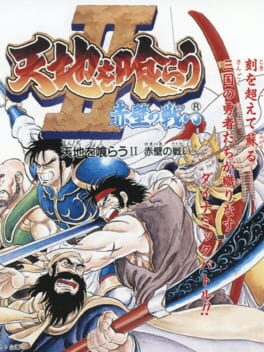
Tenchi wo Kurau II: Sekiheki no Tatakai is a side-scrolling beat-'em-up produced by Capcom first released originally as a coin-operated arcade game in 1992 and then later ported over to the PS1 and Sega Saturn. Tenchi o Kurau II: Sekiheki no Tatakai is a beat'em up with 9 stages, in each of which there are large mobs including spearman, archers, strongmen, bomb-wielding opponents, and at least one Wei boss. There can be up to three players on-screen at the same time. Using two buttons, Attack and Jump, the characters all have standard moves typical of Capcom side-scrollers of the day. Common enemies including Wei soldiers such as bandits, privatees, wrestlers, fatties and thieves will keep poping up from everywhere. In the end of each stage there is a Wei general as stage boss. Li Dian, Xiahou Dun, Xu Chu, Zhang Liao, Cao Ren, Xu Huang, the infamous Lu Bu as final boss. After defeating them all, there is also Cao Cao himself who would try to escape. There is also a variety of weapons in the game which can be picked up. As with most side-scrollers, food is used to replenish health and can be found in various breakable containers in the game level. One notable feature of the game is the ability to summon a warhorse which adds more attacks to the characters, generally involving pole-arms (except long bow for Huang Zhong)

Fighting / Hack and slash/Beat 'em up / Action / Historical
"Bushido" is the soul of Japan - an ancient honor code deeply followed by samurai warriors for centuries. Plunge into real world battles across vast 3D environments that you can run, slice and tear through. Sword matches become unbelievably real where one critical blow is the mean difference between death and victory.

Point-and-click / Strategy / Arcade / Action / Science fiction
Arkanoid Returns is an arcade game released by Taito in 1997 as part of the Arkanoid series. It was the fourth overall, and third to be released in arcades. The game was since ported to the PlayStation, with an updated home release being released afterwards titled Arkanoid R 2000. All versions were released exclusively in Japan, currently making it the only game in the series to never receive an international release. The enemy known as 'DOH' still did not get the message and after many years of silence decides to attack once again. The 'Vaus' space vessel better be ready to face new, yet familiar challenges, in order to stop 'DOH' once again. The gameplay remains similar to Arkanoid: Doh it Again, the previous game in the series released for the Super Nintendo, in that it features the same powerups , some re-used level designs, and the same board size. The initial arcade game contains only 50 levels, the environment changing every 9 levels.

Fighting / Role-playing (RPG) / Hack and slash/Beat 'em up / Action / Fantasy
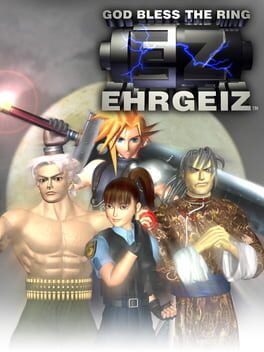
Ehrgeiz is a 3D fighting game that features some characters from Final Fantasy VII. Cloud Strife and Tifa Lockhart are playable in the arcade and the PlayStation versions, and Sephiroth, Yuffie Kisaragi, Vincent Valentine and Zack Fair were added to the PlayStation version's roster. Ehrgeiz differs from most 3D fighting games by drawing heavily from the concepts of wrestling games and Dream Factory's own Tobal series, which allow for full 360-degree movement and do not require fighters to be facing each other at all times.

Platform / Hack and slash/Beat 'em up / Action
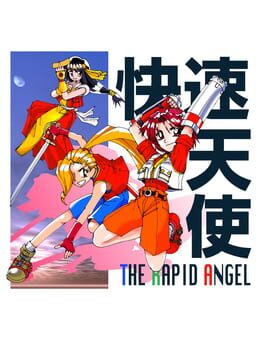
Rapid Angel is a mix of 2D platformer and beat-'em-up, so the players will explore the levels fighting enemies, collecting power-ups and avoiding traps. While basic moves are the same for all characters (running, double-jumping, using bombs etc.), each girl has her unique fighting style with Natsumi and Ayane relying on physical attacks and Haruna using mostly distance-type magic attacks. Particular fragments of levels and story sequences are different depending on the character chosen by the player. Two more characters are unlocked after beating the game. In 2-player mode the second player controls an angel-thing that follows the first player's character aiding him along the way.

Fighting / Hack and slash/Beat 'em up / Action
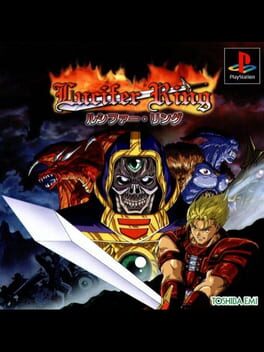
You play as a young hero named Nash who is tasked with stopping a dark wizard from using the Lucifer Rings that will open the gates of Hell. Naturally, Nash will have to hack and slash his way through Centaurs, Goblins, Dragons and creatures named Bob to put a stop to the evil forces. There will be mini-bosses and multi-state level bosses to round out this adventure to put our hero to the test. Dark wizards never let heroes get any rest, do they?