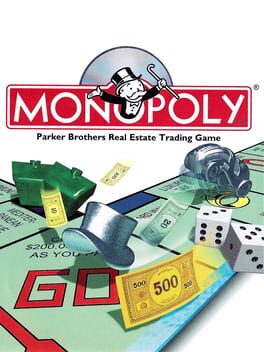
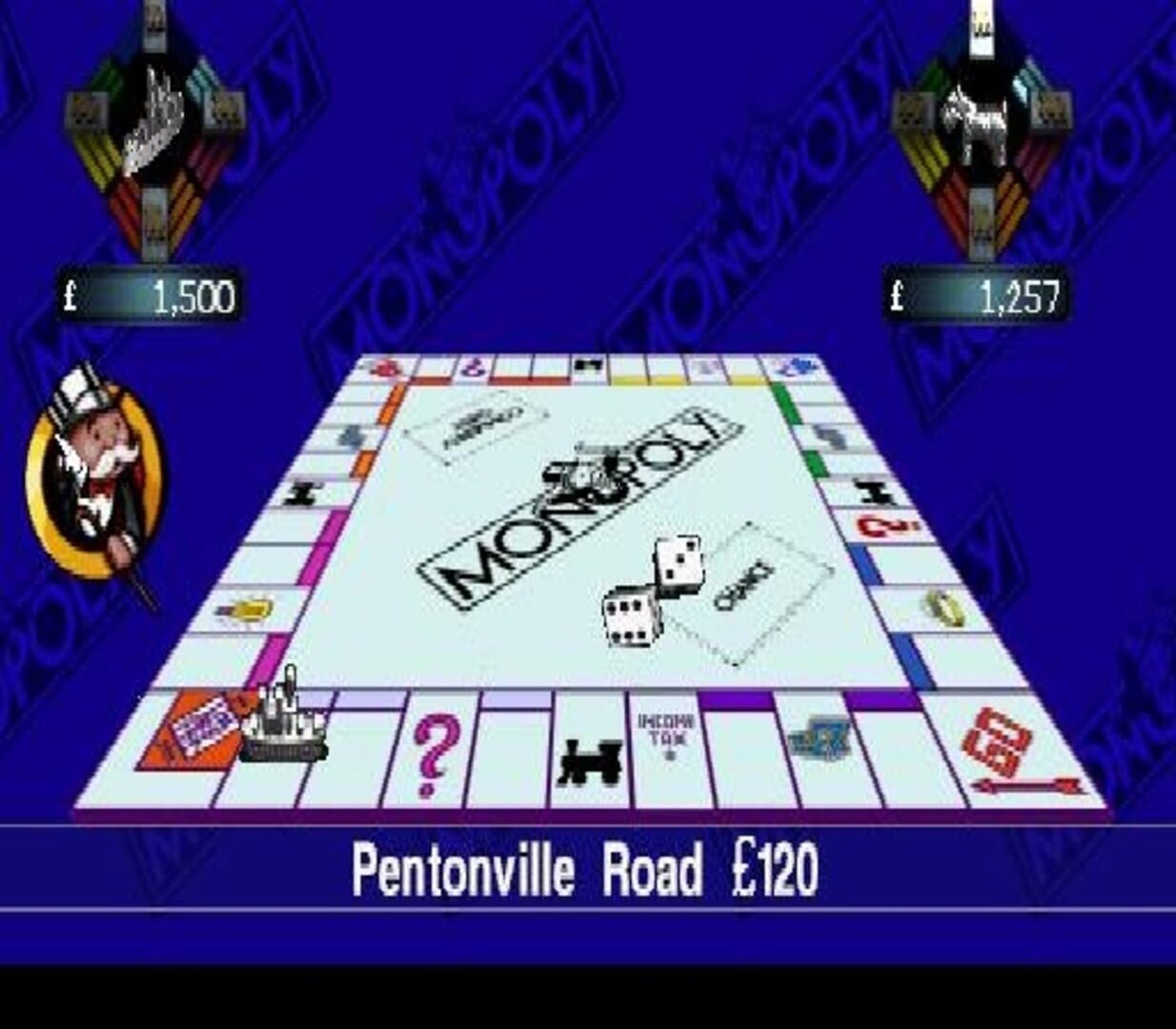
Monopoly is a PlayStation video game based on the board game Monopoly, released on November 6, 1997 in Europe. Developed by Gremlin Interactive and published by Hasbro Interactive, this title was one of many inspired by the property. Despite using the same box art as the 1995 PC version of Monopoly, it is not the same game.

Simulator / Strategy / Turn-based strategy (TBS) / Party
This game follows the rules and nuances of the community card game Texas hold 'em.

Puzzle / Strategy / Turn-based strategy (TBS) / Party
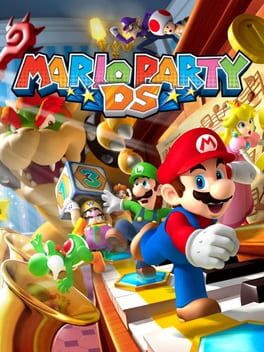
He's captured Mario and his friends in his pursuit of a crystal that the group collected when it fell from the sky, and he doesn't hesitate to shrink them to miniature size to get rid of them and get his hands on the other four crystals. The mini-heroes have to find the crystals before he does, making their way through giant environments filled with enormous creatures. The single-player campaign takes place in five different settings, each of them ending with a boss. As usual, players have to collect coins and stars, at the same time escaping dangers such as Piranha Plants and other classic creatures from the Mario universe.

Puzzle / Strategy / Card & Board Game / Kids / Party
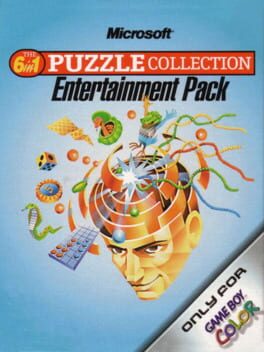
A Game Boy version of the Windows puzzle suite of the same name, featuring 6 of the 10 games released on PC, designed by Alexey Pajitnov, the original Tetris designer, on one Gameboy Color cartridge. Jewel Chase. A level based game. Every level consists of a labyrinth of colored pathways, scattered valuables, locked doors, keys, a thief (the player), on some levels an opposing thief and a door marked exit. The goal is to reach the exit to proceed to the next level, valuables can be 'stolen' for score. If the opposing (computer controlled) thief reaches the exit before the player, the game is lost. Movement is not possible between differently colored tiles, unless a special, multicolor 'bridge' stone is used. 99 levels total. Spring weekend. A rotation puzzle, where a given pattern needs to be recreated by rotating elements on the playfield. Lineup. Using 'Tetris' style blocks, a continuous line from a screen border to an opposite screen border needs to be build. Elements appear on an element stack, and can be selected freely from that and subsequently placed anywhere on screen, without overlapping each other. If the element stack is full, the game is over. As soon as a line is complete, the elements of that line are removed from the screen. Elements appear faster over time. Finty Flush. A grid on top of the screen fills slowly with multicolor balls. The player can pick one out of 4 squares on the bottom of the screen to shift balls in one line into and out of these squares. The squares can be rotated in 90 degree steps. As soon as any square is completely full with balls of the same color, its content empties to make room for more balls. 3 filled square grids grant a bonus point, and the next level begins (tiles appear faster). The game is over when the upper grid is full. Color Collision. A 'Qix' style ray ( no better way to describe this - for the younger audience - imagine a flapping fan ) moves with increasing speed through a screen full of obstacles. The player can only indirectly control it - any time the direction pad is pressed, it gets 'reflected' into the direction that has been indicated. Objective is to hit obstacles with a given color and pattern, avoiding all other elements. To top things of, the patterns change over time. The game ends if the wrong obstacles have been hit too many times. Rat Poker. Little differently colored rats are automatically fed into labyrinths, with labyrinth design changing and getting more complex during level progression. Switches allow rerouting of the rats to arrange certain color combinations ('hands') of rats. If a given combination is achieved, the contributing rats exit the playfield through a door. You progress to the next level if a given number of rats has been removed from the game. The game ends if there is no space left on the playfield for additional rats. .
Strategy / Card & Board Game / Party
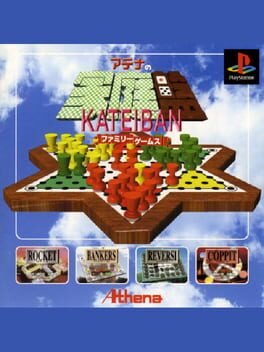
Variety game collection was recorded board game of nostalgia. I record five sugoroku like to play using the board that mimics of Othello-like "Reversi", the luster of diamond "King Diamond", hat up game "Kopit", "rocket", the Game of Life-style of "Bankers". Can be simultaneously play up to four people maximum. Let Moriagaro in the good old game a long time ago!

Strategy / Card & Board Game / Action / Party
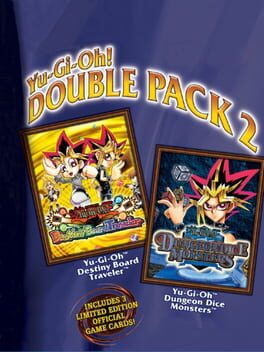
A second two-game cartridge for the Game Boy Advance Yu-Gi-Oh! games, this time focusing on Destiny Board Traveler, and Dungeon Dice Monsters, spinoff games that are not related to the popular "Duel Monsters" card game from the manga.

Strategy / Card & Board Game / Comedy / Party
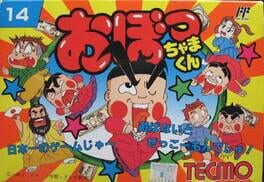
Obocchamakun is a Miscellaneous game, published by Tecmo, which was released in Japan in 1991. This board game is played by up to four players, and the victory condition is to receive a kiss from the heroine. The map, which resembles a world map, is divided into Europe, Asia, the Soviet Union, Africa, North America, South America, the North Pole, the South Pole, and Tamba World (the underworld), and players must find the treasure demanded by the heroine among them. Treasures obtained by other players can be taken away by physical assault or by using items. Players can earn the necessary liking points to receive a kiss when they deliver the treasure they have found to a randomly selected city where the heroine is staying. When the player reaches the number of points set before the game begins, the player wins a kiss from the heroine.

Platform / Strategy / Card & Board Game / Comedy / Party
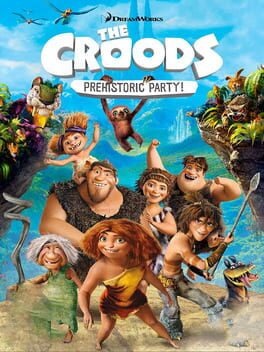
The Croods: Prehistoric Party! features the lovable Croods family: Grug, Ugga, Eep, Thunk, Sandy, Gran and Guy, on a hilarious adventure through 30 unique and addictive party-style mini-games. Explore spectacular landscapes in an incredible new world filled with never-before-seen creatures as you battle your friends and family in this awesome adventure with up to four friends in multiplayer gameplay.

Strategy / Tactical / Card & Board Game / Kids / Party
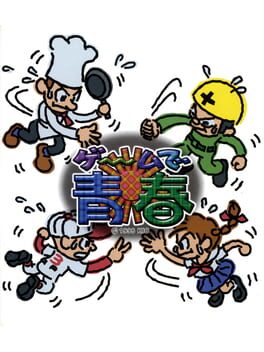
Game de Seishun is a multiplayer party board game in the mold of The Game of Life, which follows each player's avatar through five stage of youth, from kindergarten through to graduating high school and starting a career. The focus is on building friendship and relationships with various characters, and living a full and satisfying youth, with the winners being decided by so-called "seishun points" which are accrued by deepening interpersonal relationships, earning money from jobs, exercising and studying to improve oneself, and going on dates. Each player moves through the board by selecting from one of several numbers to determine the number of spaces to move. Various spaces have different effects: some cause good or bad events to occur, some cause random events to happen, and some allow the player to pick a specific activity for the day such as studying or going to work which will increase various stats that in turn affect future events. Once all players have reached the goal, points are tallied based on the game type selected and a winner is decided.