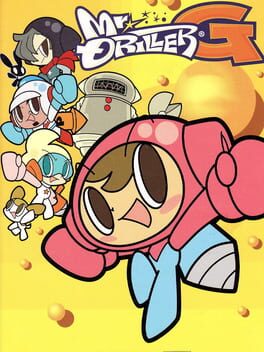

Mr. Driller G is a another entry in Namco's series of arcade puzzle games. As in the previous titles, the main objective is to control a miner character and dig through layers of multi-colored blocks to reach the deeper levels of a shaft and score points. As sections are removed, the whole structure becomes unstable and dangerous. When large pieces of the same color fall on top of each other, they automatically disappear. The miner can be squished by the crumbling stones, or suffocate by lack of oxygen. Air pills and power-ups are found scattered throughout the level, and must be collected to refill the supply, shown as a meter at the right side of the screen. Special brown blocks act as a barrier and have to be drilled several times to break, removing a portion of the remaining air after being destroyed. The single player game has three modes. In mission mode, the objective is to reach a specific depth and make as many points as possible, with several levels available to play right from the beginning. In scenario mode, cutscenes play between a linear succession of levels, where each shaft has to be completed to move the plot forwards. In time attack mode, the air pills are replaced with clocks that add a few seconds to the time remaining to reach the bottom of the mine. The normal arcade mode has multiplayer variations that can be played locally with two controllers, where the screen is split vertically in the middle showing two separate mine shafts for each player. In Driller Race, the objective is to reach the deep end of a randomly generated shaft as fast as possible, while in Driller Survival the players try to outlast each other in bottomless mines. There is an option called Net Driller, that generates passwords to be used on the official site for competitions and global rankings. Support for it was discontinued on January 30th, 2003.
A.D 2000X in Tokyo, a mysterious occurrence of overflowing Blocks was halted by the actions of a Professional Excavator "Driller" by the name of Susumu Hori. Above ground, peace returned again. Half a year passed, suddenly the Blocks began to overflow in three nations. One after another America, India and Egypt became flooded in blocks. Susumu Hori and his Rival Driller, Anna Hottenmeyer; urgently began to dig to the depths of the earth. Meanwhile, Susumu's father, Taizou Hori; Susumu's elder brother, Ataru Hori; Anna's Robot Assistant, Horinger Z and Susumu's roommate, Puchi, were all digging to the depths of the earth, aiming for the resolution of this disaster. What is the probable cause of this latest incident? And, among the 6 Drillers, who will be the one to resolve this disaster? Our hero can drill up, down, left and right. Drilling through single blocks would take forever, so it's fortunate that blocks of the same color form into groups that vanish when only one of the blocks is drilled. This allows for chain reactions, since vanishing blocks will often cause other blocks to fall and form new groups. Alas, these falling blocks are also deadly if they hit Mr. Driller. If all Mr. Driller had to do was drill, life would be easy. But he also has to keep refilling his oxygen supply by collecting air capsules scattered throughout the blocks. The deeper he goes, the faster his air runs out. Hampering his progress even further are brown "X-blocks" that take five drill strikes to disappear and remove 20% of Mr. Driller's air when broken. This game is a Japan-only port of the original Arcade game of the same name.
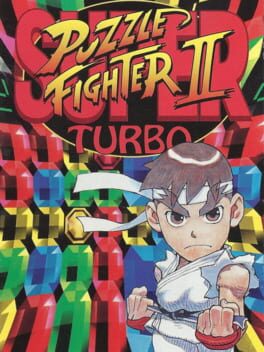
The game's title is a parody of Super Street Fighter II Turbo (or Super Street Fighter II X in Japan), as there are no other Puzzle Fighter games, and the game includes music and interface elements spoofing the Street Fighter Alpha and Darkstalkers games. It was a response to SEGA's popular Puyo Puyo 2 that has been sweeping Japanese arcade. A HD-remake version titled Super Puzzle Fighter II Turbo HD Remix, is available for purchase on Microsoft's Xbox Live Arcade and Sony's PlayStation Network.

Puzzle / Strategy / Arcade / Fantasy / Kids
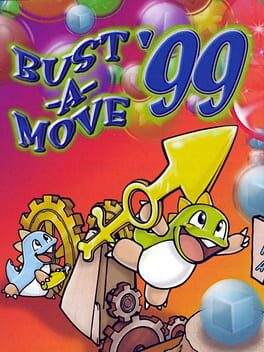
In the tradition of the Bust-A-Move series, Taito's Bust-A-Move '99 is a traditional puzzle game. The main objective is to destroy or get rid of (by dropping) all the bubbles located within the stage. Once you do this, you'll graduate to the next level. While the premise may sound simple, the logic and execution is not. Using a "bubble shooter", you must aim and shoot your bubbles to the top of the screen so that you can bring three bubbles of the same color together. When you do this, the bubbles will pop. One way to earn points is to have the popping bubbles as well as the bubble that was shot fall off the screen (in multi-player, it puts these bubbles on your opponent's side). This also gives you a lot less bubbles to take care of. Bubbles are constantly falling down. Popping them all in a short amount of time is necessary because the longer it takes you to pop them all, the faster they will drop. If you fail to clear out all the bubbles and they reach the bottom of the screen, the game is over. Bust-A-Move '99 contains some new options never seen in the Bust-A-Move series. There are now special bubbles (star, metal and rainbow to name a few), obstructive bubbles and blocks and new backgrounds. You are also given the opportunity to create your very own stages with the create-a-level editor.

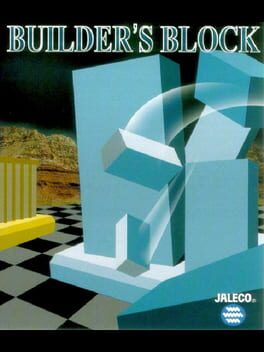
Builder's Block (known as "Land Maker" in Japan and "Landmaker" in Europe) is a puzzle game in which you must construct buildings and then eliminate them for points. Although a certain color can only eliminate itself, the object of this game is to match colored blocks together to form buildings. Once you have made a building, you can eliminate it by shooting a block on the corner of it. The larger the building, the more benefits you'll reap when you destroy it! The game can be played three different ways: Puzzle mode, Battle mode, and Arcade mode. In the Puzzle mode, you must travel to one of seven different courses and construct specific size buildings. You must not destroy the buildings in this mode. The object is to build cities for the specific course or region you're in and make the cities grow.

A 1997 arcade game developed by Taito (now SquareEnix) subsequently ported to PlayStation and Game Boy Color. The arcade version was re-released in 2006 as part of Taito Legends 2 for PlayStation 2, Xbox and PC. Later the game was released on the PlayStation Network. The general objective of the game is to destroy gem-like blocks using a ball and paddle.

Puzzle / Arcade / Card & Board Game / Comedy
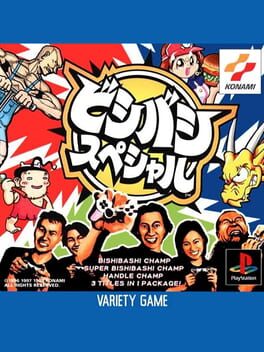
Bishi Bashi Special is a compilation (and conversion) of the Konami arcade titles Bishi Bashi Champ, Super Bishi Bashi Champ and Handle Champ. Gameplay is made up of tons of mini games, all of which use a simple 3-button interface that mimics the arcade originals. The mini games encompass a wide variety of button-mashing, timing and button combination games. The games themselves can be anything from making hamburgers, throwing a pie down a church aisle to balancing a car on a floating narrow gravel road and much more. The game can be played alone, vs a computer player or play up to eight people using a multi-tap and three controllers.

This is the first volume of one of the series of Namco game compilations, released only in Japan. This anthology is similar to the "Namco Museum" series except that this collection include games that have been released on consoles originally. Each disc includes 4 games and, along with each of the games, there were also updated versions of those. This volume includes: - Star Luster - Tower of Babel - Wrestleball (aka. "Powerball" in America) - Haou no Tairiku

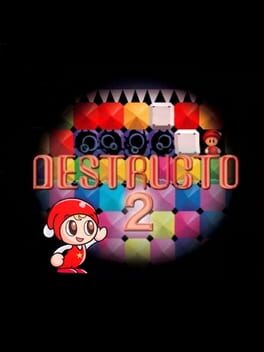
Destructo 2 is a simple color-matching puzzle game similar to Mr. Driller, originally released as part of a budget series in Japan. The main objective is to guide a cartoon character moving through an ascending pile of multicolored tiles, pushing the available blocks to create clusters of the same color. Groups of four or more tiles of matching colors can be removed by punching one of the connected blocks, with the vacant space being occupied by the falling stacks on top. The descending tiles that end up rearranged in new color clusters are automatically eliminated and give combo points.