Developed by Orebody for Nami Tentou.
Shooter / Music / Indie / Action / Science fiction
Oratorio is a rhythm action rail-shooter developed for the 8-bit Nintendo Entertainment System. Primarily inspired by games like Rez, Child of Eden, and Thumper. Oratorio is a unique on-rails rhythmic shooter where players create the music of the game through interaction with the game's systems, like shooting enemies, projectiles, and powerups. Everything players do contributes to the soundscape in this innovative retro music shooting game. The game takes place in a dystopian cyberpunk future where an environmentalist hacker group launches a desperate mission to hack the servers of one of the world's largest corporations in order to steal the DNA sequences for extinct plants and animals that the corporation has copyrighted for use in virtual reality safaris. As the enigmatic hacker named Oratorio, players are the last hope for revival in a world that has gone to a digital ruin. Players control a cursor and assume a first-person perspective on an ever-expanding digital track in cyberspace.
Despite our best intentions, the world did not survive us. The coasts flooded. Mass migration displaced hundreds of millions. Food supply chains broke. People fought wars over fuel and water. Social unrest led to the collapse of most organized governments. In the wake of this ruin, the Mega Corps and their Metaverse emerged as a beacon. Life became a luxury reserved for the wealthy. And the blueprints of life, the DNA data for all flora and fauna, became a commodity owned by the most powerful Mega Corp, Nu-Li. As each species went extinct, Nu-Li coded and copyrighted its DNA. Its fiercely guarded data banks became a new, proprietary Digital Ark. While most used the Metaverse to escape the desolation of everyday life, the eco-hacker group SOL (Save Organic Life) used it to fight back. As time runs out for the world, SOL launches a desperate mission to hack Nu-Li and steal back all the copy-protected DNA data. With it, they can bring back what’s been lost. In the hacker world, you are known only as Oratorio. You are the world’s only chance for revival.

Shooter / Music / Indie / Action
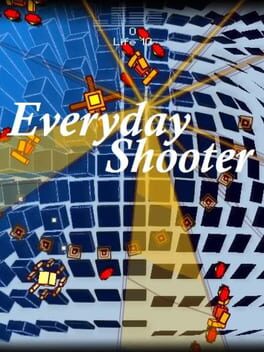
Everyday Shooter is an album of games exploring the expressive power of abstract shooters. Dissolute sounds of destruction are replaced with guitar riffs harmonizing over an all-guitar soundtrack, while modulating shapes celebrate the flowing beauty of geometry. Play through different levels each with a completely unique musical, graphical, and gameplay style. Shoot to trigger musical sounds and riffs that combine to form the final soundscape of the game. Use points earned in the game to unlock extra lives, shuffle mode, and different visual filters.


Shooter / Puzzle / Indie / Action / Science fiction
In this vertical scrolling spaceship shooter, you control a ship that can change its polarity at will. As blue/white, the ship can easily destroy red/black enemies, and vice versa. Bullets of your polarity can be collected to fuel your energy gauge, but those opposite will kill you. Destroying an enemy ship causes them to fire revenge bullets which can be absorbed and fired back by the player. Different difficulties exist to change exactly how you interact with polarized points, or how they appear. It is the spiritual successor to Radiant Silvergun, featuring similar level and boss design, as well as it's buddhism inspired themes and aesthetics. Both are directed by Hiroshi Iuchi, who also composed Ikaruga's soundtrack.


Shooter / Indie / Arcade / Action / Science fiction
The basic gameplay is simple: progress through the levels in the spacecraft, collecting powerups and protecting the spacecraft from destruction. The game has very obvious similarities in design and gameplay to R-Type. It is actually believed that some ex-Irem employees left the company to join Aicom, which used to be a subcontractor for various coin-op manufacturers like Jaleco or SNK. Despite the familiarities, Pulstar is not without innovations. There is the option of using the weapon power bar, which consists of two halves. The right-hand side of the bar turns blue when the fire button is depressed. When fully charged the ship delivers a devastating emission of energy. The left-hand side turns red when it is continually pressed, shooting out a barrage of smaller, rapid blasts. The in-game visuals are mostly pre-rendered 3D graphics, which gives the interactive elements a far more realistic appearance. Great care was taken to really place the player into the world of the game, with cinematic style cut scenes and pre-rendered movies. There is a hefty reliance on strategy and not just blasting everything in sight. Using the charged weapon is key, and requires careful precision. Also, once a power up is obtained, a small orb appears at the posterior end of the ship. This can be used as an advantage by deflecting/absorbing oncoming enemy fire and taking out small enemies that run into it.

Shooter / Music / Platform / Action / Fantasy
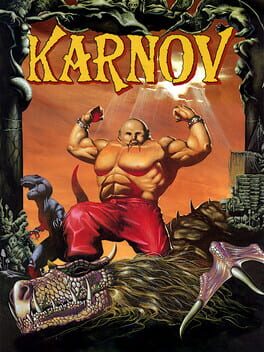
Karnov is a 1987 platform arcade game. It is the debut of Data East's mascot of the same name. After Data East became defunct due to bankruptcy in 2003, Paon, a company comprising former Data East staff, acquired the rights to Karnov, along with multiple other Data East games. In the game, players take control of the title character Jinborov Karnovski, or "Karnov" for short. Karnov is a strongman popularly illustrated as being from an unspecified part of the Soviet Union's Central Asian republics as shown on the original arcade flyer and again in Karnov's Revenge.

Shooter / Indie / Action / Science fiction
The sky is falling! The sky is falling! Your base of operations is the last line of defense against an imminent disaster. Big rocks and lil rocks are pounding the earth. Making matters worse, extra terrestrials or some rogue government are sending over spinner missiles and pulsar bombs designed to end your day and make sure you and yours can never phone home again.