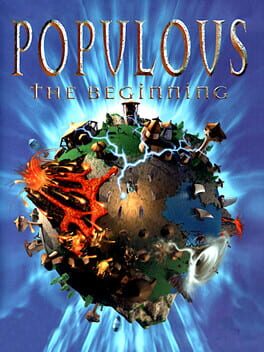

Developed by Bullfrog Productions for Electronic Arts.
Real Time Strategy (RTS) / Role-playing (RPG) / Strategy / Fantasy
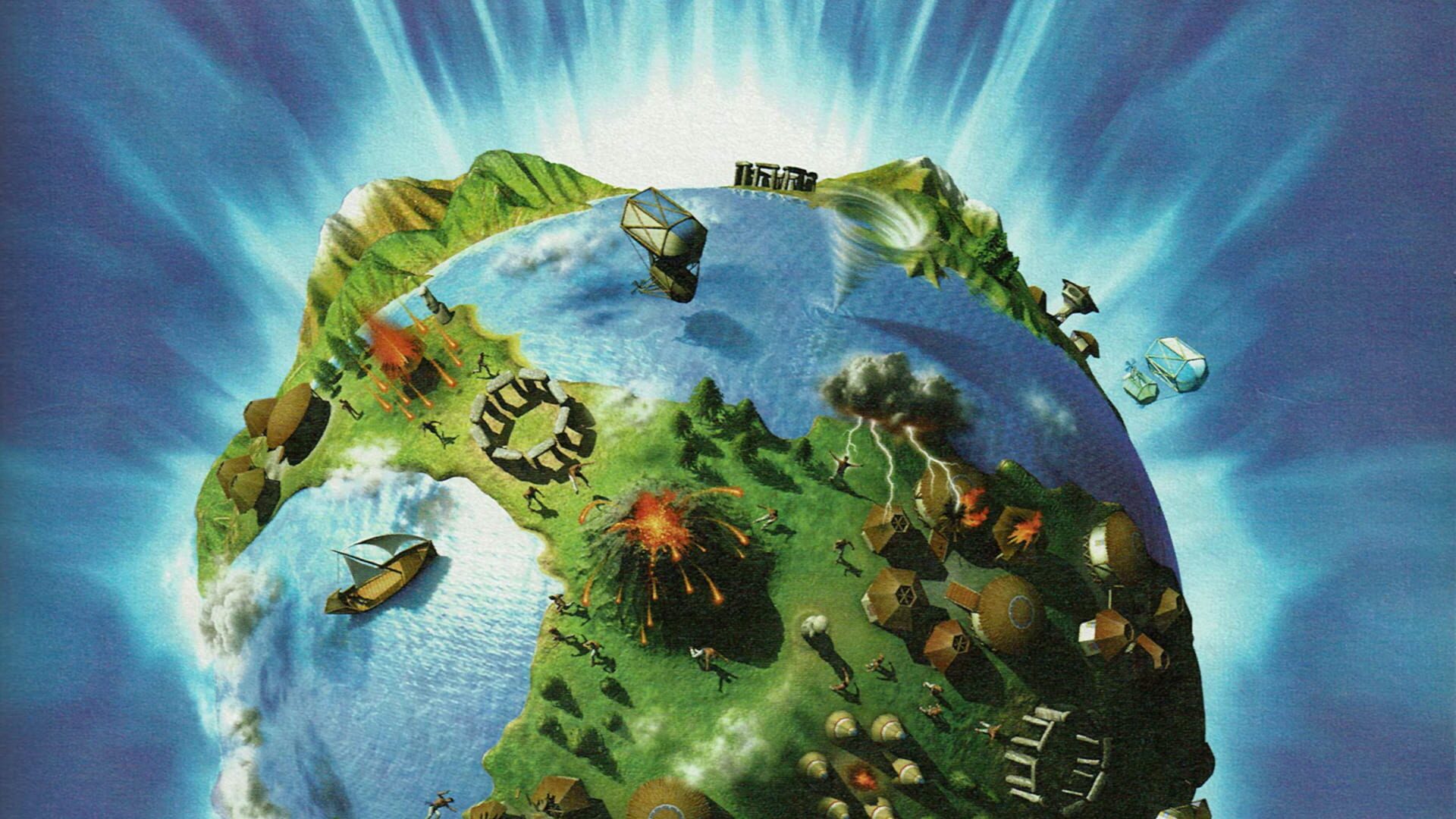
Populous: The Beginning is a strategy and god-style video game. It is the third entry in the Populous video game series, developed by Bullfrog Productions in 1998. The PC version of the game was released November 30, 1998 and a PlayStation version was later developed and released on April 2, 1999. Unlike earlier games in the series, which cast the player in the role of a god influencing loyal followers, The Beginning took a radical departure and placed the player in the role of a shaman, who directly leads her tribe against opponents. Throughout the twenty-five missions of the campaign, the player leads their tribe across a solar system, dominating enemy tribes and tapping new sources of magic, with the ultimate goal of the shaman attaining godhood herself. Populous: The Beginning was the first entry in the series to use true 3D computer graphics; Bullfrog waited four years after Populous II: Trials of the Olympian Gods so that the graphics technology could catch up to their vision for a new and different game in the series. The developers considered the addition of terrain deformation and manipulation, combined with "smart" villagers who automatically attended to tasks, to add an entirely new dimension to the series. The game's original title was Populous: The Third Coming before being changed prior to the beta release. Populous: The Beginning plays very differently from earlier titles and received mixed reviews. Reviewers positively noted the excellent graphics, while complaints were directed at the artificial intelligence and the indecision in game design between being a real time strategy title and a god game. GamePro's Peter Olafson wrote that Populous: The Beginning was not a bad game, in fact a good one; "but it's a different game—one without a quintessential quality that defined Populous."
Populous: The Beginning takes place before the first two games in the series. The player controls the Blue tribe, pitted against the three enemy tribes which control most of the solar system. The player's destiny as Shaman is to become a deity; only by defeating all the enemies in the system can the player's shaman become omnipotent. The player begins on the planet furthest from the sun, and attacks each planet in sequence. Along the way, the Shaman can learn new skills and magic to defeat her (usually) much more powerful enemies. Victory requires the player to either destroy the opposition, or on occasion perform special actions. The player loses if his or her Shaman is killed and there are no remaining followers, if the Shaman is killed and there is no circle of reincarnation, or the player runs out of time on timed levels.[16] Upon beating back the other tribes, the Shaman ascends to godhood, and further helps her people conquer the Matak, Chumara and Dakini in one final conflict.

Real Time Strategy (RTS) / Role-playing (RPG) / Simulator / Fantasy / Sandbox
Populous is a real-time strategy game where the player takes the role of a deity influencing the development of civilizations. You shape terrain, guide followers, and use natural disasters like floods, volcanoes, and earthquakes to influence or eliminate opposing tribes. The game features an isometric perspective and includes 500 levels (worlds), each with different challenges. Originally developed by Bullfrog and designed by Peter Molyneux, it is considered one of the earliest examples of the god-game genre.

Real Time Strategy (RTS) / Role-playing (RPG) / Strategy / Fantasy / Warfare
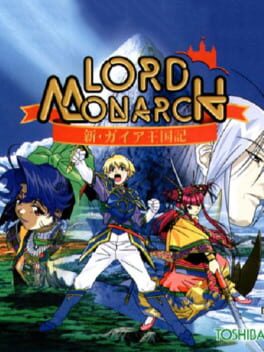
An enhanced release of "Lord Monarch" for PlayStation, adding a full story mode and voice acting. Lord Monarch was first released as a PC game in 1991 and became a hit not only in Japan but all over the world with its real-time simulation gameplay, an innovative game system ahead of its time. While the goal of this game is simply leading your nation and expand your territory as far as possible, players can at the same time enjoy the intricate tactic gameplay and an immersive story that unfolds along with the introduction of different characters. There are 100 stages in total and together with different game modes and systems, it is hard to get tired of the endless fun offered by this title!

Role-playing (RPG) / Strategy / Fantasy / Science fiction
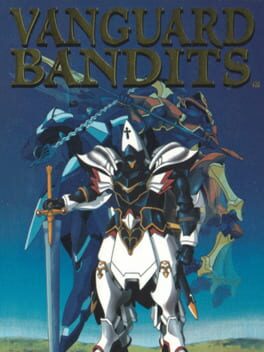
In a world where technology and mythology are one, a young rebel and his ragtag crew are unwittingly drawn into a holy war being waged by the bloodthirsty General Faulkner and his mercenary forces. Guide the charasmatic Bastion as he realizes his destiny to lead the rebellion against the Junaris Kingdom, and to save the people of his world from an eternity of oppression. Lead powerful squadrons of robotic warriors into battle and take complete command of their actions. Smite your foes with cleaving swords, piercing spears, and sizzling magic spells. Use the terrain to your advantage and maneuver your forces into superior combat positions. Witness the results of your tactical decisions in glorious 3D combat sequences.

Role-playing (RPG) / Adventure / Card & Board Game / Fantasy / Science fiction
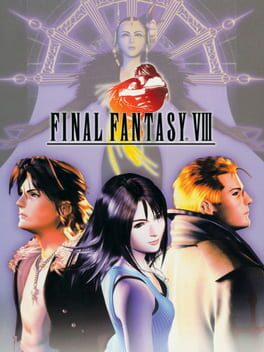
Final Fantasy VIII is the eighth main installment in the Final Fantasy series. The gameplay makes a departure from many series standards. While it still uses the Active Time Battle system, it deviates from the series' traditional means of boosting a character's power via leveling, although levels are not completely abandoned as they were in Final Fantasy II. In addition, it does not have a Magic Point-based system for spell-casting. Instead, magic is collected, drawn, and created from items, and is used to power up the characters via the junction system.

Role-playing (RPG) / Strategy / Adventure / Action / Fantasy
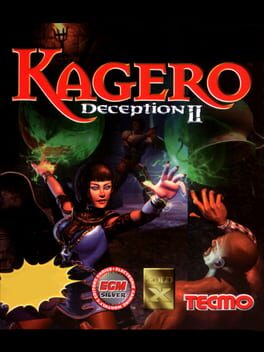
Kagero: Deception II is the sequel to Tecmo's Deception. It follows a similar, hard-to-classify gameplay style, which can be perhaps defined as a real-time strategy game with RPG elements. Instead of commanding troops and units, Millennia has to place traps and activate them to prevent the intruders from conquering the castle. Unlike the first game, Kagero: Deception II is played from a third-person perspective. A major addition to the gameplay is the introduction of "trap combos": traps can be positioned in such a way that they will trigger each other, leading to powerful combinations that would harm the invaders more. The game also allows to customize traps and use various materials to build new ones. As before, the main character and her traps grow in power in correspondence with the amount of enemies killed, lending the game a RPG flavor. The morality system also present in this sequel, as the player can decide for Millennia whom to kill and whom to spare. Eventually, the player will be able to choose to join either the Timenoids or the humans.

Role-playing (RPG) / Strategy / Tactical / Fantasy / Comedy
Rhapsody: A Musical Adventure, released in Japan as The Puppet Princess of Marl Kingdom is a tactical role-playing game for the PlayStation from Atlus USA and Nippon Ichi Software, the creators of Disgaea, and is part of the Marl Kingdom series. Rhapsody, along with its sequels, are considered musical RPGs, meaning in place of FMV cutscenes, there are musical numbers, complete with vocals. The game is also known for its "overwhelming cuteness" and low level of difficulty. Although this may make the game seem geared towards a younger audience, in Japan, the game and series in general has seen much success.

Role-playing (RPG) / Strategy / Fantasy
Wild Arms XF is a 2D turn-based tactical role-playing game, creating a gameplay experience somewhere between Dungeons & Dragons and chess. Players are given control of a small squad of characters (six or less) and placed on a grid-based map resembling a geographical location (a swamp, a town, a river), upon which they fight battles to progress through the game. As with most T/RPGs, positional advantage can be critical to victory, and players are encouraged to outmaneuver their enemies as well as outgun them. The game emphasizes positioning and maneuvering by the inclusion of "Formation Arts," which increase attack damage when an enemy is surrounded by your characters in a line, a triangle or a circle. Wild Arms XF is a member of the small subsection of T/RPGs whose battlefields are based around hexagonal tiles instead of squares. "Combination Arts" return from previous Wild ARMs titles, allowing characters to target an enemy in a waiting state and then deliver their attacks simultaneously with the next ally to attack their target. If the player succeeds in executing an uninterrupted series of commands, the damage inflicted upon enemies will increase significantly. On the other hand, the enemy gets the same advantage.

Role-playing (RPG) / Adventure / Fantasy / Drama
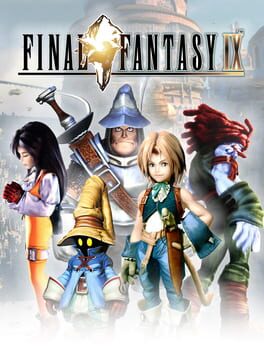
Final Fantasy IX is the ninth main installment in the FF series. The title is a return to the series's roots, with gameplay features and references to the past games featuring throughout, as well as a medieval fantasy setting and cartoonish art style as a break from the sci-fi slant style of Final Fantasy VII and Final Fantasy VIII.