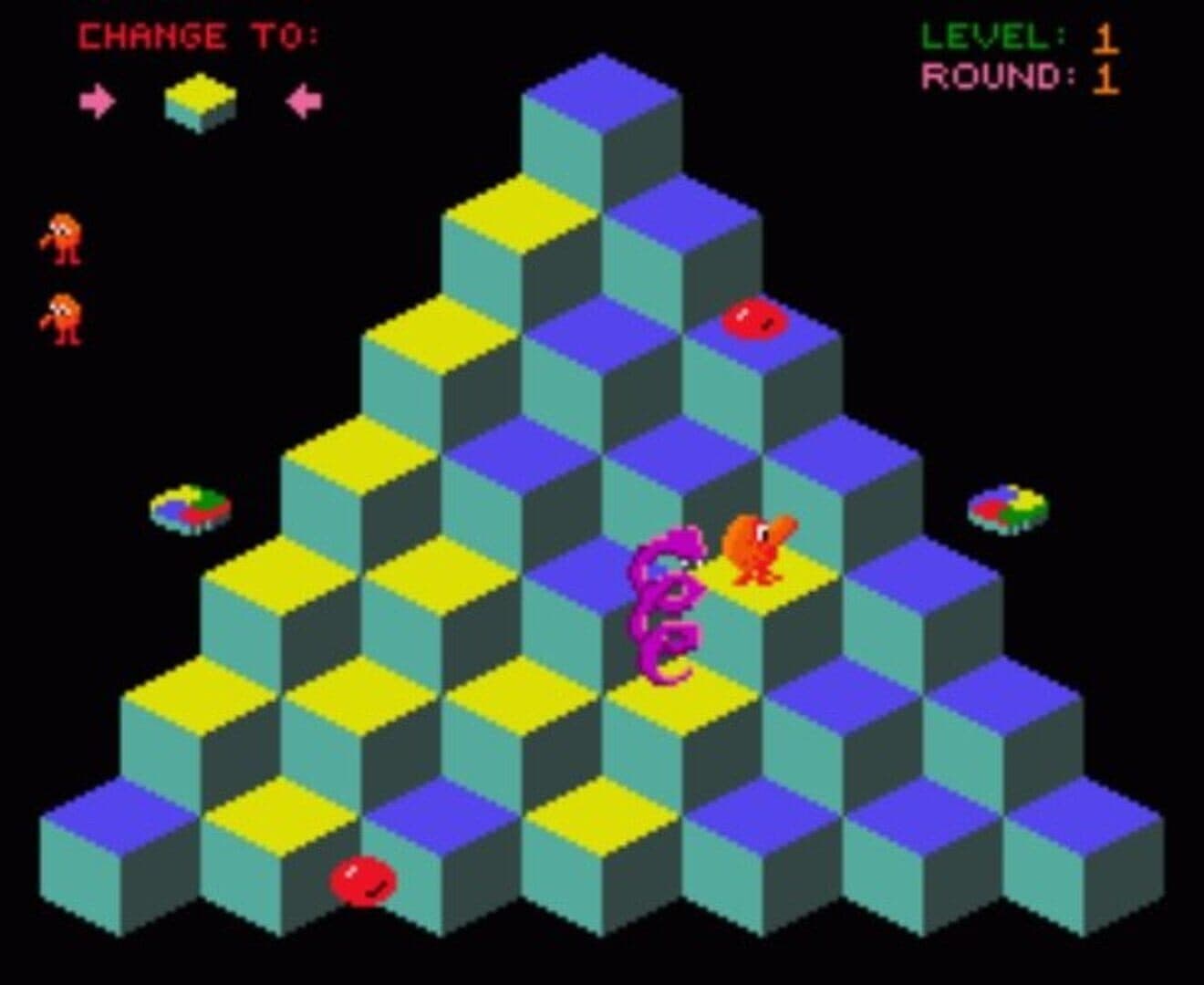
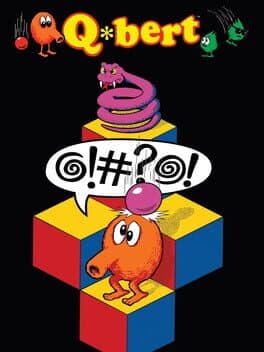

Q*bert was a popular arcade game that was released on a large number of consoles in the early 1980s. It was developed and published by Gottlieb, and became their most successful game. The concept serves as a precursor to the isometric platformer genre, where the title character must work to turn all cubes to a certain colour in a psuedo-3D world, made 3D through isometric graphics in the same way that the Penrose Stairs was made. The game was widely successful and has become a highly recognizable brand of the 1980s gaming era.
Q*bert is primarily a puzzle game where the title character must alter the colour of each cube in a pyramid by jumping on it, while avoiding the various monsters that seek to get in his way. No significant story was developed for the game, partly due to the original inception as an arcade game.
Platform / Puzzle / Adventure / Action / Comedy
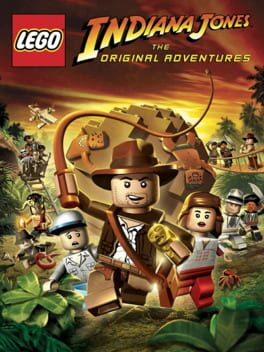
Build, Battle and Brawl your way out of trouble! Play through all three classic Indiana Jones movies and relive your favorite Indy adventures in the tongue-in-cheek worlds of LEGO. Explore and Discover - Battle enemies, solve puzzles, and seek out the world's greatest treasures.

Platform / Puzzle / Action / Comedy
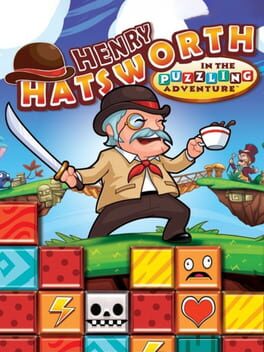
In Henry Hatsworth in the Puzzling Adventure players embark on single player fun like no other. Here Henry Hatsworth, a quirky, lighthearted character serves as your guide on a journey through a new style of gaming on your Nintendo DS that combines the action of an adventure game with the challenge of a puzzle game. In this two-in-one extravaganza players explore five exotic worlds, fight a variety of opponents, and venture through more than 30 levels, including nearly a dozen hidden levels while taking on outrageous world-ending bosses.

Platform / Quiz/Trivia / Adventure / Action / Fantasy
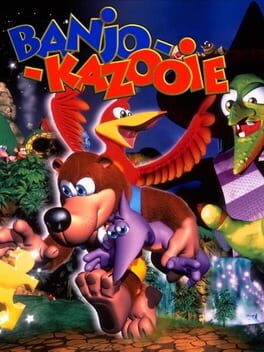
Trouble brews when Gruntilda the witch captures the unbearably beautiful cub, Tooty. But before the grisly hag can steal the bear's good looks, big brother Banjo and his fine-feathered friend, Kazooie, join forces to stop her. Combining their 24 moves and special powers, Banjo and Kazooie will fend off armies of beasts. Bear and bird must hunt down the 100 puzzle pieces and 900 musical notes that will ultimately lead them to Gruntilda. However. miles of swamp, desert, and snow and one bear of an adventure stand in their way.

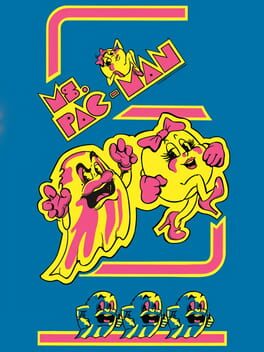
In 1982, a sequel to the incredibly popular Pac-Man was introduced in the form of his girlfriend, Ms. Pac-Man. This sequel continued on the "eat the dots/avoid the ghosts" gameplay of the original game, but added new features to keep the title fresh. Like her boyfriend, Ms. Pac-Man attempts to clear four various and challenging mazes filled with dots and ever-moving bouncing fruit while avoiding Inky, Blinky, Pinky and Sue, each with their own personalities and tactics. One touch from any of these ghosts means a loss of life for Ms. Pac-Man. Ms. Pac-Man can turn the tables on her pursuers by eating one of the four Energizers located within the maze. During this time, the ghosts turn blue, and Ms. Pac-Man can eat them for bonus points. The Energizer power only lasts for a limited amount of time, as the ghost's eyes float back to their center box, and regenerate to chase after Ms. Pac-Man again. Survive a few rounds of gameplay, and the player will be treated to humorous intermissions showing the growing romantic relationship between Pac-Man and Ms. Pac-Man, leading all the way up to the arrival of "Junior".

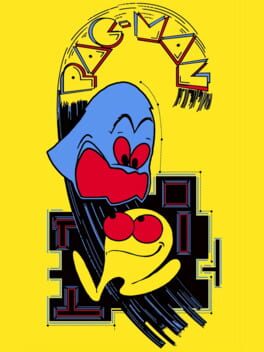
Pac-Man is a 1980 maze action video game developed and released by Namco for arcades. It is considered one of the classics of the medium, virtually synonymous with video games, and an icon of 1980s popular culture. Players control Pac-Man, who must eat all the dots inside an enclosed maze while avoiding four colored ghosts. Eating large flashing dots called Power Pellets causes the ghosts to temporarily turn blue, allowing Pac-Man to eat them for bonus points.

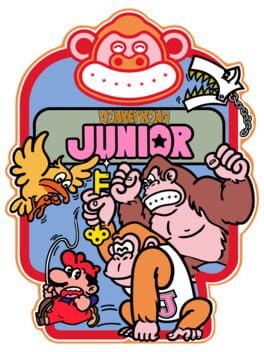
Donkey Kong Junior is the direct sequel to Donkey Kong. In this game, Mario plays the antagonist, finally having captured Donkey Kong, and has put the ape in a locked cage. As Donkey Kong Jr., players will have to make their way through four different levels (Vines, Springboard, Chains and Mario's Hideout) in an attempt to find keys to free the little monkey's father.

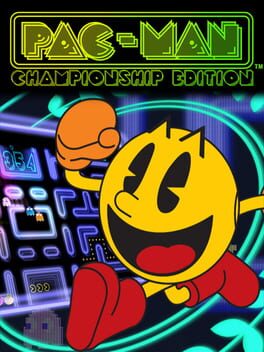
Pac-Man Championship Edition is similar in basic gameplay to the original 1980 Pac-Man: players have to eat dots, while avoiding the four ghosts that roam around the maze. Championship Edition, however, also brings many gameplay differences. The game was designed by Tōru Iwatani, the creator of the classic original 1980 arcade game Pac-Man, and it was Iwatani's final game before his retirement.

Shooter / Platform / Puzzle / Action / Science fiction
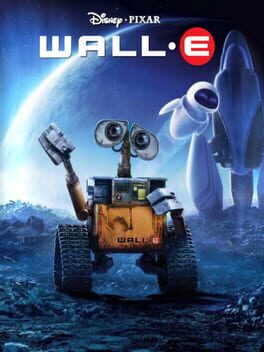
Based on the 2008 computer-animated film from Pixar Animation Studios, the video game version of WALL-E involves playing as the lonely robot as he navigates a trash-tainted world and begins an unlikely trek across the cosmos.