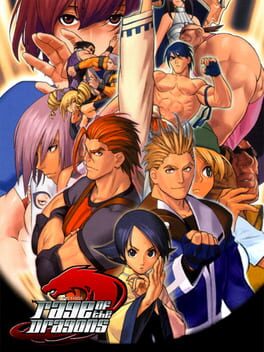
In a town ruled by an evil religious cult, the battle to decide the strongest dragon begins! Each Contestant is a champion who contends with the power of mighty dragons: Black Dragon, Red Dragon, Blue Dragon, and White Dragon. Go head to head in a tag-team partnership to test your attack and defense in the heat of battle.

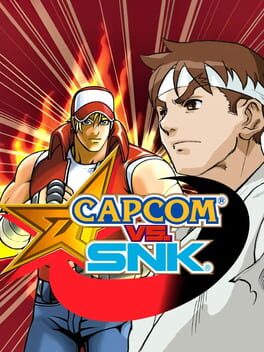
Two of the worlds greatest arcade fighter developers, Capcom and SNK, join forces to finally answer the question asked by many for years: Who is the dominant fighter? A range of fighters from both worlds are available to choose from, with two different fighting styles (Capcom and SNK, of course) meaning that players of both worlds can fit into the game easily, while new gamers can try Ryu using the SNK format.

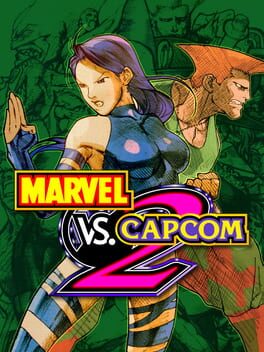
Marvel vs. Capcom 2: New Age of Heroes is the fourth game in the Marvel vs. Capcom series of fighting games. The player's controls were simplified to make the gameplay more accessible to the wider audience of casual players and the button configuration was trimmed down to 4 main buttons and 2 assist buttons. The game also features a different air-combo system and 3 on 3 tag, compared to the 2 on 2 tag from previous games in the series.

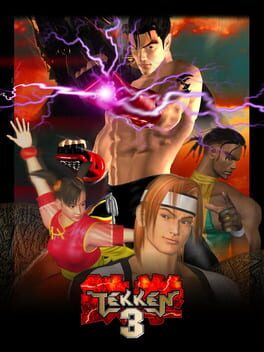
Tekken 3 is the third installment in the Tekken series. It maintains the same core fighting system as its predecessors but brings many improvements, such as significantly more detailed graphics and animations, fifteen new characters added to the game's roster, more modern music and faster gameplay.

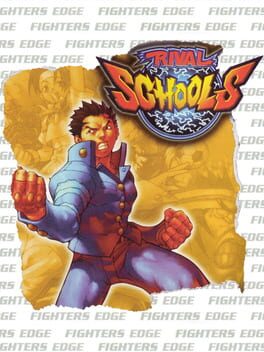
The main fighting game is best described as a polygonal Marvel vs. Capcom game, with some notable differences. Control wise, the game varies from other Capcom fighting games by only having four buttons (two punches and two kicks, which is closer to the SNK game format) rather than the standard six. A player chooses a team of two characters, and fights against another two character team. The actual fights, however, are one-on-one fights, with the partner only participating by being called in when a player has enough 'vigor' for a Team Up attack, done by pressing a punch and kick button of the same pressure. The Team Ups would be some kind of double team attack by the character and partner, or (for most female characters' Team Ups) would heal the main character or give them more vigor. After the end of a round, a player (win or lose) has a choice to fight the next round with the partner from the previous round, or to keep their main character in play. The 'vigor' meter (essentially a super meter) could go up to 9 levels, with Team Ups costing two levels and super moves from a single person all costing one level of vigor. Much like the Marvel vs. Capcom games, launchers can be done that allow air combos to be performed, with all characters having universal low and high launchers. The game also had a few defensive techniques. Tardy Counters acted much like Alpha Counters from Street Fighter Alpha, allowing a player to immediately counter-attack from a blocking position. However, the restrictions on Tardy Counters are very lax; any hard normal, special or super attack can be used to Tardy counter (Alpha counters are only limited to certain special moves for each character), and Tardy Counters do not cost any extra vigor to perform (Alpha Counters required at least a level of Super Combo gauge to do). Attack Cancels allowed a player to cancel an incoming hit simply by timing their own hit with the attack, which would cancel out both attacks (though it does not nullify the remaining hits of a multi-hit move). Also, one additional level of vigor is awarded.
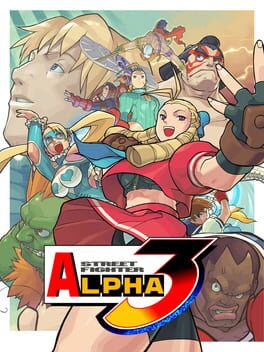
Street Fighter Alpha 3 is the third game in the Street Fighter Alpha series. It features a complete gameplay overhaul with the addition of three selectable fighting styles, new stages, over seven new and returning characters and an exclusive soundtrack. The game's illustrations, select screens, soundtrack and sound effects all have a similar style to the Final Fight series, unlike the previous games.

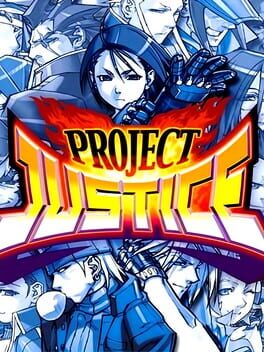
Project Justice is the sequel to Rival Schools: United By Fate. Project Justice's fighting system is lifted from the original Rival Schools, with some notable changes. The game continues to be a team fighter, but has teams of three characters instead of two. This allows another Team-Up attack to be used in a fight, but also adds a new type of attack, the Party-Up, initiated by pressing any three attack buttons. The Party-Up is a three-person attack that varies based on what school the character initiating the attack is from. The additional partner also allows players to cancel an opponent's Team-Up Special by inputting a Team-Up command of their own. This initiates a short fighting sequence between one character from each team. If the person initiating the sequence gets the first successful hit in during the sequence before time runs out, the Team-Up they are caught in will be canceled, and the game switches back to the main fight; if the opposing player gets the first hit or time runs out, the Team-Up continues as usual. Additionally, the 'vigor' meter in Project Justice is limited to 5 levels (down from 9 in Rival Schools), with Party-Ups requiring all 5 levels, Team-Ups continuing to cost two levels, and any attempts (successful or not) to cancel a Team-Up costing one level. Also carrying over from the first game, the Dreamcast port of Project Justice in Japan includes a character creation mode that allows a player to create their own fighters who can be used in all modes except for single-player. However, the character creation in Project Justice is packaged as a board game, taking place during an inter-school festival, rather than a date sim game like in Rival Schools. As with School Life Mode in the original Rival Schools, though, this boardgame is not included in non-Japanese ports of Project Justice due to the amount of time it would take to translate the mode. Instead, several unlockable sub-characters were included in these ports, built from the character creation parts in the Japanese version.

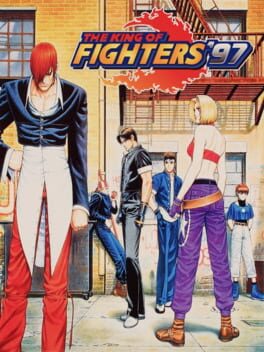
The King of Fighters '97 is a 1997 fighting game produced by SNK for the Neo Geo arcade and home console. It is the fourth game in The King of Fighters series. It was ported to the Neo-Geo CD, as well as the PlayStation and the Sega Saturn in Japan only.

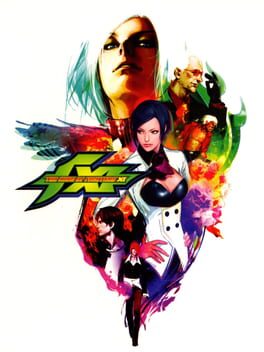
The eleventh game in the KOF series following The King of Fighters 2003. According to Sega: 'For over 10 years, the King of Fighters series has been the choice of game players around the world. The 11th team of fighters continues this tradition. KOF11 is suited for one to two players, with continuous buy-in. Choose from 33 fighters, including 4 new characters. A fifth control button was added to enhance your skills by delivering a devastating blow to your opponent, if hit at the right time. A New Skill Gauge performs a variety of tag-off moves and new attacks. A player can also custom construct a Three-Fighter Tag-Team by selecting three choice combatants.'