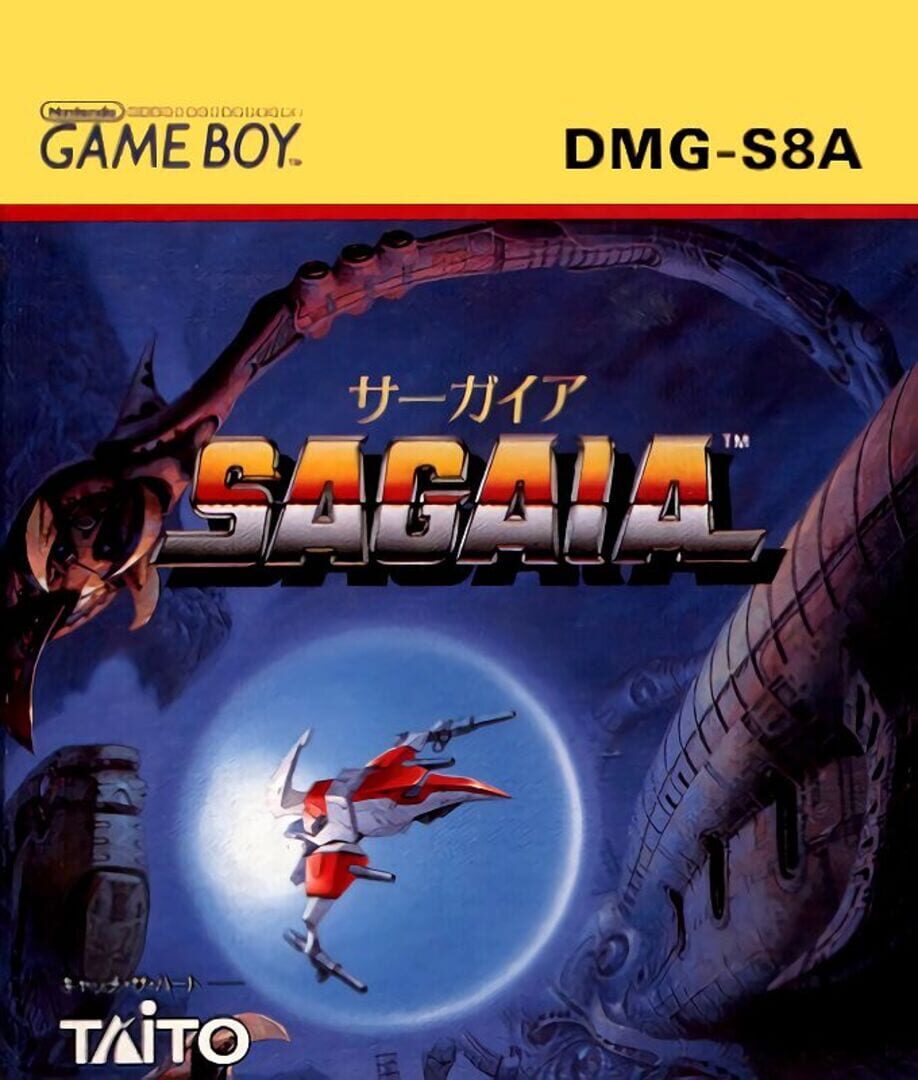

Sagaia for Game Boy (commonly known as Darius II) is a shoot 'em up video game originally released in 1991 for the Game Boy in Japan only. This game is a original title for the handheld console, mixing elements from the first two games while featuring its own unique levels. This game is single player only, not featuring formation bonuses and zone selection at the end of the levels, but the ending is divided into three depending on the difficulty. Since the game is on a monochrome system, items are identified by different symbols instead of colors.
Darius II takes place sometime after the first Darius game. The colonized planet Darius is recuperating from its invasion from the alien Belser Army thanks to that game's heroes Proco and Tiat. Darius' inhabitants have since situated themselves on the planet Olga while Darius' societies, architecture and attacked areas were being repaired. The space flight Headquarters established on Olga picks up an SOS signal coming from Earth, where the first colonists originated before colonizing Darius. The signal included the description of alien ships similar to those of the Belser Army. Suspecting that these might be their remaining Earthling ancestors, the people of Darius sends both Proco Jr. and Tiat Young to help them.
Shooter / Arcade / Science fiction
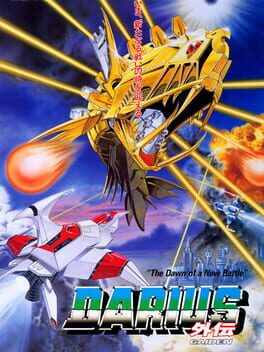
Darius Gaiden is a two-dimensional shoot'em up. The player controls a space ship named the Silver Hawk and must guide it through scrolling stages, destroying enemies and avoiding obstacles along the way. The ship is armed with forward-firing missiles, aerial bombs and a protective force-field, all of which can be upgraded by various power-ups that are dropped by specially-colored enemies when they are destroyed by the player. New to the Silver Hawk's arsenal in Darius Gaiden is the 'black hole bomb.' When fired, the black hole bomb will create a large vortex in the center of the screen, which sucks in enemies and projectiles on the screen for a short moment, until it explodes into a powerful ball of lightning that inflicts massive damage onto every enemy on the screen. Another feature introduced Darius Gaiden is the ability to capture minibosses, who appear in every stage. Each miniboss has a small, circular ball placed on them that, after receiving enough damage, will detach and float away, causing the miniboss to turn idle. If the player collects the ball, the miniboss will follow and aid the player. After a brief period of time, or the player loses a life, the miniboss will explode. A few months following release, update to the arcade version was later released entitled "Darius Gaiden Extra Edition". This version of arcade game contains rearranged levels, as well as automatically-enabled auto fire, two extra weapon power levels (bigger wave shot and a bigger red wave shot as well) and an all-stage mode which can be accessed by starting the game in 2P side.

Shooter / Arcade / Action / Science fiction
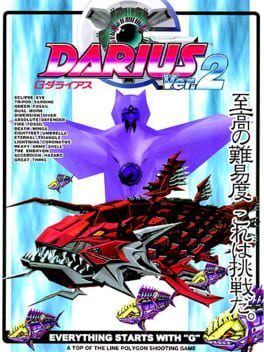
A second version of G-Darius was released in the arcades in 1999, with the following changes: - Increased difficulty. - Default play cost is increased to 2 coins per credit from 1 coin per credit. - Added Beginner Mode; in this mode, the game ends after completing only 3 zones. - Standard auto-fire button. - When using a Capture Ball, the player is no longer invulnerable. - With the super shield, the player is vulnerable to obstacles; with the hyper shield, the player can take a single hit from obstacles. - All stages include mid-bosses; moreover, they all fire the spiral laser from First Captain at the player. - Boss battles include a timer - three minutes for normal bosses, seven minutes for the final boss - with 10000 bonus points added to the player's score for each remaining second upon destroying the boss. - The high score table records high scores for each zone. - After continuing, the player is given one of each Missile, Bomb, Arm and Capture Ball power-ups, instead of a single item that provides the first three.

Shooter / Arcade / Action / Science fiction
The Sega Versions of the "The Terminator". This side scroller was based on the 1984 science fiction blockbuster of the same name. Just like the movie, you assume the role of Kyle Reese, a traveller from the future who returns to modern-day L.A. to protect the life of Sarah Conner - the beautiful woman who holds the key to the survival of the human race. Your mission: Outwit and outmaneuver a brutal killing machine known as the Terminator. He's big, he's bad and he's virtually unstoppable - let's hope you're smarter! Featuring 10 huge main levels pumped up with hardcore weaponry and heavy-hitting adversaries.

Shooter / Arcade / Action / Science fiction
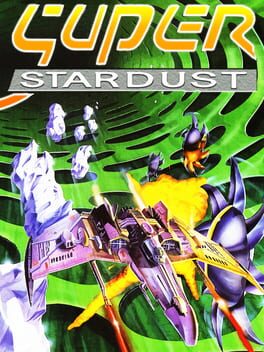
Not only Super Stardust did equal its predecessor in every conceivable way, it added more flair, features, gameplay, special effects, colors and animations. Advertised as “the first true arcade shoot-em-up for home platforms”, the game was a critical and commercial success, receiving rave reviews, and was released on Amiga, Amiga CD32 and, in 1996, also on PC. To this day it’s still considered one of the most technically impressive Amiga and PC games ever made. Players controlled their trusty starship, which they could upgrade with five different weapons, missiles and shields. Super Stardust 96, the latest incarnation of the game, featured five different worlds (all connected via 3D hyperspace tunnels) and 30 levels chock-full of asteroids, enemies and bosses. A true arcade-quality experience for PC!

Shooter / Arcade / Action / Science fiction
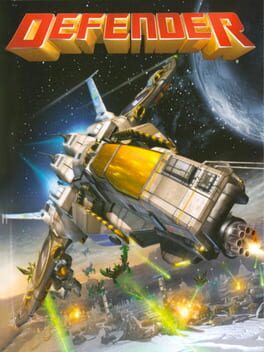
Released in conjunction with a 3D update of the classic arcade game on consoles, the Game Boy Advance version is also an update of the original, but retains its side-scrolling gameplay. The cartridge includes several variants of the game. The main mode is called "XGP". Its basics are the same as in the original: The player's spaceship flies left or right over a scrolling landscape that wraps around after a few screens. The goal is to destroy all invading aliens before they can capture the humans sitting on the ground. Besides updated graphics with various backgrounds and sprites for the enemies and humans, there are other differences as well: players can select from different ships, all with slightly different weapons and ratings for shields and speed. The XGP mode offers six different levels to complete. It can also be played by two players over the System Link. The cartridge also includes "Classic" mode, which is a port of the original arcade game. Finally, "XG" mode is the same gameplay-wise as Classic, but has been updated with graphics similar to the XGP mode.

Shooter / Adventure / Indie / Action / Science fiction
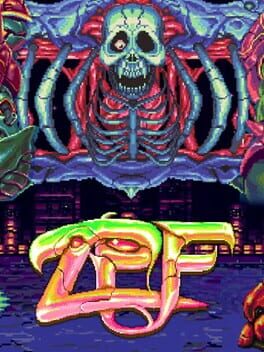
ZPF is a retro-inspired horizontal shooter for the Sega Genesis/Mega Drive. Blast your way through a cosmic gauntlet of epic boss battles, addictive scoring, and hidden secrets in a thrilling arcade-style adventure through fantasy, sci-fi, and alien-themed worlds.

Shooter / Arcade / Action / Science fiction
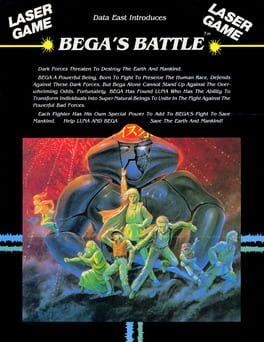
Data East used footage from the film Harmagedon to create a laserdisc video game titled Bega's Battle. It was released in June 1983. In the game, the player to take on the role of the robot Bega (Vega) whose goal was to stop the invasion forces of the alien Varga (Genma), while also rescuing his three friends who had been kidnapped by them. Even among laserdisc games Bega's Battle has become somewhat rare because many of the machines were converted into Cobra Command machines as part of a discount deal offered by Data East in exchange for the internals of the Bega's Battle arcade cabinet. Similar to Astron Belt, the game used the footage mainly for backgrounds, while the actual gameplay was a shooting game with sprites laid over the video. Bega's Battle also used brief full-motion video cut scenes to develop a story between the game's shooting stages. Years later, this would become the standard approach to video game storytelling. Bega's Battle also featured a branching storyline. The Twin Galaxies world record for Bega's Battle was set by Steve Harris (later the founder of Electronic Gaming Monthly) on July 18, 1983.

Shooter / Puzzle / Indie / Action / Science fiction
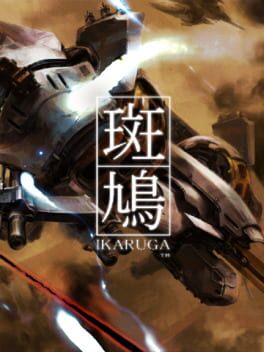
In this vertical scrolling spaceship shooter, you control a ship that can change its polarity at will. As blue/white, the ship can easily destroy red/black enemies, and vice versa. Bullets of your polarity can be collected to fuel your energy gauge, but those opposite will kill you. Destroying an enemy ship causes them to fire revenge bullets which can be absorbed and fired back by the player. Different difficulties exist to change exactly how you interact with polarized points, or how they appear. It is the spiritual successor to Radiant Silvergun, featuring similar level and boss design, as well as it's buddhism inspired themes and aesthetics. Both are directed by Hiroshi Iuchi, who also composed Ikaruga's soundtrack.