
Developed by Taito for D3 Publisher.
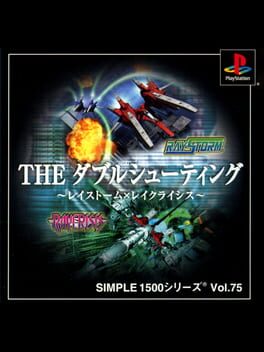
Simple 1500 Series vol. 75: The Double Shooting - Raystorm & Raycrisis is a compilation of 2 Taito arcade game shooters. 1 - RAYSTORM: The year is 2219 and the Secilia Federation has initiated a plan to destroy Earth. So far, the evil federation has been highly successful in destroying much of the planet's defensive forces and resources. With world destruction at hand, the fate of mankind is looking for a savior. 2 - RAYCRISIS: The sequel to RayStorm, RayCrisis: Series Termination takes place in a time when the future of mankind hangs in the balance. Determined to create the ultimate neural interface between man and machine, a rogue scientist named Leslie McGuire cloned herself and hardwired the clone's mind into directly into Con-Human, a powerful, worldwide computer network. Con-Human's AI quickly took over the clone's consciousness and was driven insane. Unable to comprehend the complexities of sentience and the human psyche, the Network went on a killing spree that wiped out most of Earth's 13 billion citizens.
Shooter / Action / Science fiction
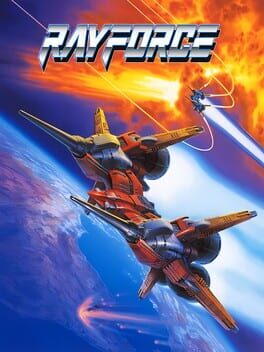
RayForce (released in western Arcades as "Gunlock") is a top-down shooter. There are seven levels to play, ranging from battles in the atmosphere of planets to battling over mountain ranges, each with their own standard huge bosses at the end of these levels. The player takes control of a starfighter called the RVA-818 X-LAY, out to destroy any opposing forces.

Shooter / Adventure / Arcade / Action / Science fiction
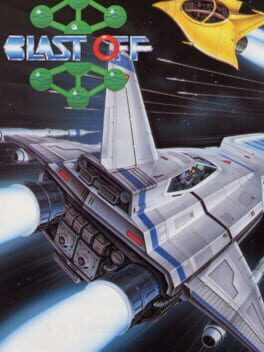
As in many other vertical scrolling shooters (including Namco's own Xevious), the player controls a ship, facing the top of the screen, that can move freely while the background scrolls down, bringing enemies in to view; the player may destroy enemies for points. The game uses two buttons - one is used to make the ship fire circular lasers, while the other is used to cycle through its four firing patterns. The red pattern is two lasers in a spiral pattern, while the blue one is one laser straight ahead and one behind, the yellow one is one laser straight ahead, one left, and one right and the green one is two lasers diagonally forward (one to the left and one to the right), and one straight behind; by holding down the button, the ship fires more powerful, spherical lasers. Even though the game is the sequel to Bosconian (which used a synthesized, DAC-generated voice saying "Blast off!" at the beginning of every round), Blast Off had more in common gameplay-wise with Namco's own Dragon Spirit than with Bosconian; this is especially noticeable in the third area of every world, where the player's ship undergoes an increase in size, and must destroy a boss. Despite several gameplay differences, the connection with Bosconian was emphasized in the marketing of the game, with the hexagonal space stations from Bosconian appearing in Namco's press literature, and on the game's title screen, and also making appearances in the game itself - and the game is also worth noting for its usages of various Engrish phrases, such as "To push start only 1 player button" (on title screen), "Go next" (at end of world), "Congraturations" (at end of game) and "Entry your name" (on high score table). There are a total of six worlds in this game, and each one has three areas (so there are a total of eighteen "stages" to play through).

Shooter / Hack and slash/Beat 'em up / Action / Science fiction
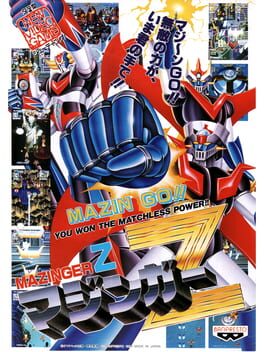
Mazinger Z is an Action game, developed by Eleven (Japan) and published by Banpresto, which was released in Japan in 1994.This is shooting game in which you will be able to pick your character between Mazinger Z, Great Mazinger and Grandizer, each of them with their own strengths and weaknesses... yep, appears that although the name of the game only has one of those robots, you can control one from the 3 of them, or 2 if you will be playing in the usual 2-player game, which requires a friend of yours to spend his own coins.

Shooter / Action / Science fiction
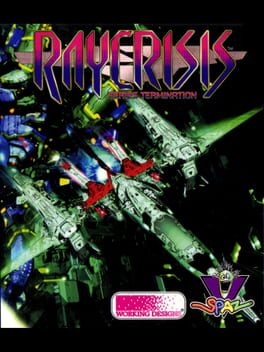
RayCrisis, known as RayCrisis: Series Termination in North America, is the third game released in the "Ray" series of Taito shooting games. Chronologically, it is considered a prequel to the first game, RayForce. First released for arcades in 1998, it supported co-op mode for two players, which the PlayStation ports released in 2000 lack; these ports are the only games in the "Ray" series to lack co-op.

Shooter / Puzzle / Indie / Action / Science fiction
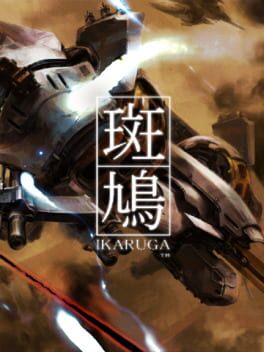
In this vertical scrolling spaceship shooter, you control a ship that can change its polarity at will. As blue/white, the ship can easily destroy red/black enemies, and vice versa. Bullets of your polarity can be collected to fuel your energy gauge, but those opposite will kill you. Destroying an enemy ship causes them to fire revenge bullets which can be absorbed and fired back by the player. Different difficulties exist to change exactly how you interact with polarized points, or how they appear. It is the spiritual successor to Radiant Silvergun, featuring similar level and boss design, as well as it's buddhism inspired themes and aesthetics. Both are directed by Hiroshi Iuchi, who also composed Ikaruga's soundtrack.

Shooter / Action / Science fiction
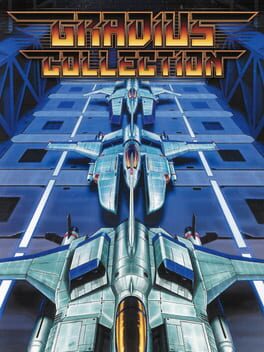
Gradius Collection is a compilation of five beloved games in the Gradius series available for the first time on the PSP system. Spanning more than 20 years, the five games--Gradius, Gradius II, Gradius III, Gradius IV, and the long-awaited Gradius Gaiden--deliver hours of classic 2-D shooting action on the go.

Shooter / Arcade / Action / Science fiction
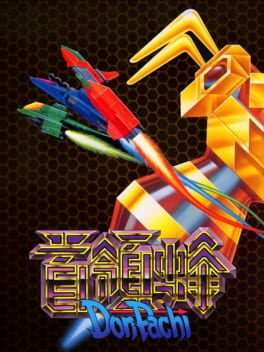
DonPachi is a 1995 vertical manic shoot-'em-up originally in arcades and was the first game from the developer Cave. Settings are mainly woodland and enemies are military vehicles and robots, culminating in the final boss, a huge robotic bee. One of three weapon configurations is chosen at start and then leveled up through dropped power-ups. DonPachi was ported to the Sega Saturn and Sony Playstation in 1996.

Shooter / Action / Science fiction
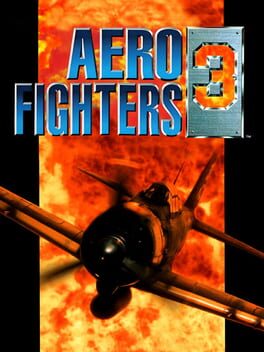
When enemy forces wipe out the jets of the Aero Fighters, they must scramble using heavily-modified World War II warplanes in the third installment of the comical Aero Fighters series.