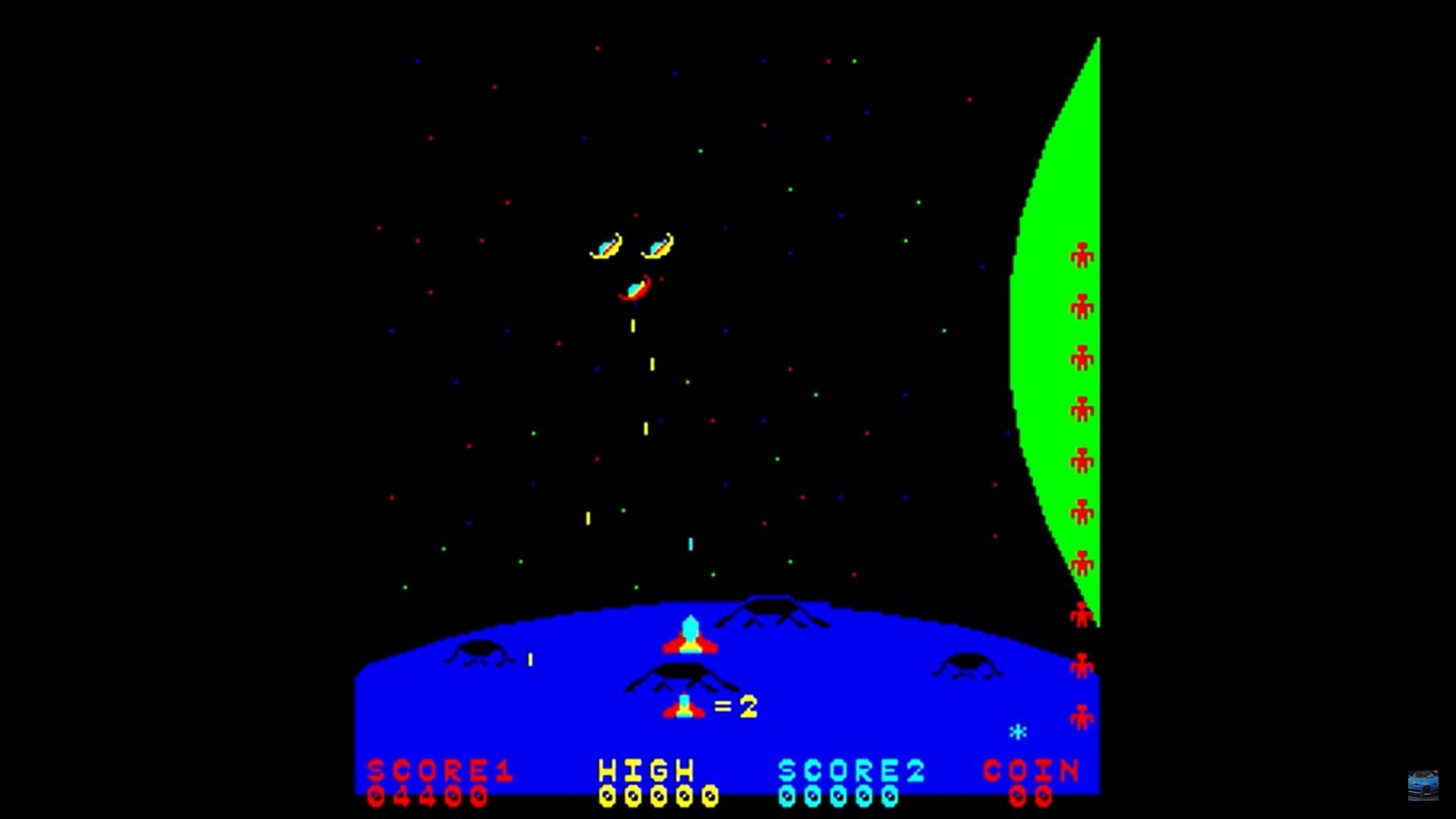
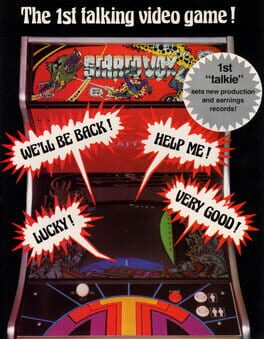
Men are lined up the right side of the screen and alien ships fly out, swirl around the screen and eventually try to grab the men. This was one of the first all color graphics games and might be the first one that used speech. Some of the phrases are "Help Me! Help Me!", "Very Good", "We'll be back" and "Lucky!"

Shooter / Arcade / Action / Science fiction
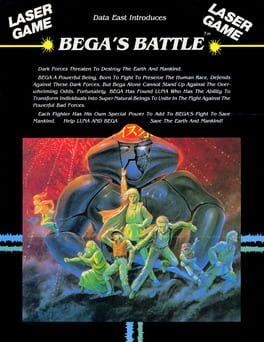
Data East used footage from the film Harmagedon to create a laserdisc video game titled Bega's Battle. It was released in June 1983. In the game, the player to take on the role of the robot Bega (Vega) whose goal was to stop the invasion forces of the alien Varga (Genma), while also rescuing his three friends who had been kidnapped by them. Even among laserdisc games Bega's Battle has become somewhat rare because many of the machines were converted into Cobra Command machines as part of a discount deal offered by Data East in exchange for the internals of the Bega's Battle arcade cabinet. Similar to Astron Belt, the game used the footage mainly for backgrounds, while the actual gameplay was a shooting game with sprites laid over the video. Bega's Battle also used brief full-motion video cut scenes to develop a story between the game's shooting stages. Years later, this would become the standard approach to video game storytelling. Bega's Battle also featured a branching storyline. The Twin Galaxies world record for Bega's Battle was set by Steve Harris (later the founder of Electronic Gaming Monthly) on July 18, 1983.

Shooter / Puzzle / Arcade / Action / Science fiction
High-speed action-packed game play returns with the addition of exciting head-to-head battle modes, a challenging new time attack mode, and expanded game play progression that goes beyond Fever Time to SUPER FEVER TIME! Space Invaders Extreme 2 - faster and more exhilarating than ever before!

Shooter / Arcade / Action / Science fiction
Space Invaders Extreme combines the captivating essence of the original game with a stunning alliance of futuristic graphic design and cutting-edge audio. The gameplay experience has been developed to maximise on the consoles' abilities, offering players a whole new range of amazing features including a vast array of new power-ups.

Shooter / Arcade / Action / Science fiction
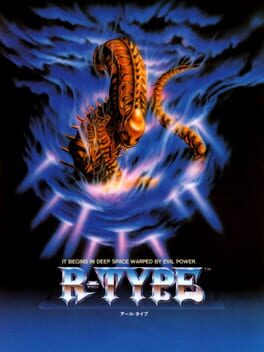
R-Type is set in the 22nd century, and the player flies a futuristic fighter craft called the R-9a "Arrowhead", named for its shape, and because it is the ninth model in the 'R' series of fighter craft (but it is the first of the series to actually be used in combat; the previous models were all prototypes). The mission is to 'blast off and strike the evil Bydo Empire'. The R- in the series title originally stood for "ray", as in a ray of light. It was a reference to the many different types of ray-like weapons in the first R-Type. his was later retconned in R-Type Final to refer specifically to the production code as well as a term of endearment for the player fighter craft, the "Round Canopy". The original R-Type was well received by most gaming critics. However, it was also infamous for its relentless difficulty. It earned 7th place in IGN's Top 10 most difficult games to beat. The gameplay of R-Type is noticeably distinct among shoot 'em ups. Invariably the player will lose, not because of an inequality in firepower, but because of the design of the levels themselves. There is usually a 'correct' way to get through a level, but players must learn these by experience - i.e. by losing and restarting from earlier in the level. The game innovated with its weapon system compared to contemporary shooters, featuring a chargeable shot (beam-meter), and detachable 'force' pod; levels were designed to require different tactics and ideal weapons (air-air, diagonal, or air-ground laser).

Shooter / Arcade / Action / Science fiction
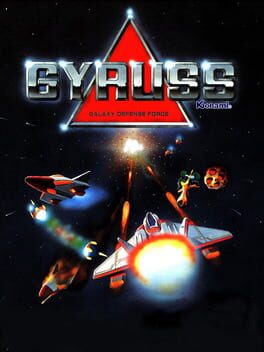
Gyruss is a shoot 'em up video arcade game developed by Konami, and released in 1983. It was designed by Yoshiki Okamoto, who had earlier created Time Pilot for Konami. Gyruss was licensed to Centuri in the United States, and was ported to numerous games consoles and home computers. It follows in the tradition of space war games such as Space Invaders and Galaga. Gyruss was the second and last game Yoshiki Okamoto designed for Konami, after Time Pilot. Due to pay disputes, he was fired after the release of this game, and soon joined Capcom, where he would write 1942 and the first Street Fighter game. The game's background music is an electronic, fast-paced arrangement of J. S. Bach's Toccata and Fugue in D minor, BWV 565; this particular arrangement is similar in sound to "Toccata", a rock arrangement by the UK-based instrumentalist group Sky. Gyruss is notable for using stereo sound, which according to the bonus material for Konami Arcade Classics, was achieved by utilizing discrete audio circuits. The game used three microprocessors: two Z80 microprocessors and one 6809, as well as an 8039 microcontroller. For the sound, five AY-3-8910 PSG sound chips and a DAC. Gyruss was released in both upright and cocktail cabinets. R.Hirst "KOO", M.Jones, "BOX" and the Elliott Brother's are arguably considered some of the best Gyruss players of the 1990's.
Shooter / Arcade / Action / Science fiction
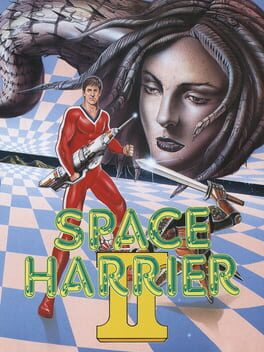
A call for help comes from deep in the universe. Fantasyland has been taken over by destructive forces. Quick on the scene is Space Harrier equipped with his laser, who must attempt to outwit and outmanoeuvre the hoards and prevent Fantasyland from being blown into oblivion!

Shooter / Arcade / Action / Science fiction
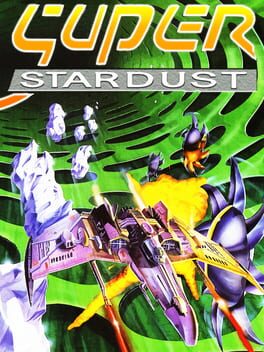
Not only Super Stardust did equal its predecessor in every conceivable way, it added more flair, features, gameplay, special effects, colors and animations. Advertised as “the first true arcade shoot-em-up for home platforms”, the game was a critical and commercial success, receiving rave reviews, and was released on Amiga, Amiga CD32 and, in 1996, also on PC. To this day it’s still considered one of the most technically impressive Amiga and PC games ever made. Players controlled their trusty starship, which they could upgrade with five different weapons, missiles and shields. Super Stardust 96, the latest incarnation of the game, featured five different worlds (all connected via 3D hyperspace tunnels) and 30 levels chock-full of asteroids, enemies and bosses. A true arcade-quality experience for PC!

Shooter / Arcade / Action / Science fiction
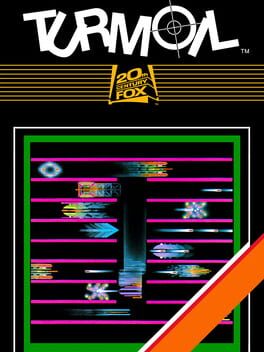
The player controls a space ship which is trapped in an area consisting of seven tunnels which are connected by a vertical shaft. Enemies are attacking the player from left and right and it is the objective of the player to destroy as many attackers as possible using the shaft. You can't, however, hover at one spot for too long since an invincible enemy will appear, forcing the player to change positions eventually.