Tall twins tower is the sequel to Tall Infinity and in this case the game was never released outside Japan. As in Tall Infinity the player manipulate multi-colored blocks to construct a tower. The players needing to complete ten floors of the tower to pass each stage. Players must avoid unnecessary moves or risk losing the game. There are three difficulty levels and different game modes (like endless mode or time attack). One of the new features is the slide mode in which using the R1 and L1 Button the player can move a whole line of blocks to the right or to the left, the game also features a 2 players split screen vs mode.

This game was released only in Japan. It is the fourth game in the Puyo Puyo series and the last set during the Madou-era in the main series. Continuing the trend of naming the games after puns, the name comes from a pun on "yon", the Japanese word for the number 4, but this time this is the only reference to the pun. The gameplay in is similar to that of Puyo Puyo 2, but adds super attacks. Clearing chains now builds up a "charge meter" which allows players to use them. The only other addition was a new game mode which could be played with a number of different field sizes, smaller or bigger than the standard 6x12, however, it removes several game modes that were present in Puyo Puyo Sun, i.e. the tournament, task and chain training modes. The art is also vastly different to the previous game in the series and, of course, the Fever series; this style was only otherwise used for Minna de Puyo Puyo.

This is a compilation game consisting of modes from previous Puyo Puyo games. It is Compile's last recognized Puyo Puyo title in the series before Sega obtained the rights. Puyo Puyo Box, being a compilation, primarily consists of modes from earlier Puyo Puyo games, but also contains original content. This game has a plethora of game modes available to the user. It contains ports of "Puyo Puyo" and "Puyo Puyo 2", as well as a RPG-styled quest mode in which the player plays as Arle and battles against members of the other cast in Puyo Puyo matches. It also houses a "Stage Clear" mode in which you have to face either 10, 20, or 30 opponents, as well as two multiplayer modes which can be played with either other players or AI substitutes. For the Quest mode itself, it allowed the player to customize the armory in ways in which made Arle stronger with a double-edged sword effect. You could remove the Puyo Rings in order to beef up her attack at the expense of being unable to see your next pieces for example, and the amount of experience gained and gold won was relative to how big a chain was scored and how quickly the opponent was defeated. The key point in the Puyo Puyo gameplay of Box is that the player can choose a ruleset from either "Puyo Puyo", "Puyo Puyo 2", "Puyo Puyo Sun" and "Puyo Puyo~n". This can effectively lead to 4-player battles where each player plays with independent or mixed rules. This game also allowed for team battles to take place. A special multiplayer mode was made available in this game, known as "Treasure Mode", which was adapted in "Puyo Puyo! 15th Anniversary" as its "Excavation Mode".

A 2001 puzzle game with 4 difficulty levels and 3 game modes. The game features more than 240 different stages.

Rupupu Cube: Lup Salad is a block-pushing puzzle game developed by Fupac for the PlayStation in Japan only until it offered in the US through PSN Import Classic. It has been ported to both the DS and the PSP in Japan as well. The characters were designed by Izumi Takemoto.

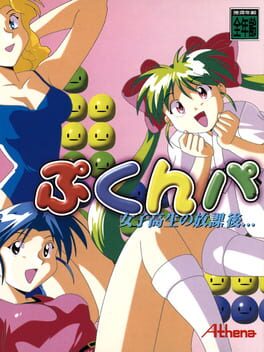
Things fall puzzle-battle to fight schoolgirl eight 6 units closed betting honor and pride of the affiliation. Adopt a simple, straightforward rules to manipulate the "ball" has fallen from the top of the field becomes two pair, side-by-side to erase the "balls" of the same color. Let's storm the lumps "disturb" a lot of the other party caused the chain stretch and rotate the ball well two types of "lumps" small "lumps" large.

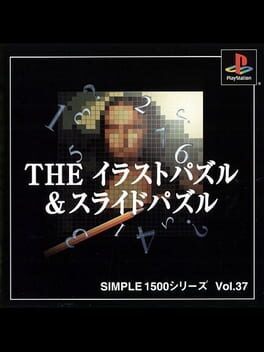
Big collection of illustration and slide puzzles for the player to choose and solve. Up to 2 players to play at the same time. There are more than 500 illustration puzzles and more than 100 slide puzzles.

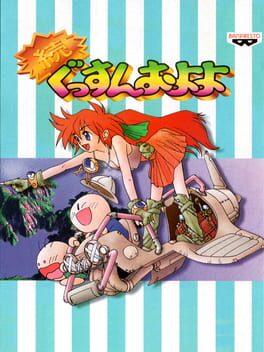
Zoku Gussun Oyoyo is an action puzzle game and a sequel to Risky Challenge. The game plays essentially the same as its predecessor — position falling blocks in a well, Tetris-style, to guide the characters to the exit of each stage — but includes 100 all-new puzzles and several new game modes. Normal and Versus modes are the single-player story and two-player versus modes returning from the previous game; Tsume mode is a dedicated puzzle mode; Climbing mode is an endless climb mode where the goal is to climb upward as far as possible; and Ranking Certification mode is a trial mode where the player must complete a selection of stages to earn higher rankings. The PlayStation and Saturn versions feature slightly different puzzle layouts but are otherwise identical.

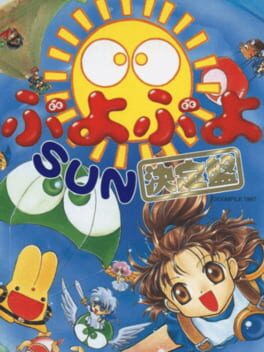
This game is a Japan-only port of the third game in the Puyo Puyo series originally made for the Arcades by Sega. The name of Puyo Puyo Sun comes from a Japanese pun on "san", and also indicates a new Ojama brought into the game. As Sun Puyos were used in this game, and the game itself is not only set on a tropical beach, but is the third in the series (三, "san" is the Japanese word for the number 3), the name suited the game. The Ketteiban (Definitive) edition of the game introduces a nazo puyo puzzle mode. Rerecorded audio tracks and voice acting, using higher quality audio tracks from the arcade version as a source. Just like the predecessors, Puyos fall from the top of the screen in pairs, can be moved left and right, and can be rotated clockwise and anti-clockwise by 90°. The rule of Sousai and Zenkesei still remained, but every time you countered, special garbage would fall on the screen in a preset pattern. Every time you cleared the screen however, Sun Puyos would fall on the screen, and the All Clear bonus removed. The game features 3 story modes featuring their own character and difficulty: Draco Centauros (Easy), Arle Nadja (Normal) and Schezo Wegey (Hard).