The two Game Boy Advance games based on the 2003 TMNT animated series were later re-released on the same cartridge.
TMNT 2003: The main gameplay loosely adapts the following season one episodes: "Things Change", "A Better Mouse Trap", "Attack of the Mouser"s, "Meet Casey Jones", "Nano", "Darkness on the Edge of Town", "The Way of Invisibility", "Notes From the Underground" (Parts 1-3), and "Return to New York" (Parts 1-3), as well as a level that is not derived from the animated series at all. Shortly after a group of mouser robots destroy the turtles' old home, they begin to look for a new home. Michelangelo eventually gets on Raphael's nerves, making Raphael leave to the surface. At the surface, he is confronted by Purple Dragon thugs, Casey Jones, and Dragonface. Baxter Stockman soon uses invisible foot tech ninjas to capture Raphael, and Donatello is forced to rescue him. Afterward, while Raphael and Michelangelo spar for fun, Donatello analyzes a strange crystal he found in their home, noting that they look like mutated brain cells. Raphael kicks Michelangelo into a wall, revealing a large tunnel behind it. Donatello's crystal start glowing and the turtles decide to investigate. They follow the tunnel and they are confronted by genetically mutated humans. After a few scuffles with these mutants, the turtles find that these mutants were turned into their current state by past experiments of Shredder's scientists. The crystals Donatello found are the only thing keeping these mutants alive, and cannot leave their underground home as a result. They plead the turtles to defeat Shredder, so that no more humans will suffer as they have. The turtles decide to defeat Shredder once and for all, and promise the mutants that they will come back for them if they ever find a way to reverse their condition. TMNT 2: Battle Nexux: The game begins with a battle with the Foot Clan and Hun in Oroku Saki's skyscraper. The Foot is defeated, and Master Splinter mysteriously disappears. The Turtles chase the trail down to a building marked "T.C.R.I.", which proves to hide a bizarre secret beneath its innocuous exterior: its employees are members of a brain-like alien race, the Utroms. Whilst battling these strange new foes, the Turtles are accidentally teleported to different points across the galaxy, meeting the Fugitoid Professor Honeycutt on D'Hoonib, and end up as crossfire in the war between the Triceratons and Federation - both sides are after the Fugitoid for his technology. Along the way, they come across an intergalactic bounty hunter named Slashuur. Said to be the most powerful bounty hunter in the universe, Honeycutt heard legends of him as a young child. Ironically, Honeycutt is who Slashuur is after, having been hired by the Triceratons to capture him. After the Turtles beat him, Slashuur reveals that he has knowledge of Hamato Yoshi before taking his leave. Before escaping the Triceraton Homeworld, the Turtles befriend and free a noble Triceraton warrior who had been forced to fight as a gladiator, Traximus. Upon returning to Earth and the T.C.R.I. building, it is revealed that the Utroms had rescued an injured Splinter and were caring for him. The Utroms place the TMNT and Splinter in a virtual reality machine to better explain their origins to them. Hundreds of years ago, the Utroms were traveling across the galaxy, transporting a murderous rogue of their species, Ch'rell. Their ship crashes on Earth in the country of Japan. Ch'rell escapes, while the Utroms are forced to wait for Earth technology to catch up with their own, so they can return home. Some time later, after the Utroms have enlisted the help of some humans as Guardian Ninja, the Utroms are ambushed by a heavily armored warlord known as The Shredder. Meanwhile, in the real world, Baxter Stockman sabotages the virtual reality machine, and the dangers within become presented as real to the Turtles and Splinter. After defeating Shredder and his Feudal Foot Ninja, the Turtle meet up with the Utrom Mortu, who gives them a device that allows them to return to the real world. Unfortunately, when they get there, they find Shredder and the Foot attacking the T.C.R.I. building. During their fight, an organic destruction device is planted, and the Utrom escape through their Transmat. The Turtles defeat Shredder before he can chase after them, and it is revealed that not only is this Shredder the same one they saw in Feudal Japan, but he also is the evil Utrom Ch'rell! The Turtles escape the building before the device goes off, but Ch'rell is not so lucky.
Hack and slash/Beat 'em up / Action / Science fiction
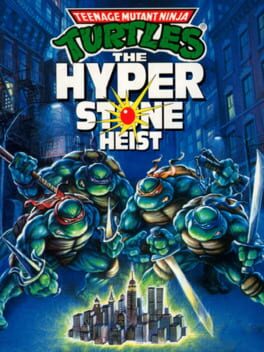
Teenage Mutant Ninja Turtles: The Hyperstone Heist, released in Europe as Teenage Mutant Hero Turtles: The Hyperstone Heist and in Japan as Teenage Mutant Ninja Turtles: Return of the Shredder is a side-scrolling beat 'em up based on the comic book characters the Teenage Mutant Ninja Turtles for the Sega Genesis.

Hack and slash/Beat 'em up / Arcade / Action / Science fiction
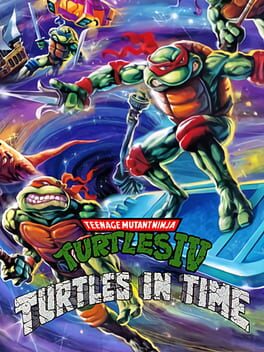
Teenage Mutant Ninja Turtles IV: Turtles in Time, developed by Konami, is a side-scrolling beat ’em up for up to two players. It is the fourth game in the series, following Teenage Mutant Ninja Turtles III: The Manhattan Project on the Nintendo Entertainment System. Originally released as an arcade game, it was later ported to the Super Nintendo Entertainment System in 1992.

Fighting / Hack and slash/Beat 'em up / Adventure / Action
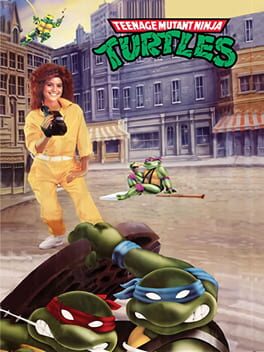
NOTE: This is the original 4-Player Arcade release, not the NES Title. The player chooses from one of the four Ninja Turtles: Leonardo, Michelangelo, Donatello, and Raphael. After Shredder kidnaps the Turtles' friend April O'Neil and their mentor Splinter, they must give chase, save their comrades, and defeat the evil Shredder. The player chooses from one of the four Ninja Turtles: Leonardo, Michelangelo, Donatello, and Raphael. Depending on the version of the game, the characters are either, chosen at the start of the game or assigned by control panel. After Shredder kidnaps the Turtles' friend April O'Neil and their mentor Splinter, they must give chase, save their comrades, and defeat the evil Shredder. Up to four players (two in some versions) can take control of any of the Turtles. Donatello has slower attacks but a longer range, Michelangelo and Raphael have faster attacks but a shorter range, and Leonardo is a well-rounded Turtle with average range and speed. The eight-way joystick controls the movements of the Turtle, the jump button makes them jump and the attack button makes them hit in front of them using their weapon. In addition to this, some combinations are possible. The Turtles can throw Foot soldiers overhead, and by pressing the jump and attack buttons, a special attack is performed. Raphael rolls along the ground and finishes with a kick, while the other Turtles do a sweeping jump attack with their weapons. Turtles can also spring off the wall in certain areas. Enemies can be defeated more quickly by slamming them into walls or solid objects. Many objects such as traffic cones, parking meters, fire hydrants and exploding oil drums can be hit or damaged with attacks in order to help defeat nearby enemies. In the attract mode, the game showed the first part of the cartoon opening, along with a portion of the Teenage Mutant Ninja Turtles theme song. Most of the enemies the Turtles face are the Foot Soldiers, all color-coded to indicate their attack patterns and weapon of choices. Some enemies, such as the standard purple-clad Foot Soldiers and Roadkill Rodney robots, have the ability to restrain the Turtles' mobility and drain their health, leaving the player open to attack for other enemies. The bosses in the game include Rocksteady and Bebop (individually at first in that order, and later the two of them together), Baxter Stockman, Granitor, General Traag, Krang, and Shredder himself.

Hack and slash/Beat 'em up / Action / Science fiction
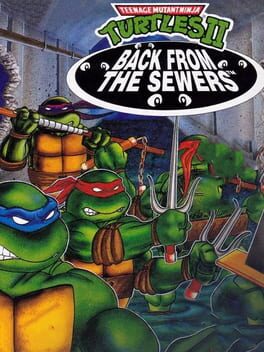
Teenage Mutant Ninja Turtles II: Back from the Sewers, released as Teenage Mutant Hero Turtles II: Back from the Sewers in Europe, and simply Teenage Mutant Ninja Turtles 2 in Japan, is a 1991 Game Boy game by Konami. It is the sequel to Teenage Mutant Ninja Turtles: Fall of the Foot Clan.

Hack and slash/Beat 'em up / Adventure / Arcade / Action / Fantasy
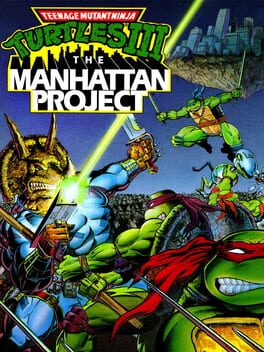
Teenage Mutant Ninja Turtles III: The Manhattan Project is a side-scrolling beat-'em-up. The game features play mechanics similar to the previous game, Teenage Mutant Ninja Turtles II: The Arcade Game, but it is an original title for the NES without any preceding arcade version.

Role-playing (RPG) / Hack and slash/Beat 'em up / Adventure / Action / Science fiction
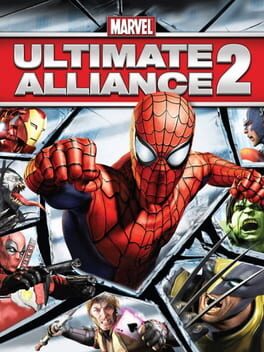
Marvel: Ultimate Alliance 2 is the second game in the Marvel: Ultimate Alliance series, and is loosely based on the events of the Civil War comic book story line. It brings with it a larger roster of heroes and villains to play as, as well as more ways to utilize your team in battle.

Fighting / Platform / Hack and slash/Beat 'em up / Action / Science fiction
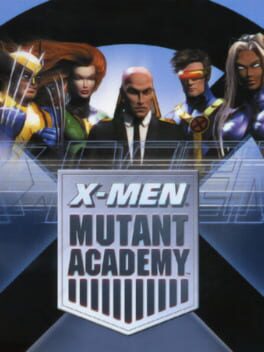
X-Men: Mutant Academy is a 3-D/2D fighting game developed by Paradox, the company behind Activision's Wu-Tang: Shaolin Style and the never-published Thrill Kill, and based on the X-Men characters from Marvel Comics. The game was released for the Game Boy Color and PlayStation as a tie-in to X-Men. X-Men: Mutant Academy is a basic fighting game that uses six buttons: three buttons for punches and three for kicks. Due to the success of the game, it was followed by two sequels: X-Men: Mutant Academy 2 and X-Men: Next Dimension. The game's characters can be played both with their comic book costumes and their costumes from the 2000 film X-Men. Characters not present in the film were given costumes of a similar design.

Fighting / Hack and slash/Beat 'em up / Action / Science fiction
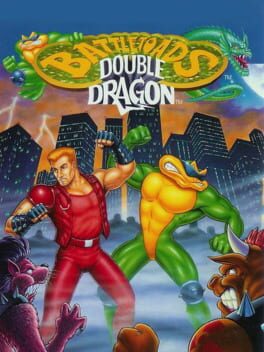
Battletoads & Double Dragon - The Ultimate Team is the fourth game in the Battletoads series. It is a crossover with the Double Dragon series of beat 'em up games developed by Technos Japan. It was released for the NES, with ports for the Super NES, Sega Mega Drive/Genesis, and Nintendo Game Boy. Despite the presence of the Double Dragon characters, Technos Japan had no actual role in the game's development.