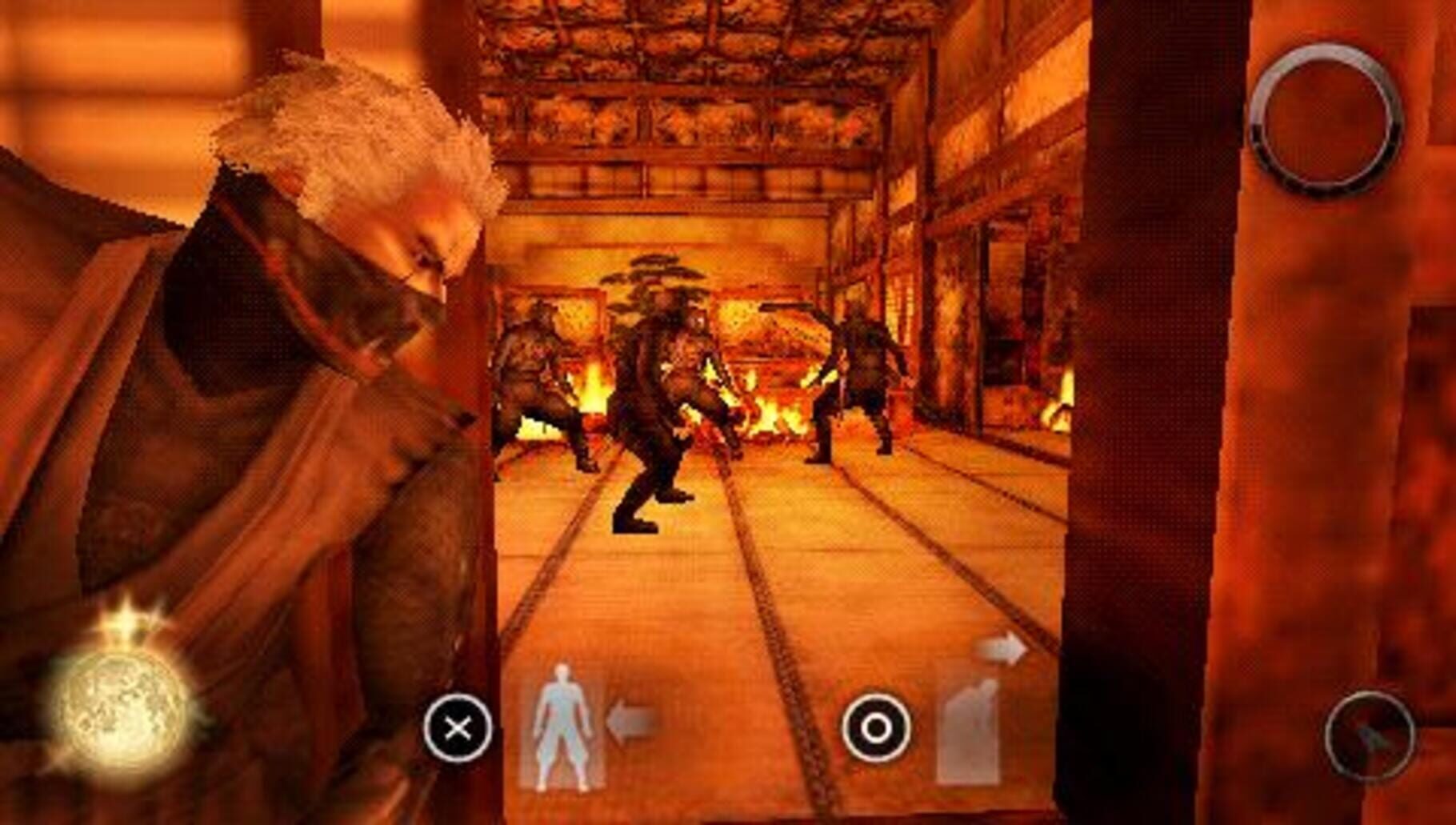
Tenchu 4 will use the Wii Remote to fight, dash, jump and kill like a true ninja. Players will continue the saga of Rikimaru and Ayame, elite ninjas who must use their lethal skills to keep the peace in feudal Japan. Playing as both stealthy Rikimaru and aggressive and acrobatic Ayame, players will fight their way through more than 10 missions and 50 side quests and experience the thrilling adventure of being the ultimate ninja.
In the land of Lord Gohda, peace has not been fully restored and rumors of betrayal have been swirling around the lord and his subjects. As a result, Lord Gohda calls upon the Azuma Ninja, Rikimaru and Ayame, to investigate. Rikimaru soon discovers that someone is planning to start a war. Meanwhile, Counselor Sekiya, Lord Gohda's right-hand man, arranges for a fortune-teller to predict the future of Lord Gohda's kingdom. Unfortunately, the fortune-teller turns out to be an imposter and kidnaps Princess Kiku, Lord Gohda's daughter.

Tenchu 2 is a prequel to Tenchu, telling a tale of events prior to those of the previous game. Once again, you can play as Ayame or Rikimaru, two faithful and honorable ninja whose lord is a gentle man in an age of warfare. With your training nearly complete, you find yourself caught up in aiding your lord against a civil war in his own domain. All is not what it seems, however, and you'll soon realize that your greatest threat has been forged much like you. Much like its predecessor, Tenchu 2 is a 3D third person stealth action game. You are not only rewarded for stealth, but also for efficiency of movement this time. This extra feature increases the difficulty of achieving the better items, as you not only have to be quiet, but be direct and near perfect in your steps.

Tenchu: Stealth Assassins is an action-adventure stealth game developed by Acquire and published by Sony Music Entertainment Japan in Japan and Activision worldwide for the PlayStation in 1998. Tenchu is known for its stealth gameplay and the eerie settings of feudal Japan. Tenchu was one of the first ninja games to incorporate stealth, a very crucial aspect of ninjutsu. However, aside from featuring traditional martial arts in battles, the game incorporates elements of historical fantasy and Japanese mythology. The game also used motion capture, where actor/martial artist Sho Kosugi and his son Kane were hired as actors for the game's combat moves.

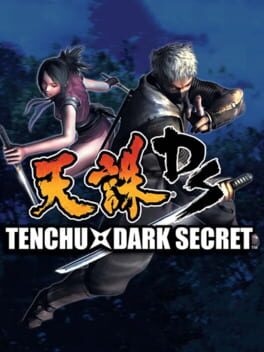
Tenchu: Dark Secret places you in the shoes of ninja assassins charged with protecting the life of a princess. Stalk your enemies with sword in hand, plant explosive traps in the underbrush, or strike with an assortment of realistic ninja weaponry - the choice is yours. It features over 40 single-player missions and the ability to construct your own weapons and items. Prove your mettle with the metal by challenging friends to a local wireless multiplayer match.

Shooter / Tactical / Adventure / Action / Survival
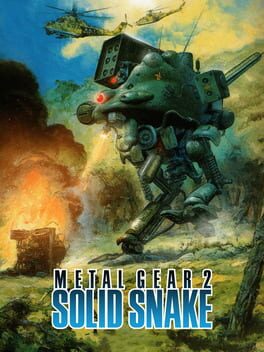
Metal Gear 2: Solid Snake is an action-adventure stealth video game created and published by Konami for the MSX2 computer platform. Acting as a direct continuation of the MSX2 version of the original Metal Gear, it was written and designed by the series' creator, Hideo Kojima. Kojima's inspiration for this game arose as a response to the development of Snake's Revenge, a separate sequel being produced simultaneously for the NES, intended primarily for the North American and European markets.

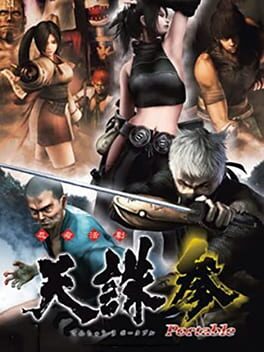
Tenchu: Wrath of Heaven is an action-adventure stealth game developed by Capcom subsidiary development studio K2 LLC and published by Activision in North America and Europe and FromSoftware in Japan for the PlayStation 2 in 2003. It was later ported to the Xbox in 2004 under the title Tenchu: Return from Darkness and to the PlayStation Portable in 2009 under the title Tenchu 3 Portable by FromSoftware.

Shooter / Tactical / Adventure / Action / Science fiction
Metal Gear Solid is a stealth game created by Hideo Kojima which follows the MSX2 video games Metal Gear and Metal Gear 2: Solid Snake. Despite a transition to 3D, Metal Gear Solid's gameplay remains similar to his predecessors. The game utilizes a traditional top-down view and the player must navigate the protagonist Solid Snake through the game's areas without being detected. Detection will set off an alarm which draws armed enemies to his location. Conversations with Snake's allies and cutscenes are used extensively to advance the plot and gain more insight into it. Metal Gear Solid is regarded as one of the greatest and most important video games of all time, and helped popularize the stealth genre and in-engine cinematic cutscenes.

Platform / Adventure / Action / Stealth
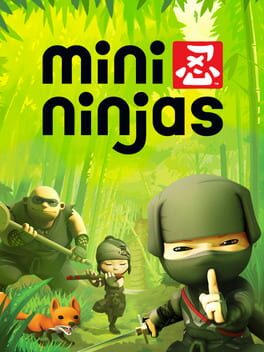
Mini Ninjas is a game that combines furious action with stealth and exploration for an experience that appeals to a wide audience across age groups and preferences. It’s an action-adventure with a strong focus on allowing the player freedom to explore the world and has the depth to allow for very varied gameplay and approaches to getting through the game.

Shooter / Tactical / Adventure / Action / Science fiction
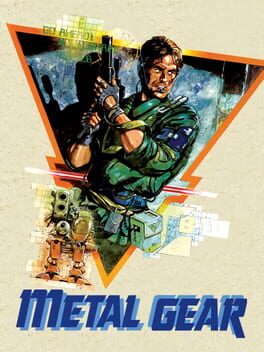
Metal Gear is considered to be the progenitor of the stealth game genre, it was also the first video game designed by Hideo Kojima, who also directed many of the later Metal Gear sequels. The game revolves around a special forces operative codenamed Solid Snake who goes into a solo infiltration mission into the fortified state of Outer Heaven to destroy Metal Gear, a bipedal walking tank capable of launching nuclear missiles from anywhere in the world. The player must navigate the main character, a military operative codenamed Solid Snake, through various locations, while avoiding visual contact and direct confrontation with patrolling guards. If the player is seen, the game enters the "Alert Mode." In this situation, Snake must escape from enemy's sight in order to resume infiltration. The method of escaping varies depending on the circumstances behind discovery: If Snake is seen and only a single exclamation mark appears over an enemy's head, only the enemies in the player's present screen will attack and Snake can escape by simply moving to an adjacent screen. However, if two exclamation marks appear over the enemy (or the player triggers an alarm by being spotted by a camera, infrared sensor or by using an unsuppressed weapon), reinforcements from off-screen will appear as well. Snake can only escape by eliminating all incoming enemies, going outdoors, or by entering an elevator. The player starts the game unarmed, but eventually acquires firearms such as a Beretta 92F and an M79 grenade launcher, as well as explosives such as remote control missiles and landmines. Ammo and supplies for weapons are limited, but are replenished by picking up ammunition caches or additional supplies. Weapons can not only be used to kill enemies, but also to clear obstacles such as hollow walls and electrified floors. Snake can also use his fists to punch and defeat patrolling enemies. Occasionally, if the player defeats a guard with punches without alerting anyone, the defeated guard will yield a single unit of rations or an ammo box that can be picked up. In addition to enemy guards, the player will also be confronted by mercenaries who will challenge the player to combat, serving as the boss characters. The enemy base consists of three different buildings, with multiple floors (including basement levels) within them. The player uses key cards and other items to unlock doors and explore new areas. Each door will only open to its corresponding key cards. Information can be obtained by rescuing hostages being held within the buildings. After rescuing five hostages, the player's rank will increase by one star (with the maximum rank being four stars), allowing for increased carrying capacity and maximum health. However, if a hostage is killed, the player is demoted to the previous rank. A transceiver is available for the player to communicate with their commanding officer, Big Boss, or one of the resistance members operating covertly near Outer Heaven (Schneider, Diane, and Jennifer). Each of Snake's allies specializes in a specific subject. The player must keep track of their allies' frequency numbers in order to contact them. All of the radio messages are dependent on the rooms where the player is located.