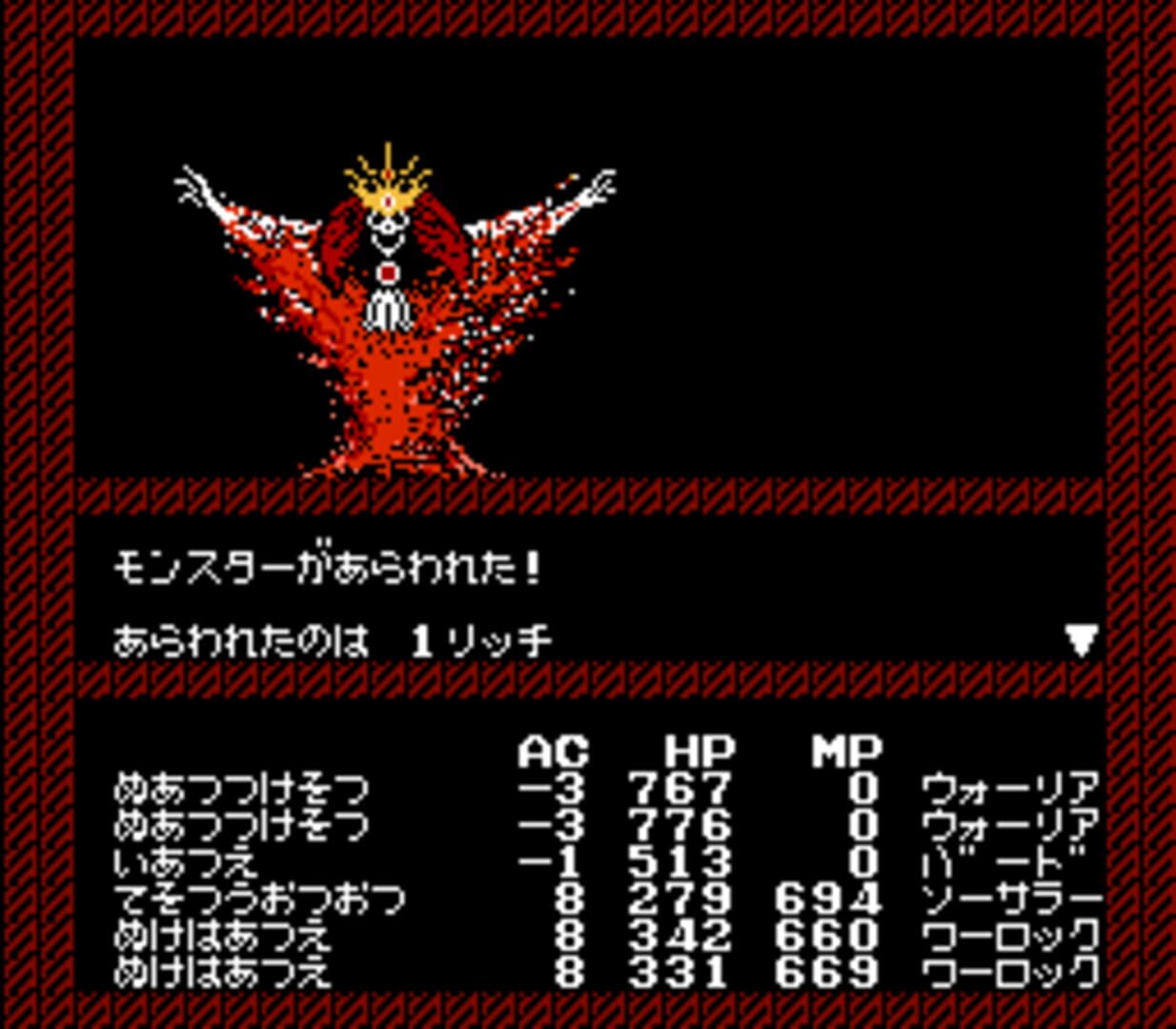
The original Famicom port of The Bard's Tale developed by Atelier Double. Because it was released on a larger ROM than the international NES version, it contains more content and graphical variety, among other differences.
Screenshots
Featured in
The original Famicom port of The Bard's Tale developed by Atelier Double. Because it was released on a larger ROM than the international NES version, it contains more content and graphical variety, among other differences.
Role-playing (RPG) / Adventure / Fantasy
Ten years ago, Wizardry set the standards in Fantasy Role-Playing (FRP). Now after two million copies have been sold and dozens of awards have been won, Bane of the Cosmic Forge raises and redefines those standards. This new Wizardry , the truest simulation ever of Fantasy Role Playing, will push your computer, your mind, and your sense of adventure to their very limits. Only through the power of the latest computer technology could the full dimensions of this new genre in FRP be possible.
Role-playing (RPG) / Adventure / Fantasy / Science fiction
The Western release of Final Fantasy VII (released as Final Fantasy VII International in Japan) included additional elements and alterations, such as streamlining of the menu and Materia system, reducing the health of enemies, new visual cues to help with navigation across the world map, and additional cutscenes relating to Cloud's past.
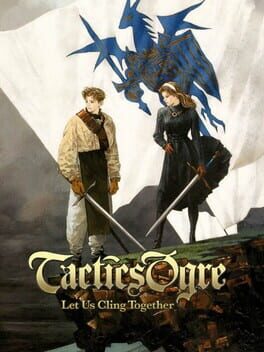
Role-playing (RPG) / Strategy / Turn-based strategy (TBS) / Fantasy / Historical
Tactics Ogre is a 3D isometric tactical role-playing game. The player starts out with a band of troops, builds a small army and fights many battles with choices to make in between, that will determine which one of the eight possible endings will be reached in a non-linear storyline. The player has the option to recruit characters, control individual equipment of each character, with over six male character classes, six female character classes, three demi-human classes, and more. It is also possible to train at safe locations to prepare the army before the next battle or storyline advancement.
Role-playing (RPG) / Adventure / Fantasy
Final Fantasy VI is the sixth main installment in the Final Fantasy series, developed and published by Square. It was the final title in the series to feature two-dimensional graphics, and the first story that did not revolve around crystals. The game gives players up to fourteen playable characters, the largest cast in the series, and features the Active Time Battle pseudo-turn based menu command system. A party can consist of up to four characters, though some events require the player to assemble three different parties of up to four and switch between them. Each character has a unique command ability, such as Terra's Trance, Locke's Steal, Edgar's Tools or Sabin's Blitz, and can also learn Magic spells from earning AP from battles with magicite equipped. Each character's rare Desperation Attack will randomly activate after using the Attack command when at critical health.

Role-playing (RPG) / Turn-based strategy (TBS) / Adventure / Action / Fantasy
A turn-based JRPG and sequel to the then-Japan-only Earthbound Beginnings (1989) in which Ness, a young boy living in a land based on the USA, leaves home to go on an adventure through strange locations, get to know quirky characters, and defeat an unknowable alien threat called Giygas while facing up to the realities of growing up and becoming familiar with the real world.
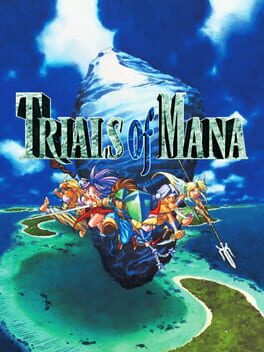
Role-playing (RPG) / Adventure / Action / Fantasy
Trials of Mana is the third installment of the Mana series, developed by Square under the direction of series creator Koichi Ishii. The game takes place in a new world where, once again, the Mana Tree is under threat from an ancient evil thought sealed away. Players choose three from among six heroes as the chosen wielder of the Mana Sword and their two companions on the journey to claim the holy blade and preserve what remains of the Mana power.
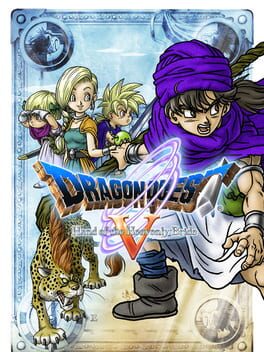
Role-playing (RPG) / Adventure / Action / Fantasy
Dragon Quest V uses basic role-playing video game mechanics seen in the rest of the series, which includes leveling up by gaining experience points through battle, first person turn-based battles, and equipping weapons and armor. Something new to the Dragon Quest series is the ability to tame monsters into the player's party. The monsters can be used in battle and level-up like the human characters. Monsters sometimes request to join the Hero after battles if the party is strong enough. There are a total of 71 monsters that are capable of joining the Hero's party
Role-playing (RPG) / Adventure / Fantasy
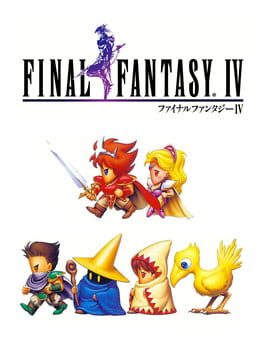
FINAL FANTASY IV is the fourth main installment in the FINAL FANTASY series, developed and published by Squaresoft. It was released in July 1991 for the Super Nintendo Entertainment System in Japan, and released as FINAL FANTASY II in North America in October 1991 with alterations made due to Nintendo of America's guidelines at the time.