Amstrad CPC / DOS / Mac
Developed by Distinctive Software for Dro Soft.
Racing / Simulator / Arcade / Action / Non-fiction
The Duel: Test Drive II is a cross-platform racing game developed by Distinctive Software and published by Accolade in 1989. It is the second entry in the Test Drive series of video games.
Like the original Test Drive, the focus of The Duel is driving exotic cars through dangerous highways, evading traffic, and trying to escape police pursuits. While the first game in the series had the player simply racing for time in a single scenario, Test Drive II improves upon its predecessor by introducing varied scenery, and giving the player the option of racing against the clock or competing against a computer-controlled opponent. The player initially is given the opportunity to choose a car to drive and a level of difficulty, which in turn determines whether the car will use an automatic or manual transmission—the number of difficulty options varies between gaming platforms. Levels begin with the player’s car (and the computer opponent, if selected) idling on a roadway. Primarily these are two to four lane public highways with many turns; each level is different, and they include obstacles such as bridges, cliffs, and tunnels in addition to the other cars already on the road. Each level also has one or more police cars along the course. The goal of each level is to reach the gas station at the end of the course in the least amount of time. Stopping at the gas station is not mandatory, and one could drive past it if inattentive. The consequence of not stopping results in running out of gas, and thus losing a car (life). The player begins the game with 5 lives, one of which is lost each time that the player crashes into something. If the player completes a level without crashing or running out of gas, then he or she is awarded a bonus life. In addition to losing a life, crashing adds thirty seconds to the player's time. Cars could crash into other traffic or off-road obstacles such as trees; they could crash by falling off the cliff on one of the mountain levels, or they could sustain too much damage by staying off the roadway for too long on the flatland levels. Players could also lose a life when using a manual transmission by redlining and consequently blowing the engine. Crashing into a police car instantly ends the game, regardless of the number of lives the player has left. Police cars appear in every level, and if the player is driving faster than the speed limit when encountering one of them, the police car will follow in pursuit. If at any point while being pursued the police car is able to pass the player’s car, the player is forced to pull over and receives a ticket stating the offense and the speed of the vehicle. While this doesn’t cost the player a life, it does take away valuable time. Players can avoid being pursued by police by slowing down before encountering them, anticipating them through the aid of a radar detector, which comes standard in all vehicles in the game.
Racing / Simulator / Arcade / Action / Non-fiction
After you choose a car, you have to drive as fast as possible without crash and without getting caught by the cops. You are equipped with the radar detector so you are informed about the approaching trouble.


Racing / Arcade / Action / Non-fiction
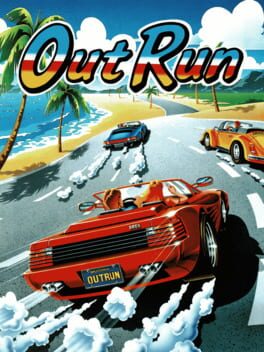
OutRun is a racing game originating in the arcades. The player can race across varied terrain in a readily available Ferrari, complete with a female passenger, over a series of short tracks. Gameplay is viewed form just above and behind the car. The roads are full of sharp bends and hazards, contact with which can cause the car to roll and lose the player's time. On each section of track there is a fork in the road, allowing the player to choose which direction he or she wishes to go in. The player has to to complete five track sections in total, out of the fifteen in the game.

Racing / Simulator / Arcade / Action
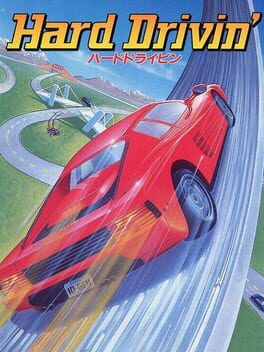
Hard Drivin' is a 3D arcade hit from Atari Games. You are in control of a high-performance sports car. Your objective is to race around the course as fast as possible and hit as many checkpoints as possible. If you hit a checkpoint you gain extra time to go farther. You will see traffic on the road both in your direction and coming down the opposite direction, so be careful when you pass... The course has two sections: speed track, and stunt track. Speed track is longer, but you can usually achieve higher speeds. Stunt track requires you to perform several stunts such as jumping bridges, driving through a loop, and so on. Crashing the car has no serious consequences and indeed shows a replay of your crash from a cinematic angle. Admire your crash head-on into the cement truck, or clipping the minivan, or flying off the bridge in the wrong angle... You lose several seconds as your car is "reset" and you get up to speed again. The home conversions retain most of the then-advanced 3D graphics but lack the force-feedback that was in the arcade version.

Racing / Simulator / Non-fiction
Gran Turismo 2 is a racing game for the Sony PlayStation and the sequel to Gran Turismo. The game uses two different modes: Arcade Mode and Gran Turismo Mode. In the arcade mode, the player can freely choose vehicles they wish to use, and can enable damage. However, the Gran Turismo Mode requires the player to earn driver's licenses, pay for vehicles, and earn trophies in order to unlock new courses. Gran Turismo 2 features nearly 650 automobiles and 27 racing tracks, including rally tracks. Compared with Gran Turismo, the gameplay, physics and graphics are very similar. The major changes are the vastly expanded number of cars, tracks and races in simulation mode. Other differences include that the player can race events separately, if they don't want to enter the whole tournament. The player is no longer able to "qualify" for each race entered.

Racing / Arcade / Action / Non-fiction
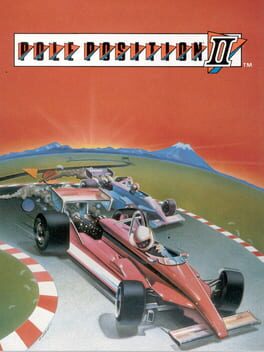
Just like the first game, but with improved graphics and 4 different tracks to choose.

Racing / Simulator / Sport / Action / Educational
Relive the 80's with Intellivision Lives! Play over 60 classic Intellivision games including Baseball, Astrosmash and Space Battle and several unreleased games. Each game comes with historical information, fun facts and interviews with the original developers. If that doesn't inspire nostalgia, you can also watch original Intellivision commercials and archival footage. All games are optimized for both the PS2 Dual Shock 2 and Xbox controllers. Finally, all your all-time favorite Intellivision games in one package.

Racing / Simulator / Arcade / Action
Continental Circus, released as Continental Circuit in North America, is a racing simulation arcade game, created and manufactured by Taito in 1987. It was later ported to various home computers in 1989, including the Amiga, Amstrad CPC, Atari ST, Commodore 64, MSX and ZX Spectrum. It was then released in 2005 for the PlayStation 2, Xbox and PC as part of Taito Legends. The arcade version of this game comes in both upright and sit-down models, both of which feature shutter-type 3D glasses hanging above the player's head. According to Computer and Video Games in 1988, it was "the world's first three dimensional racing simulation." The home conversions of Continental Circus lack the full-on 3D and special glasses of the arcade version, or the detailed graphics, but retain the essential gameplay structure.