

A strategy/simulation game for the Playstation that tasks you with managing your own video game company. It was developed by Kuusou Kagaku in 1998 and was only released in Japan.
Screenshots & Artwork
Featured in
A strategy/simulation game for the Playstation that tasks you with managing your own video game company. It was developed by Kuusou Kagaku in 1998 and was only released in Japan.
Simulator / Strategy / Business / Sandbox
SimCity, later renamed SimCity Classic, is a city-building simulation video game, first released on February 2, 1989, and designed by Will Wright for the Macintosh computer. SimCity was Maxis's second product, which has since been ported into various personal computers and game consoles, and spawned several sequels including SimCity 2000 in 1993, SimCity 3000 in 1999, SimCity 4 in 2003, SimCity DS, SimCity Societies in 2007, and SimCity in 2013. Until the release of The Sims in 2000, the SimCity series was the best-selling line of computer games made by Maxis.
Real Time Strategy (RTS) / Simulator / Strategy / Comedy / Business
You have inherited a fortune from an eccentric aunt and her will states the money can be spend building the world largest and most profitable theme park. Create a wonderful theme part full of thrilling rides and greasy - but delicious - food and start to make the loads of money. You are a lucky one who can create the best theme park ever made plus make a fortune. Your park will be compared to 40 rivals all over the world every year. Your goal is to become the best park in all categories.
Simulator / Strategy / Business / Sandbox
Welcome to the building simulation game SimTower, which offers the chance to build and manage all the complex, interconnected operations of a modern skycraper. You build your empire from nothing and become the engineer and general manager of your structure. You can provide offices, coffee shops or apartments to anyone who is willing to pay.
Simulator / Sport / Strategy / Business
Football Manager Handheld is a handheld version of Football Manager 2006, where you take control of a team in one of 7 countries. You control the signing of new players, setting the team for the matches and setting up training. Compared to the PC version the PSP version has been significantly simplified. There are fewer players, fewer teams and every player and staff member has fewer stats.
Simulator / Strategy / Turn-based strategy (TBS) / Action / Science fiction
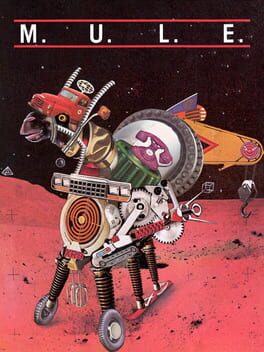
M.U.L.E. is about four hopeful explorers trying to make a fortune on a virgin planet. This is done by producing various goods (Food, Energy, Smithore, Crystite). Each of these goods have their uses: if you don't have enough food, you will have less time during your turn. If you don't have enough energy, your output will be lower. If enough smithore isn't produced, there will be a shortage of M.U.L.E.s. Crystite is the big earner that can make or break your game. You start the game by selecting your race. Some are easier to play, some harder. There are three levels of difficulty, in the easiest the game only lasts 6 turns, but the real game is 12 turns. Crystite is not available at the easiest level. Each turn starts with land claim. Each player gets to choose a spot of land for themselves from the map. If two players choose the same spot, the player with less money wins. The map consists of different landscape. River is best for producing food, plains for energy, mountains for smithore. Crystite is hidden and must be first found by taking a land sample to the town. After the land claim each player takes turns in cultivating their land and do other tasks. They can buy M.U.L.E.s to start production on their land, sabotage other players by buying M.U.L.E.s and letting them loose, try to catch the Wumpus for cash and try to find crystite veins. The time to do these things depends on if the player has enough food. Finally the player goes to the casino and wins a small amount of money, depending on how much time was left.