
Developed by MiCROViSion for Bandai.
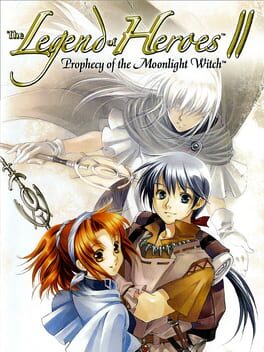
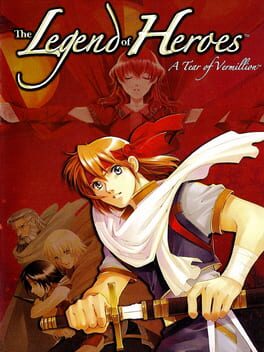
The fourth game in the Legend of Heroes series and the second in the Gagharv Trilogy. The PSP remake was renamed to simply "The Legend of Heroes: A Tear of Vermillion" and was the first entry in the storied franchise to be localized into English. The other 2 games in the trilogy were renamed because of this.
The setting for the fourth Legend of Heroes game and the second in the Gagharv Trilogy takes place in the fictional land of El Phildin, fifty-six years before the events of "Moonlight Witch". The story begins with an insight to the past. Avin and Eimelle are orphaned children, ages 10 and 8 respectively, who are living in the city of Cathedral after being taken in by Supreme Priest Esperius. Avin is seen bringing milk for the kitten Eimelle snuck into the chapel. They both watch it drink to its heart's content. Before long, Oracle Ollesia appears. The children panic at being caught with the smuggled kitten, but Ollesia doesn't seem too concerned with that, yelling at them to take cover. Cathedral is under attack.
Role-playing (RPG) / Adventure / Card & Board Game / Fantasy / Science fiction
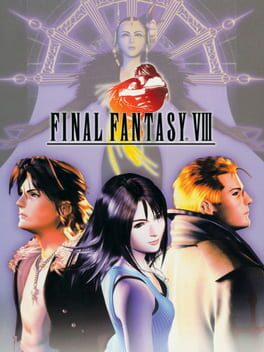
Final Fantasy VIII is the eighth main installment in the Final Fantasy series. The gameplay makes a departure from many series standards. While it still uses the Active Time Battle system, it deviates from the series' traditional means of boosting a character's power via leveling, although levels are not completely abandoned as they were in Final Fantasy II. In addition, it does not have a Magic Point-based system for spell-casting. Instead, magic is collected, drawn, and created from items, and is used to power up the characters via the junction system.

Role-playing (RPG) / Adventure / Fantasy / Drama
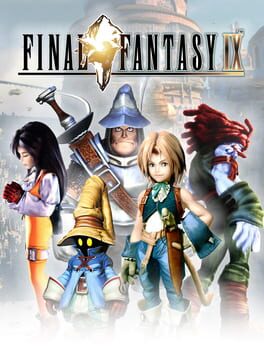
Final Fantasy IX is the ninth main installment in the FF series. The title is a return to the series's roots, with gameplay features and references to the past games featuring throughout, as well as a medieval fantasy setting and cartoonish art style as a break from the sci-fi slant style of Final Fantasy VII and Final Fantasy VIII.

Role-playing (RPG) / Adventure / Fantasy
The third game in The Legend of Heroes series originally released for Japanese PCs in 1994 and then remade for the PSP in 2004. In 2006 it was localized for the first time and renamed to "The Legend of Heroes II" in the United States.

Role-playing (RPG) / Adventure / Fantasy
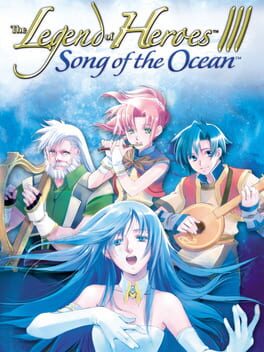
A remake of The Legend of Heroes V: Umi no Oriuta, later localized for North America in 2007 under the title, "The Legend of Heroes III: Song of the Ocean." The trilogies titles have been changed in North America to match a mistake in the title of previously released games. Because of this the trilogies order was mixed up. This takes place in Weltluna, the third realm in Gagharv, seven years after "A Tear of Vermillion" and forty-nine years before "Moonlight Witch". It centers around Forte, Una and McBain and their quest in seeking Leone's Resonance Stones.

Role-playing (RPG) / Adventure / Fantasy
Final Fantasy VI is the sixth main installment in the Final Fantasy series, developed and published by Square. It was the final title in the series to feature two-dimensional graphics, and the first story that did not revolve around crystals. The game gives players up to fourteen playable characters, the largest cast in the series, and features the Active Time Battle pseudo-turn based menu command system. A party can consist of up to four characters, though some events require the player to assemble three different parties of up to four and switch between them. Each character has a unique command ability, such as Terra's Trance, Locke's Steal, Edgar's Tools or Sabin's Blitz, and can also learn Magic spells from earning AP from battles with magicite equipped. Each character's rare Desperation Attack will randomly activate after using the Attack command when at critical health.

Platform / Puzzle / Role-playing (RPG) / Action / Fantasy
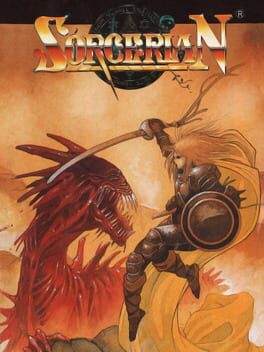
Sorcerian is a side-scrolling action-RPG. The player can create up to ten characters, from whom up to four members can be present in a party at the same time. Each character is highly customizable, with four different classes/races (fighter, wizard, elf, and dwarf) and over 60 possible jobs/occupations (ranging from clown to exorcist) available for them to perform; each has its own strengths and weaknesses, affecting the seven primary attributes (strength, intelligence, protection, magic resistance, vitality, dexterity, and karma) in different ways, as well as different equipment limitations. The player can choose from fifteen different scenarios, or quests, to play through in the order of their choice. The party must battle enemies and perform tasks within the given levels to clear each scenario, before moving onto another scenario of their choice. The player controls the entire party at the same time, with all four members running in a line, jumping in sequence, and attacking in unison. The party members follow behind in a manner similar to the Options in the arcade shooter Gradius (1985). Sorcerian also employs class-based puzzles, such as using a high-strength character to force open doors. All the characters have a default starting age of 16. Each time a player begins a new scenario, a year passes by, while additional time passes by in towns as a character goes through training or enchants items. The characters age at different rates depending on their race, with humans reaching old age at 60, dwarves at 100, and elves at 200. Upon reaching old age, for every year that passes, a character can die permanently at a random time. There is also an “Advance Time” to speed up the flow of time. Another new feature of Sorcerian was its episodic format that extended across various expansion packs. Besides the default fifteen scenarios that come with the game, there were a number of additional scenario packs released. The aging system was created with the additional scenario packs in mind.

Role-playing (RPG) / Turn-based strategy (TBS) / Adventure / Fantasy / Sandbox
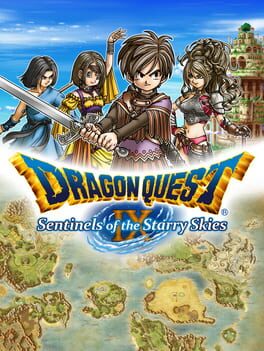
In Dragon Quest IX: Sentinels of the Starry Skies, players begin their adventure as a city guardian who is sent to retrieve a sacred trees fruits, which have the power to grant wishes. Players travel the world, conquer fearsome monsters and unravel an epic storyline. During their journey, players will encounter mighty opponents in fast-paced battles, and also interact with a colorful cast of characters.

Role-playing (RPG) / Turn-based strategy (TBS) / Adventure / Fantasy / Open world
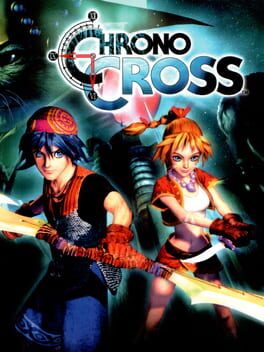
CHRONO CROSS, the sequel to the SNES favorite CHRONO TRIGGER, is one of the most ambitious role-playing games ever made. There are over 40 playable characters, each with their back-story, special moves, abilities, and weapons. The story spans two discs and follows the story of Serge, a young man who is able to cross dimensions. Suddenly he is pulled between worlds, trying to figure out his own past at the same time. The graphics are bright and beautiful, utilizing the PlayStation's capabilities to the fullest. The polygonal character models are huge and detailed, and the pre-rendered backgrounds are immaculately detailed. The music is composed and arranged by Yasunori Mitsuda, and features very realistic-sounding synthesizers. The battle system revolves around Elements, which are used to grant magical powers, as well as to summon huge monsters. For anyone that wanted to see the story of CHRONO TRIGGER continue, this is your chance.