Platform / Puzzle / Action / Comedy
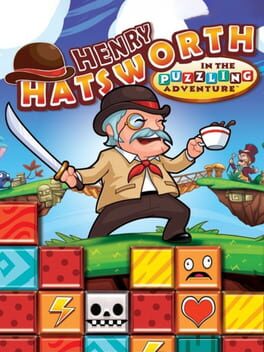
In Henry Hatsworth in the Puzzling Adventure players embark on single player fun like no other. Here Henry Hatsworth, a quirky, lighthearted character serves as your guide on a journey through a new style of gaming on your Nintendo DS that combines the action of an adventure game with the challenge of a puzzle game. In this two-in-one extravaganza players explore five exotic worlds, fight a variety of opponents, and venture through more than 30 levels, including nearly a dozen hidden levels while taking on outrageous world-ending bosses.
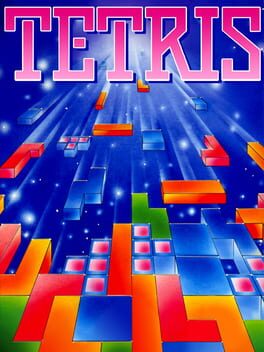
Tetris is a puzzle video game created by Soviet software engineer Alexey Pajitnov in the mid-1980s. Players arrange falling pieces made of four connected blocks, called tetrominoes, into complete horizontal lines within a rectangular playfield. Completed lines disappear and award points, while the speed of the falling pieces increases over time. The game ends when stacked pieces reach the top of the field. With over 520 million sales across approximately 220 versions and at least 70 platforms, it is the second-best-selling video game series.
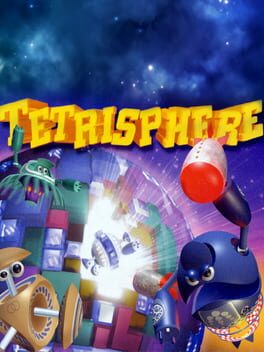
Tetrisphere is a variant on Tetris in which various shapes are shifted across a wrapped three-dimensional grid resembling a sphere, and then destroyed. The objective of the game changes depending on the mode, but generally consists of removing layers of shapes to reach the playing field's core. Despite very little domestic advertising, Tetrisphere enjoyed moderately good sales and a mostly favorable critical reception. Reviewers praised the game's originality and the musical score composed by Neil D. Voss.

Puzzle / Racing / Sport / Action / Science fiction
The game pits four racers against each other, with up to two of them being player-controlled and the rest being AI opponents. Each race consists of four laps around tracks viewed from an isometric perspective, which enables players to discern the presence of frequent sloping sections spread throughout the game's various tracks. In addition to navigating the turns, racers must also maneuver hills and dips without falling or jumping over the guard rail at the track's edge.
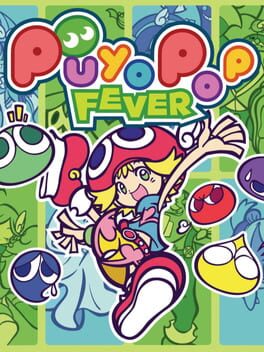
Updated version of the classic Puyo Puyo puzzle game featuring the all-new "fever" mode. Better known in the west under the titles Puyo Pop, Kirby's Avalanche and Dr. Robotnik's Mean Bean Machine, Puyo Pop Fever still follows the classic bubble-popping format (align four or more "puyos" to make them pop), but Sega also delivers completely overhauled visuals with a more hand-drawn look, an expanded roster of characters, and a new "Fever Mode" that cranks up the action to frantic degrees once players fill a "fever gauge" on their screen. Although a four-player mode didn't make the cut, two players can go head to head and compete for points or survival.
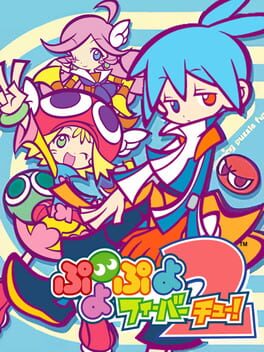
Puyo Puyo Fever 2 is a video game developed by Sonic Team and published by Sega. The game was released as a sequel to the previous title, Puyo Pop Fever. The gameplay remains relatively unchanged, but several new modes are introduced.
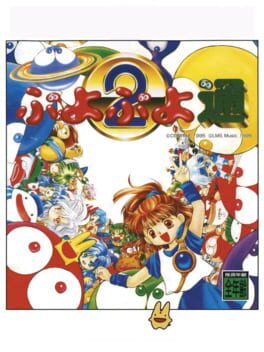
This head-to-head puzzle game tasks players with clearing their grid of falling pieces, known as puyos, by arranging four or more of the same colour into straight lines or other recognised patterns. Its competitive element comes from the fact that clearing puyos sends random filler pieces to the opponent’s grid. Larger clears generate more filler, increasing the pressure on the opposing player. A round is won by filling the opponent’s grid to the top. The game also includes a light narrative framework for solo or multiplayer play.