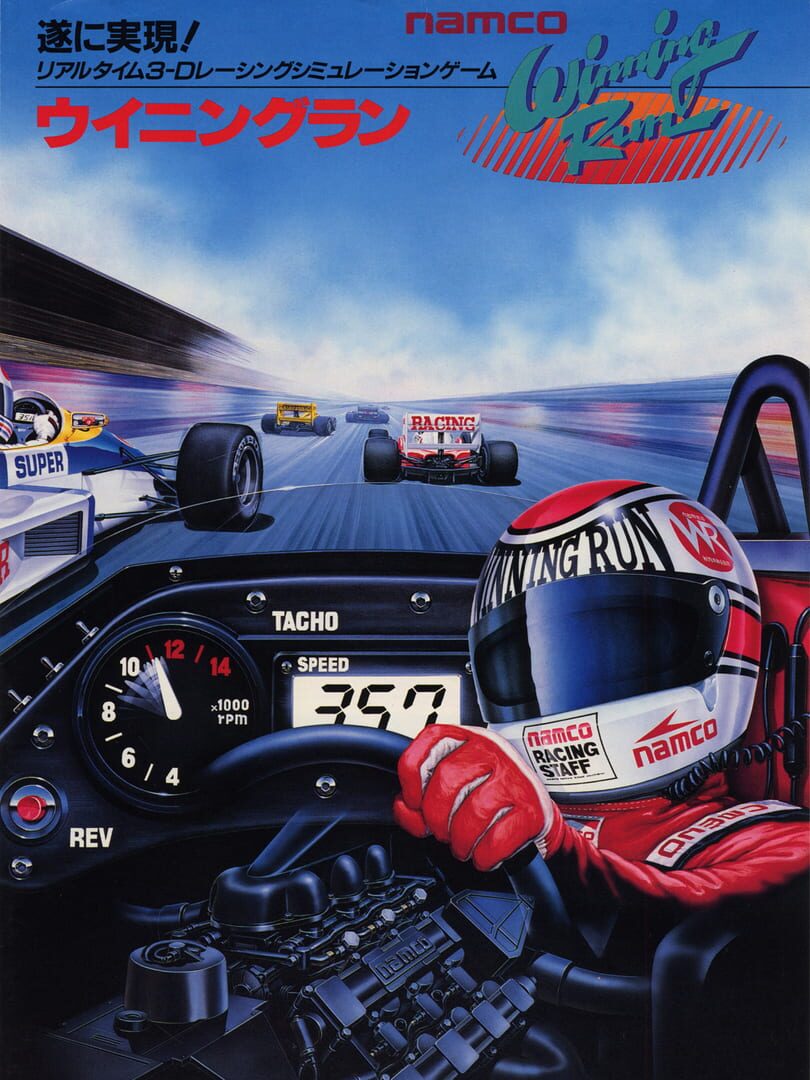
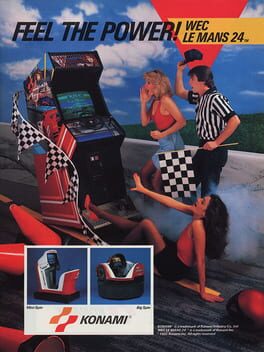
Released by Namco in 1988, this was the first arcade driving game to use fully 3D polygon graphics. It was the inaugural title for the Namco System 21 "Polygonizer" arcade hardware, the first dedicated 3D gaming system.
Featured in
Released by Namco in 1988, this was the first arcade driving game to use fully 3D polygon graphics. It was the inaugural title for the Namco System 21 "Polygonizer" arcade hardware, the first dedicated 3D gaming system.
Racing / Arcade / Action / Non-fiction
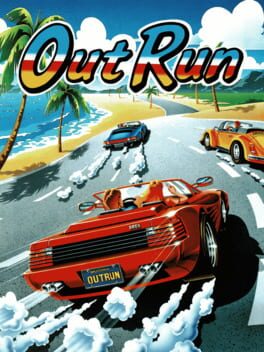
OutRun is a racing game originating in the arcades. The player can race across varied terrain in a readily available Ferrari, complete with a female passenger, over a series of short tracks. Gameplay is viewed form just above and behind the car. The roads are full of sharp bends and hazards, contact with which can cause the car to roll and lose the player's time. On each section of track there is a fork in the road, allowing the player to choose which direction he or she wishes to go in. The player has to to complete five track sections in total, out of the fifteen in the game.
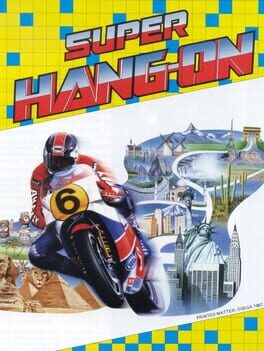
Super Hang-On is a 1987 motorcycle racing arcade game by Sega, and the sequel to the acclaimed Hang-On. A version of this game, in the full simulated-motorcycle cabinet used by the original Hang-On, was released in 1991 as Limited Edition Hang-On. It was also released for the Sega Mega Drive, Commodore Amiga, Atari ST, Macintosh, ZX Spectrum, Amstrad CPC and Commodore 64 in 1989. Super Hang-On was also released for the Sharp X68000 computer in Japan. The game also appeared on several Mega Drive compilations, namely Mega Games I (bundled with the console as Mega Drive Magnum Set), and Sega Genesis Six Pack. The arcade version was released on the Wii Virtual Console in Japan on September 14, 2010 and later for the other regions on May 3, 2012. A stereoscopic 3D version was released for the Nintendo 3DS eShop in Japan on March 27, 2013 and in North America and Europe on November 28, 2013.
Racing / Arcade / Action / Non-fiction
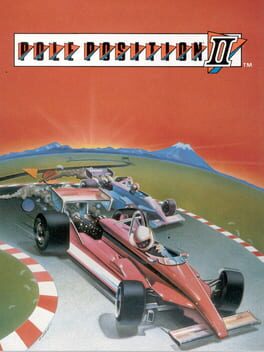
Just like the first game, but with improved graphics and 4 different tracks to choose.
Racing / Simulator / Arcade / Action / Non-fiction
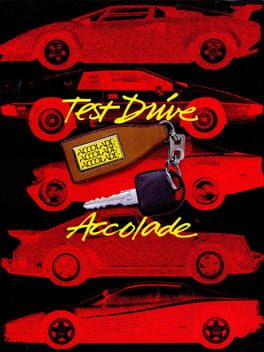
After you choose a car, you have to drive as fast as possible without crash and without getting caught by the cops. You are equipped with the radar detector so you are informed about the approaching trouble.

Racing / Simulator / Non-fiction
Gran Turismo is a racing game designed by Kazunori Yamauchi and is the first entry in the critically acclaimed simulator racing series bearing the same name. After five years of development time, it was well-received publicly and critically, shipping a total of 10.85 million copies worldwide as of March 2013, making it the best-selling PlayStation game. The game uses two different modes: Arcade Mode and Gran Turismo Mode. In the arcade mode, the player can freely choose the courses and vehicles they wish to use. Winning races unlocks additional cars and courses. However, Gran Turismo Mode requires the player to earn different levels of driver's licenses in order to qualify for events, and earn credits, trophies and prize cars by winning race championships. Gran Turismo features 140 cars and 11 race tracks (as well as their reversed versions).

Racing / Simulator / Non-fiction
Gran Turismo 2 is a racing game for the Sony PlayStation and the sequel to Gran Turismo. The game uses two different modes: Arcade Mode and Gran Turismo Mode. In the arcade mode, the player can freely choose vehicles they wish to use, and can enable damage. However, the Gran Turismo Mode requires the player to earn driver's licenses, pay for vehicles, and earn trophies in order to unlock new courses. Gran Turismo 2 features nearly 650 automobiles and 27 racing tracks, including rally tracks. Compared with Gran Turismo, the gameplay, physics and graphics are very similar. The major changes are the vastly expanded number of cars, tracks and races in simulation mode. Other differences include that the player can race events separately, if they don't want to enter the whole tournament. The player is no longer able to "qualify" for each race entered.