
Developed by Sir-tech Software.
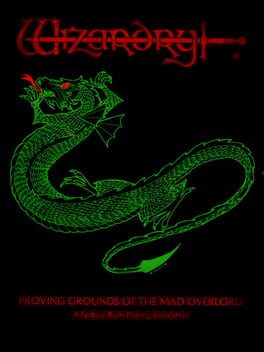
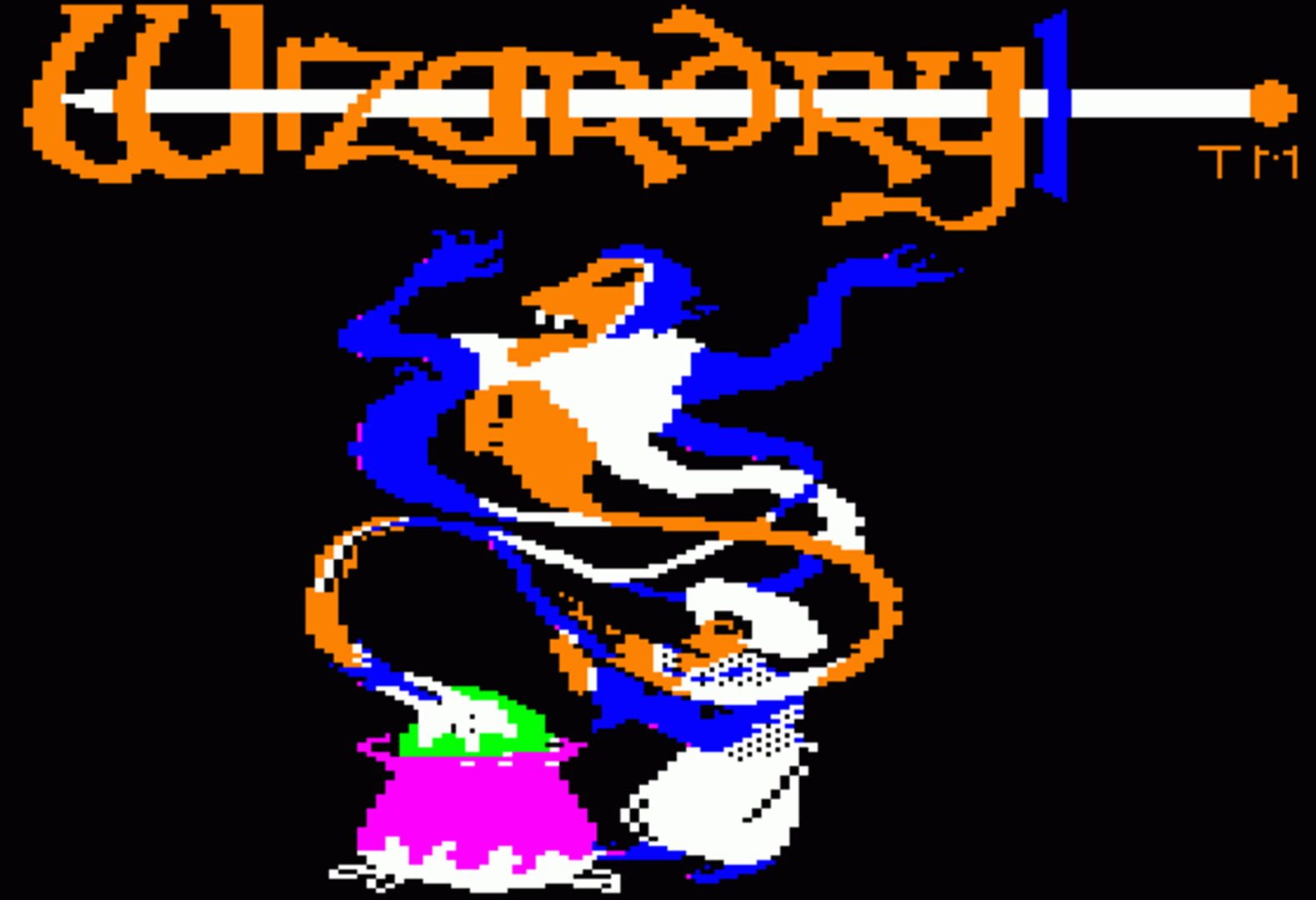
The Mad Overlord Trebor was once only power-mad, but went off the deep end after he acquired a magical amulet of immense power, only to have it stolen from him by his nemesis, the evil archmage Werdna. Werdna, not quite sure how to use the amulet properly, accidentally causes an earthquake which creates a ten-level dungeon beneath Trebor's castle. To avoid looking silly, Werdna declares the dungeon to be the new lair for him and his monster hordes. Trebor, not to be outdone, declares the labyrinth his new Proving Grounds where adventurers must prove themselves for membership in his elite honor guard, and incidentally retrieve his amulet in the process. The first Wizardry was one of the original dungeon-crawling role-playing games, and stands along with Ultima and Might & Magic as one of the defining staples of the genre. The player generates and control a party of up to six different adventurers, choosing from four races (humans, elves, dwarves, gnomes and hobbits), three alignments (good, neutral and evil), and four basic classes (fighter, priest, mage and thief). These can later evolve into elite classes (bishop: priest with mage spells; samurai: fighter with mage spells; lord: fighter with priest spells, and ninja: fighter with thief abilities) if they meet the necessary level requirements. After outfitting the party with basic weapons and armor, the player sends it into a 3D vector maze-like dungeon to fight monsters in turn-based combat and find treasure.
The land of Llylgamyn is the basis of many legends. It is the center of commerce throughout the land, and home of the academy where some of the bravest warriors are trained. In it's early days it was a monarchy ruled by the royal family, but as time passed the power shifted to aristocrats and theocrats, and eventually the royal family became more symbolic then anything else. Under a more democratic system, the High Council of Sages appointed an Overlord to govern over the kingdom. With that, the power of the royal family diminished almost completely. The Overlord was a former warrior of the realm, and a local hero. His name was Trebor. At first everything seemed well, but as time went by Trebor's thirst for power began to show. He began searching for ways to expand his rule. He learned of an ancient amulet held in a forgotten temple somewhere outside of the kingdom. Eventually, through unknown means he was able to find it's hidden location. He gathered his best men and sent them on a mission to retrieve this legendary artifact. They returned successful. Trebor, however, was not the only person who wanted this artifact. Only hours behind him in reaching it's original destination was the evil wizard Werdna (arch-enemy of Trebor). When Werdna discovered that someone had found the amulet before him he grew very angry. Using his magic he was able to discover it's new location. That evening the Wizard made his assault on Overlord's Castle. Making himself invisible he was able to sneak past Trebor's guards. He found the overlord sitting in his throne room with a group of sages studying the amulet. Werdna cast a powerful spell that made Trebor and everyone in his immediate vicinity frozen with fear. With Trebor unable to move, Werdna plucked the amulet right from his hands and left the castle. Werdna knew that once the Trebor regained his senses he would be prime suspect. He couldn't return to his tower, he needed a new hiding place. That's when he was struck with a brilliant idea. Werdna decided to use to amulet to make a new home right beneath the city of Llylgamyn! There was enough underground mining activity already, he should go unnoticed. Upon the thought of this very plan, the amulet began to glow. Suddenly there was tremendous earthquake, and in a flash Werdna found himself in a giant ten level labyrinth in the ground below the city. Summoning monsters to be his allies Werdna explored his way to the lowest depths and made a home where he would be able to study the powers of the amulet undisturbed. After losing the amulet and discovering the existence of the mysterious maze beneath his city, Trebor became unhinged. His madness grew daily, all he could think of was getting his amulet back. He called for the greatest warriors in the realm to enter the maze and find Werdna, but the monsters grew greater in numbers and they began to spread to even the highest depths of the maze. A year after the discovery of the maze, Trebor had managed to secure the first four floors. Most of the warriors who tried to journey deeper were never seen again, those that were returned with their minds warped, speaking of demons and dark magic. Trebor ordered the passages to the deeper layers of the maze to be magically sealed, thus preventing these creatures from making their way to the town. He also ordered that traps be set on the first three layers. Upon completion, Trebor declared the maze his own personal proving grounds. New cadets enrolled in the training academy would be offered the opportunity to brave the maze. Those that could find the secret he had hidden for them would be rewarded. Trebor decided he could use the maze as a test, those that would be able to able to make their way to the fourth floor would be deemed worthy and told the truth about Werdna and the amulet. They would be given the chance to go deeper into the maze. If they could return with the amulet, they would be inducted as members of Trebor's Personal Guard. It has been five years since the disappearance of the amulet, and this time it is your characters that have volunteered to challenge the maze. This is where it all begins.
Role-playing (RPG) / Adventure / Fantasy
Final Fantasy VI is the sixth main installment in the Final Fantasy series, developed and published by Square. It was the final title in the series to feature two-dimensional graphics, and the first story that did not revolve around crystals. The game gives players up to fourteen playable characters, the largest cast in the series, and features the Active Time Battle pseudo-turn based menu command system. A party can consist of up to four characters, though some events require the player to assemble three different parties of up to four and switch between them. Each character has a unique command ability, such as Terra's Trance, Locke's Steal, Edgar's Tools or Sabin's Blitz, and can also learn Magic spells from earning AP from battles with magicite equipped. Each character's rare Desperation Attack will randomly activate after using the Attack command when at critical health.

Role-playing (RPG) / Adventure / Fantasy
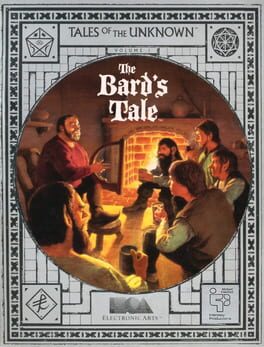
Tales of the Unknown: Volume I, better known as "The Bard's Tale", is an RPG developed by Interplay Productions in 1985 originally for the Apple II. It was quickly ported to numerous other platforms and became widely successful. This was partly because it incorporated unprecedented 3D graphic design, featuring partly animated character portraits and engaging gameplay. It also helped that the game was available on the Commodore 64-the most successful game console at the time, whereas the main competitor-the Ultima series, was not.

Role-playing (RPG) / Turn-based strategy (TBS) / Fantasy / Science fiction
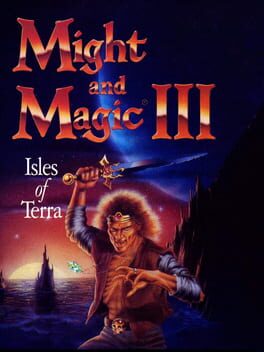
The third installment of the roleplaying series, with a multi-faceted plot full of twists and turns. Ease of use was central to the gameplay and interface, and the plot included piles of new twists and turns. Lead a party of adventurers to rendezvous with the legendary wizard Corak. From dark moldy dungeons, through corridors of hewn stone and timber, and onward to the lofty frozen peaks of Terra you will uncover the mysteries that surround the exotic islands in the Great Sea.

Role-playing (RPG) / Adventure / Fantasy / Drama
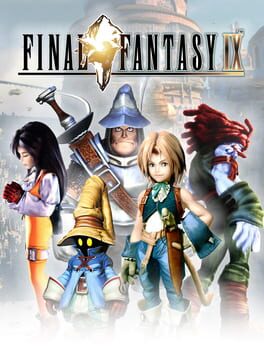
Final Fantasy IX is the ninth main installment in the FF series. The title is a return to the series's roots, with gameplay features and references to the past games featuring throughout, as well as a medieval fantasy setting and cartoonish art style as a break from the sci-fi slant style of Final Fantasy VII and Final Fantasy VIII.

Role-playing (RPG) / Sport / Fantasy / Historical
Dragon Quest VI did not receive an enhanced remake on a console until the Nintendo DS. The Dragon Quest VI enhanced remake for the Nintendo DS was announced in late 2007 by Square Enix and was developed by ArtePiazza. A handful of changes were made to the game, some remaining controversial among fans.

Role-playing (RPG) / Adventure / Action / Fantasy
Final Fantasy III is a remake and a complete overhaul of the 1990 version with the same title. This allowed western players to finally experience the classic Final Fantasy game localized for the very first time. The graphics are rendered in full 3D and various changes have been implemented.

The so-called "New & Improved Version" was a later, updated release of the original Apple II and PC Booter release from the early 80's. Unlike to original release, featured a larger graphic window and slightly more colors, depending on the computer. Rather infamously, the MS-DOS version introduces a bug where upon leveling up, there was a small chance a characters stats would decrease.

Role-playing (RPG) / Fantasy / Open world
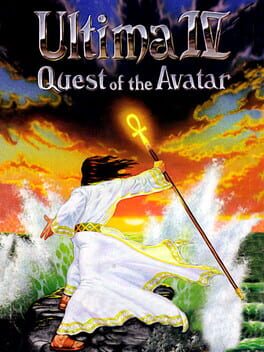
Following the defeat of the evil triad in the previous three Ultima games, the world of Sosaria changed beyond recognition: continents rose and sank, and new cities were built, heralding the advent of a different civilization. Unified by the reign of the benevolent monarch Lord British, the new world was renamed Britannia. Lord British wished to base people's well-being on the ethical principles of Truth, Love, and Courage, proclaiming the Eight Virtues (Honesty, Compassion, Valor, Justice, Sacrifice, Honor, Spirituality, and Humility) as the ideal everyone should strive for. The person who could accomplish full understanding and realization of these virtues would serve as a spiritual leader and a moral example for the inhabitants of Britannia; he alone would be able to obtain holy artifacts, descend into the Stygian Abyss, and access the Codex of Ultimate Wisdom. This person is the Avatar. The fourth game in the Ultima series features an improved game engine, with color graphics and enhanced character interaction: the player can have conversations with non-playable characters by typing names of various topics. However, the main difference between Ultima IV and its predecessors in the series (as well as other role-playing games) lies in the game's objectives and the ways to fulfill them. Instead of building up a character by any means possible in order to face a villain in the end of the game, in Ultima IV the player is trying to become the Avatar, a role model for people. This means upholding the Eight Virtues, basically trying to become a better person. Making morally conscious decisions and helping other people is not done expecting a material reward, but because it is the actual goal of the game and the main focus of its gameplay. The game frowns on behavior typical of most other RPGs, such as backstabbing fleeing enemies or picking up everything that isn't nailed down even if it does not belong to the protagonist. This different approach established the game's reputation as the first "true" Ultima, influencing the design philosophy of later installments and the overall spirit of the series. Character creation is done by choosing responses to morally ambiguous questions. Each of the Eight Virtues corresponds to a character class; by determining the player's personal priorities in the virtues, the game assigns a class and a starting location for the Avatar. After emerging in Britannia, the player is free to explore it in various ways (on foot, moongate teleportation, on horseback, by ship, etc.). Certain items must be collected in any order to enter the Stygian Abyss and complete the game. The Avatar also has to reach the highest level in all virtues. This is achieved by various means: donating blood increases Sacrifice, not fleeing from combat increases Valor, etc. The process, however, is not irreversible: should the Avatar overpay a blind seller, he gains Compassion points; should he, on the other hand, cheat the seller by underpaying, his level in several virtues would decrease. These unorthodox features of the game co-exist with plenty of traditional RPG elements, such as dungeons to explore and hostile monsters to kill. Enemies are encountered on the world map as well as in dungeons; combat takes place on separate top-down screens, allowing player-controlled and enemy parties freely move on them. Characters accumulate experience points and level up, gaining higher amount of hit points and access to stronger magic spells. Like in the previous installments of the series, world map, town exploration and combat are presented from a top-down view, while the dungeons are pseudo-3D and are explored from first-person perspective. Ultima IV also introduces several new gameplay features to the series and role-playing games in general. A number of initially non-playable characters living in various areas of the game world are able to to join the party and fight alongside the hero, replacing traditional player-generated characters or mercenaries and adventurers available only in special locations. Additional new elements include buying and combining reagents in order to cast spells, puzzle rooms in dungeons, and others.