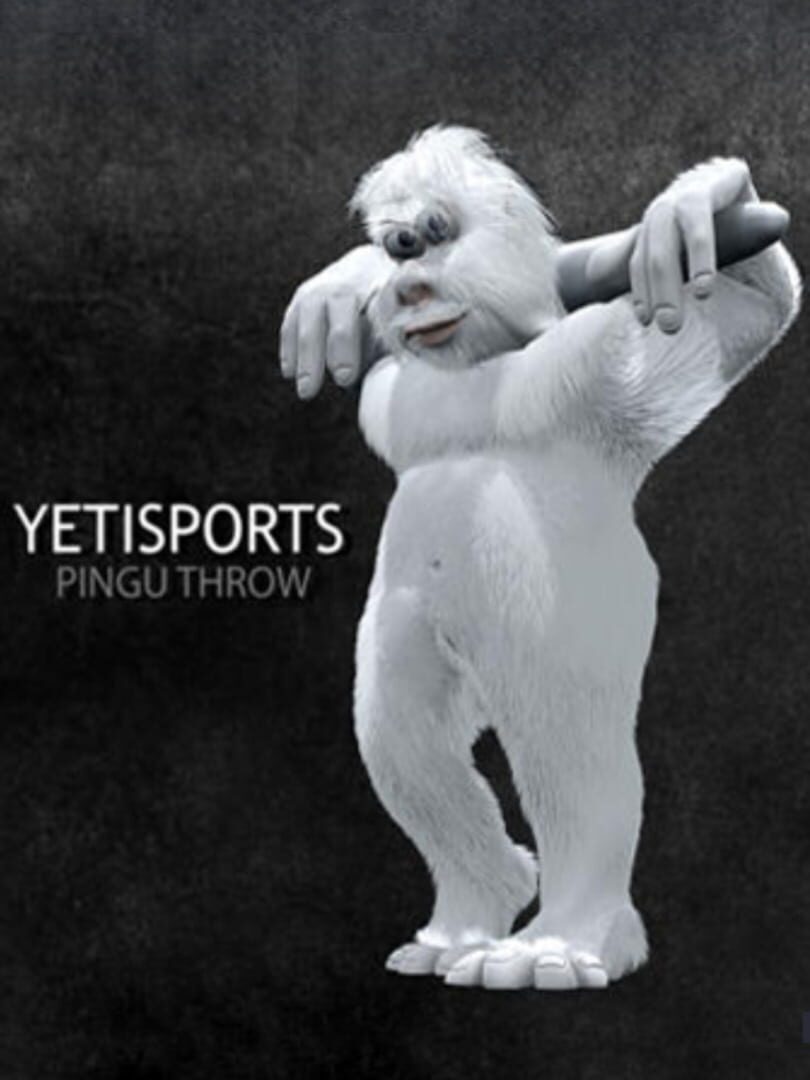
After being smashed around for years Pingu finally gets to fly! Chase the Albatrosses to steal their fish or swoop low over the ice to pluck your catch and boost your score.
Featured in
After being smashed around for years Pingu finally gets to fly! Chase the Albatrosses to steal their fish or swoop low over the ice to pluck your catch and boost your score.
Role-playing (RPG) / Action / Fantasy
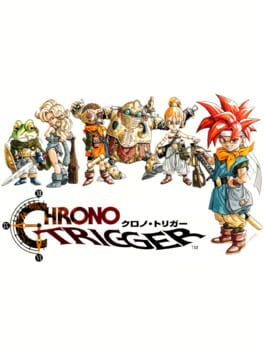
An enhanced port of Chrono Trigger that adds anime cutscenes and an exclusive Extras Mode. It is also known for having significantly longer load times in comparison to the original SNES version. Extras Mode is an option in the main menu that let players view cutscenes and artwork, listen to music, and view information about techs, enemies, bosses, endings, and item locations. It was first released for PlayStation in Japan before it came to North America as part of the Final Fantasy Chronicles compilation.
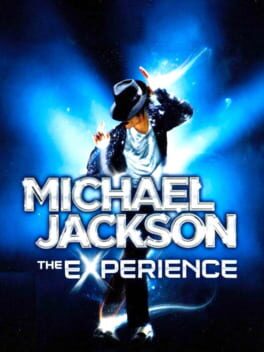
Relive the magic and rock your body to decades of iconic tracks. This unique interactive experience will immerse you in the world of the King of Pop. With Michael Jackson The Experience, dance to a wide variety of songs from Michael Jackson’s extensive catalogue including some of his greatest hits like Beat It and Billie Jean, while having a blast singing and mastering his incredible dance routines and signature moves! Discover and perform in soulful environments inspired by Michael Jackson’s ground-breaking music videos and stage performances.
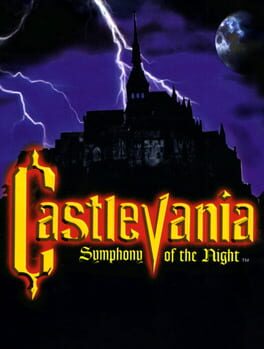
Platform / Role-playing (RPG) / Adventure / Action / Horror
Having been awoken from his eternal slumber by the reappearance of Castlevania, Alucard must once again face the evil minions of darkness. Use your vampiric powers, along with weapons, potions, and other magical relics to change the tide of battle. A mixture of platform and role-playing action with many hidden areas and secrets. Can you discover them all?
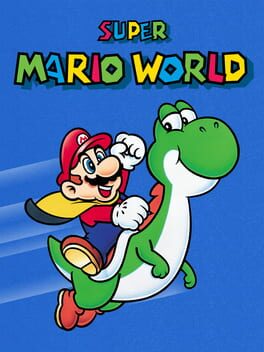
Platform / Adventure / Action / Fantasy
A 2D platformer and first entry on the SNES in the Super Mario franchise, Super Mario World follows Mario as he attempts to defeat Bowser's underlings and rescue Princess Peach from his clutches. The game features a save system, a less linear world map, an expanded movement arsenal and numerous new items for Mario, alongside new approaches to level design and art direction.
Puzzle / Adventure / Action / Fantasy
The Legend of Zelda: Ocarina of Time is the fifth main installment of The Legend of Zelda series and the first to be released for the Nintendo 64. It was one of the most highly anticipated games of its age, and is listed among the greatest video games ever created by numerous websites and magazines. The gameplay of Ocarina of Time was revolutionary for its time, it has arguably made more of an impact on later games in the series than any of its predecessors even though they had the same cores of exploration, dungeons, puzzles and item usage. Among the gameplay mechanics, one of the most noteworthy is the time-traveling system. The game begins with the player controlling the child Link, but later on an adult Link becomes a playable character as well and each of them has certain unique abilities. Ocarina of Time also introduces the use of music to solve puzzles: as new songs are learned, they can be used to solve puzzles, gain access to new areas and warp to different locations. Dungeon exploration is somewhat more puzzle-oriented than in earlier games but they are not too complex.

Shooter / Tactical / Adventure / Action / Science fiction
Metal Gear Solid is a stealth game created by Hideo Kojima which follows the MSX2 video games Metal Gear and Metal Gear 2: Solid Snake. Despite a transition to 3D, Metal Gear Solid's gameplay remains similar to his predecessors. The game utilizes a traditional top-down view and the player must navigate the protagonist Solid Snake through the game's areas without being detected. Detection will set off an alarm which draws armed enemies to his location. Conversations with Snake's allies and cutscenes are used extensively to advance the plot and gain more insight into it. Metal Gear Solid is regarded as one of the greatest and most important video games of all time, and helped popularize the stealth genre and in-engine cinematic cutscenes.
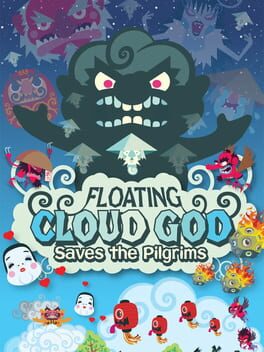
Floating Cloud God Saves the Pilgrims is a Playstation Mini game for PSP and Vita. Floating Cloud God Saves the Pilgrims is exactly that, a 2D shooter built around the eponymous deity (controlled by the player) and his quest to protect eight pilgrims in their journey across perilous territories. Your own shots just knock their hats off, but getting hit by anything else will kill a pilgrim and send their spirit floating off with a sad little wail. This is bad not only because the pilgrims are a de facto health bar (losing them all ends the game) but powering up Cloud God depends on harvesting their love - juicy little hearts that pop up whenever you kill an enemy and increase in size as you blast more. You must get all of the love (given form as hearts) that they release, which then makes you much more powerful than you already are. You increase in size, look more menacing, and your attacks are more powerful. The pilgrims get the most excited when they witness ambushing ghosts and ghouls get annihilated by you. When they are excited, they produce more love, meaning more power to you. However, you have to be very careful when shooting. You grow weaker with every shot, so try not to channel your inner war-freak and have a little restraint, for the good of both yourself and the pilgrims. You also lose some of your steam if you get hit by enemy forces. And sometimes, the situation calls to for you to sacrifice your mightiness and provide cover to the pilgrims from the enemy assault with your own self. There are two types of attack: the normal shot (by pressing X), and the bomb shot (by pressing Circle). The direction of the normal shot depends on what direction you are pressing, so there is some strategy to what part of the screen you should be shooting from. Being too far from your pilgrims is very dangerous but allows you to cover more ground, while launching a full frontal assault can protect your pilgrims by absorbing all the incoming fire. You have to think through, in real time, what tactics you would like to employ. You can always get in the middle, then rush forward, then get to a safe distance; mix and match, and you got yourself going. The bomb shot is used if you are above the enemy. But that’s not all, as some enemies can’t be killed with the bomb shot, only with the normal shot, and vice versa. There are also enemies where you have to inflict bomb shot damage first before switching to the normal shot to take them out. Enemies are varied, and they look good, even if they are vile and evil. There are boss fights, too, to keep you on your toes. The Cloud God's powers and the heart system mesh so well that any enemy can be destroyed in a blink - so they've got to be deceptive, sneaky, and sometimes numerous. Paper lanterns send out an arcing flame on death, red-eyed foxes hide in the scenery, imps swoop to carry off unlucky pilgrims and bobbing doll heads send out swarms of kisses. Hands start clawing up from the ground, crows dive-bomb your crew, and demons with phallic noses launch them as languorous, looping rockets. The cheeky oriental stylings are gorgeous, transforming symbols into everything from freaky momiji to dick-nosed devils. As this suggests, one of the reasons Floating Cloud God is such a pleasure to play is its visual inventiveness, which has room enough for everything from Wario tributes to what looks like a crying poo. This big lump of a thing, which is introduced in a level called The Saddest Enemy, explodes into gobbets of mini-poo that are very useful for building up a heart multiplier. Perhaps they're babies? That would explain the sadness. Floating Cloud God has bags more where that came from, and despite the Minis tag has plenty of room to breathe (there are seven worlds with 27 stages, including boss fights). And it keeps on surprising. The controls are simplicity itself: left stick to move, one button to shoot and one to bomb. But you soon realise the subtlety of how shooting affects movement and vice-versa, which fairly soon you're depending on against every enemy pattern. The pilgrims, too, are loosely tied to Cloud God during some sections, and learning how to manage their momentum is another little learning curve. The final touch is a minor detail that ties up everything. The pilgrims' hats can be improved. There's no in-game benefit to this, beyond looking much more awesome, and it's done by completing stages without losing a single pilgrim. Obviously, if you start this process on the first level and never lose a pilgrim, the hats just keep getting better. Seems like such a small thing, doesn't it? Soon nothing but a perfect run will do. The restart option is accessible, knowing, and tempting. Every time a pilgrim fell, it was too much to take - I didn't see their tiny spirit float off to heaven so much as all my future headwear ambitions. And to be fair, by that point I had four dudes with top hats, two with octopus heads and two with space hero helmets. You can't be replacing any of them with Norman and his brown cap just because some demon gets a lucky shot in. That's the best thing about Floating Cloud God Saves the Pilgrims. You do want to save them, and not just because they represent 'health'. The hats are a big part of it, but just as much is the sense of pride in being a badass god - harvesting power at the right moment to smash through oncoming waves, battling desperate rear-guard actions against hails of deadly kisses and throwing yourself in bodily as a last resort (which sometimes works!). The little yelp as a pilgrim goes down is a sharp reprimand, a blow to the daydreams of an all-conquering deity. This description was compiled from the following reviews: http://www.eurogamer.net/articles/2012-04-19-floating-cloud-god-saves-the-pilgrims-review http://www.pspminis.com/8859/floating-cloud-god-saves-the-pilgrims-review-if-the-indication-of-a-good-game-is-a-lengthy-title-then-that-rule-applies-here/
Role-playing (RPG) / Adventure / Fantasy
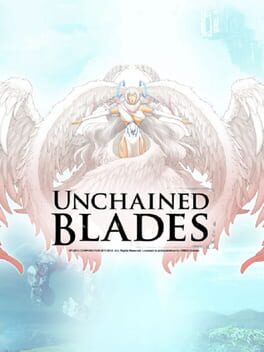
Unchained Blades follows the story of the dragon emperor, Fang, who after being stripped of his powers by the goddess Clunea, embarks on a journey for revenge and to regain his true form. Arrogant and vengeful, Fang is joined in his quest by a cowardly golem prince, a shy medusa priestess, a young phoenix clan maiden, and many other mythical beings seeking to meet with the goddess. In Unchained Blades, players journey through the game with a party of up to four characters, moving through dungeons in a first-person perspective and engaging in turn-based combat along the way. Using the game's unique "Unchain" system while in battle, players are able to try and convince monsters to follow them. If they are successful in using the Unchain system, the enemy monster will then join their party and help them in the future by blocking attacks or supplying players with special offensive abilities. Each character in the player's four person party can hold up to four unchained creatures, ensuring plenty of combat variety.